
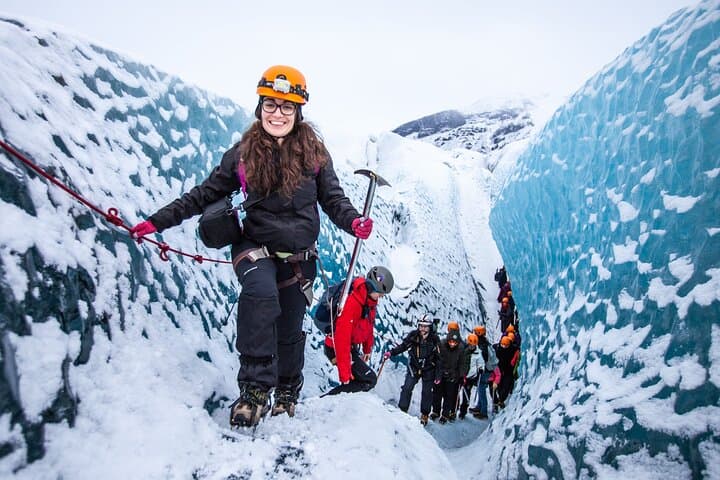
What the day feels like
You step off the gravel at Skaftafell's visitor center and the wind rearranges the day — not harsh, but honest. The ring road is a ribbon of black asphalt behind you; ahead, the glacier waits, a slow living thing stitched into the skyline. Blue veins and crevasses cut the ice like quicksilver scars. Your guide clips crampons onto your boots with practiced, efficient hands and explains the route in a voice that never rushes. For the next three hours you trade the ordinary pace of road travel for the measured rhythm of glacier walking: step, probe, breathe.
This is Skaftafell — a human-scale gateway to Vatnajökull, Europe’s largest ice cap. The area’s geology reads like a folded atlas: lava fields give way to moraines and then to the slow machinery of ice. Skaftafell’s outlet glaciers, including the frequently visited Svinafellsjökull, are tongues of ice that flow from the main cap, sculpting the valley and exposing polished rock and ribbed glacial till. The landscape is relatively young in geological terms; much of what you see was carved in the last 10,000 years, shaped by repeating advances and retreats of ice.
History is close to the surface here, too. Farmers and settlers long treated the glacier as both threat and resource — its melt waters fed rivers and shaped farmland, while ash from eruptions could bury fields. Today, national-park protections reconnect Skaftafell to a broader Icelandic story: conservation, tourism, and a deep cultural respect for unpredictable elements.
A glacier hike here is equal parts geology lesson and immersive theater. Guides walk you through reading the ice: why a section is brilliantly blue (denser ice, fewer air bubbles), why another crevice is sinuous and black (volcanic ash smelted into the ice), how meltwater carves the channels you’ll skirt. The rhythm of the hike changes with the terrain — flat, methodical walking across blue ice, then a slow ascent around a crevasse, the harness slackening and tightening like a heartbeat. Nature is given agency here: the glacier shifts, the weather decides, and you adapt.
Why go? Because glacier hiking in Skaftafell compresses a lot of Iceland into one concentrated experience. In three hours you’ll stand on ice that predates human memory, peer into a crevasse that looks impossible to have formed by chance, and learn practical skills — crampon steps, self-arrest basics — that make the wild feel accessible rather than just scenic. It’s the kind of trip that both novices and seasoned hikers appreciate: novices get a safe, guided passage onto an unforgettable landscape; experienced outdoorspeople value the technical competence of local guides and the chance to read the ice firsthand.
Practical edge: this particular tour runs about 3 hours, is offered with instant confirmation, and is competitively priced from roughly $96 USD. Expect groups led by certified guides who supply helmets, crampons, and basic technical instruction. Reviews are strong (over 50 reviewers with an average rating of about 4.75/5), which reflects consistent guide expertise and logistical smoothness.
Timing matters. Summer brings long daylight and manageable weather; shoulder seasons offer dramatic light and fewer people; winter trips are darker, colder, and more technical. Regardless of season, wear layers you can move in, a waterproof shell, and boots that can accept crampon attachments. Bring snacks and water: glaciers demand energy.
Environmental context is part of the experience. The glacier is retreating — a visible, measurable change. Guides will often point out recent trimlines and explain how melt patterns have altered the routes. Responsible operators keep groups small, stay on durable routes, and encourage Leave No Trace practices. Your visit supports local guides and a conservation economy that helps balance access with protection.
If you go: combine the hike with short treks to Svartifoss waterfall or a coastal drive to Jokulsarlon glacier lagoon. Many travelers base themselves in Höfn or towns along the ring road, turning this into a multi-day circuit of geology and quiet roads.
The payoff is immediate and tactile. There’s the satisfying scrape of crampons on ice, the bright, surprising quiet when you step away from the hum of the road, and the visual reward of sculpted ice catching sunlight. It’s not about conquering something out of reach; it’s about learning to move with a landscape that’s always changing. That education, paired with the sensory clarity of wind on your face and the incised blue of an icefall, is what keeps travelers returning to Skaftafell.
Bottom line: if you want a condensed but profound glacier experience — guided, safe, and laced with geology and local knowledge — a three-hour glacier hike in Skaftafell is hard to beat. It’s accessible enough for a confident beginner and rich enough for the curious pro, and it leaves you with something rarer than a view: an understanding of how glaciers shape land, culture, and the future.
Trail wisdom
Small choices, better day.
Use Proper Footwear
Wear stiff-soled boots that accept crampons; rental crampons fit poorly over flexible footwear and make the hike harder.
Layer for Wind and Wet
Pack a waterproof shell and an insulating mid-layer — conditions can change quickly on the ice.
Bring Snacks and Water
High-energy snacks and a thermos will keep your energy consistent during cold exertion.
Listen to Your Guide
Guides set route and safety protocols; follow instructions for crampon technique and crevasse avoidance.
Local knowledge
Read the place, not just the route.
Watch for native species including Arctic fox (rarely), Ringed plover and other shorebirds near meltwater streams.
Keep an eye out for wildlife during the transition between areas and habitats. Respect distance guidelines.
Glacial retreat is well-documented here; local guides emphasize minimal-impact practices and stick to hardened routes to protect fragile forelands.
Follow the guide's instructions on size limits, ethical handling, and leave-no-trace practices.
Svinafellsjökull viewing amphitheater (less-visited angles). Short hike to Skaftafell’s Svartifoss waterfall with basalt columns
Locally recommended viewpoints and quiet spots known best to local operators.
Skaftafell was an independent nature reserve established in 1967 and later incorporated into Vatnajökull National Park, combining conservation with public access.
Maritime roots and regional tradition shape the waterways and working coasts.
Seasonal guide
Four versions of the same landscape.
Spring
Best forFewer crowds · Dramatic meltwater channels
ChallengesUnstable weather · Cold mornings
Spring brings rapidly changing conditions and a mix of snow and exposed ice; expect soft sections and cool temperatures.
Summer
Best forLong daylight · Warmer surface conditions
ChallengesHigher foot traffic · Glacial melt increases wet areas
Summer is the easiest season for access and visibility, with long days and generally milder weather for guided trips.
Fall
Best forCrisp light for photography · Fewer tourists
ChallengesQuickly shortening days · Unpredictable storms
Fall offers beautiful color contrasts and quieter trails, but weather can flip fast — layer up and plan for shorter daylight.
Winter
Best forSnow-covered glacial landscapes · Northern lights potential
ChallengesCold temperatures · More technical ice conditions
Winter is dramatic and demanding; guided trips are more technical and typically require stronger gear and experience.
Operator details
What the booking data adds.
Included
- ✓Tour guide
- ✓Crampons
- ✓Helmet
- ✓Ice Axe
- ✓Harness
Good to know
- ✓Not recommended for pregnant travelers
- ✓Suitable for all physical fitness levels
Pack with intention
What to bring.
Good to know
Common questions.
No — the tour is designed for beginners and intermediate hikers; guides teach crampon technique and basic glacier safety.
Plan the edges
The details that make the day easier.
Skaftafell sits on the edge of Vatnajökull, the largest ice cap in Europe, and its outlet glaciers like Svinafellsjökull have appeared in feature films and commercials.
After the hike, stop in Höfn for langoustine (Icelandic lobster) — the town’s seafood restaurants are renowned. At Skaftafell, the visitor center has exhibits on glaciology and local hiking maps; pairing ice with a walk to Svartifoss adds basalt-column drama to your day.
- Closest international gateway
- Keflavík (KEF) with a 4–5 hour drive; closest town for lodging: Höfn (roughly 1–2 hours by car depending on stops); trailhead: Skaftafell Visitor Centre; cell service: intermittent; permits: no general park entry fee but guided glacier access is required for safety.
Glaciers here are retreating due to climate change — travel with certified guides who minimize route impact, pack out all trash, and avoid disturbing meltwater channels and newly exposed vegetation.
Explore by topic
Follow the threads.
Keep exploring
Make the story part of the trip.
In four hours you can move from shaded canyon ferns to wind-scoured coastal ridgelines, guided by someone who knows where the light—and the hidden views—live. This private half-day hike on the Monterey Peninsula or Big Sur is compact, curated, and perfect for travelers who want depth without a multiday commitment.
 Related story
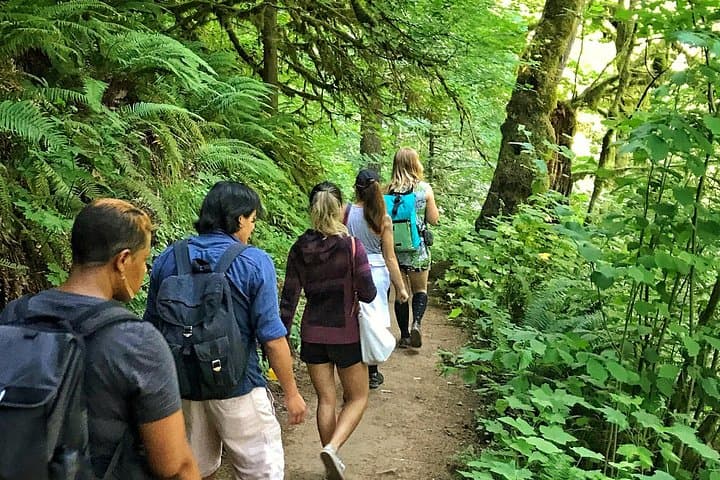
Lose the city for a few hours without leaving it: this 5-mile, 900-foot-gain Forest Park loop threads old-growth pockets, city viewpoints, and cultural landmarks for a compact taste of Portland’s wild side. Expect moss, roots, and stories.
 Related story
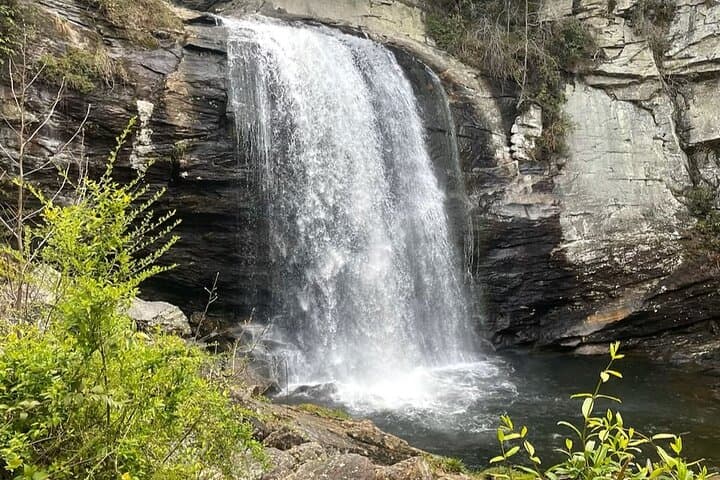
In a half-day you can trade Asheville’s bustle for mountain hush: short hikes to three waterfalls, a scenic drive along the Blue Ridge Parkway, and local guides who make the landscape intelligible. This tour is the easiest, most rewarding way to sample western North Carolina’s peaks and cascades.