
What the day feels like
You step out of the van and the mountain exhales. The air is a fraction cooler than downtown Asheville, floral with spruce and the wet-sweet tang of moss. Your guide folds a map and points the way—today’s itinerary is a rhythm of short walks and long vistas: three waterfalls, two protected forest stands and a stretch of the Blue Ridge Parkway where the road peels the world open into layered ridgelines. The hike is modest—roughly three miles of walking spread over two hours—but the choreography of river, rock and road makes the whole day feel larger than its numbers.
This tour is as much about cadence as it is about destination. The van ride itself is a slow reveal. As you climb out of Asheville, neighborhoods give way to hollowed forest and then to the Parkway’s signature outlooks: uninterrupted horizons of ridges that stack like a painter’s palette toward the west. The Parkway, conceived in the 1930s as both conservation corridor and scenic roadway, intentionally marries engineering and landscape; drivers are meant to look out and be moved. Here, movement is the point: a guided loop of short hikes that punctuate the drive with waterfall soundtracks and stands of old-growth hardwoods.
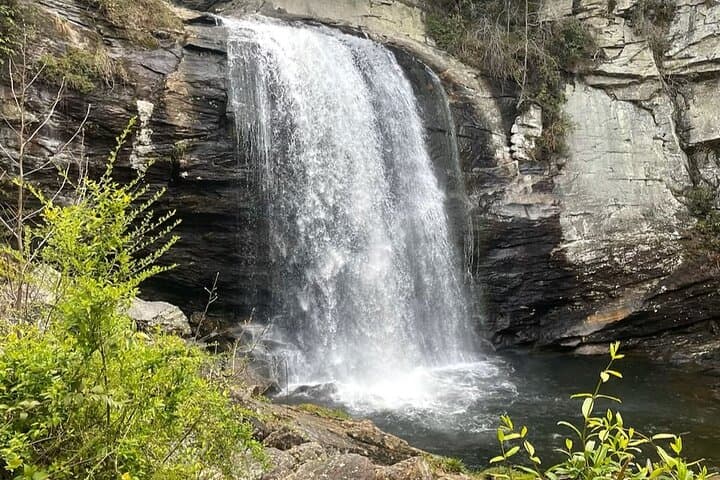
Geology does the heavy lifting. The mountains you’ll watch stack into the distance are among the oldest in North America—ancient, weathered folds of crystalline rock shaped by hundreds of millions of years of uplift and erosion. Water finds weakness in those folds, and where creeks meet the lip of bedrock, waterfalls form: curtains, slides and plunges that, depending on recent rain, can be a hush or a roar. The tour threads through National Forest land and protected tracts along the Parkway—places managed for both recreation and habitat—so the pools and cascades still feel relatively unspooled and immediate rather than manicured.
Culturally, this is Appalachian country: a region shaped by resilient small towns, craft traditions and a modern renaissance in food and craft beer. Asheville, your starting point, is a flavorful hub—its restaurants and breweries make a natural bookend to a morning outdoors. Along the way, your guide will point out historical footnotes: old logging roads repurposed into trails, remnants of stone walls, and the human stories that stitch communities to the landscape.
Why go on a guided waterfall-and-Parkway tour? For many travelers it’s the most efficient way to digest a lot of what this part of western North Carolina has to offer. The day’s structure removes the stress of driving narrow mountain roads and navigating multiple trailheads, and it adds local context: a guide who reads the light for the best photo angles, times the walk to avoid crowds where possible, and watches the weather so you don’t summit into a fog bank.
The hiking itself is friendly but honest. Expect uneven footing, roots and slick stone near cascades; a short uphill here and there; and stretches of flat, easy trail. Bring shoes with grippy soles and a waterproof layer—spray from falls can cool the air and your knees. Hydrate before you go: the tour includes snacks and drinks on the van, but you’ll want a refillable bottle for the trail.
Timing matters. The trip leaves in the morning and returns to Asheville by early afternoon, making it a perfect half-day escape that still lets you plan an evening in town. Spring and early summer offer the fullest waterfalls; fall delivers foliage-draped ridgelines that render the Parkway almost otherworldly; winter can be crisp and quiet but occasionally closes segments of the road. No matter the season, the van’s climate control and the guide’s local knowledge smooth the rough edges of mountain weather.
Practicalities: this excursion covers five to six hours door-to-door, with about two hours on foot. It’s suitable for most adults and teens, but it’s not recommended for children under 12. The tour includes pickup for hotels within a short ride of downtown Asheville or a meet-up at the Visitor Center if you’re staying farther away, and snacks/drinks are provided. The price-point is reasonable for the convenience and expertise included, and the group size keeps the experience intimate rather than impersonal.
Leave no trace is more than a slogan here. The fragile plants at trail edges and the microhabitats behind waterfalls can be easily damaged by off-trail wandering. Your guide will enforce respectful distances, and you should too—take photos from safe spots and carry out any trash. If you want the best photographs, ask your guide when to pause; early morning light, low sun in fall, and soft overcast days in spring each offer their own rewards.
The payoff is elemental: the smallest details on a hike can be the most memorable—a moss-furred boulder that holds yesterday’s rain like a bowl, sunlight freckling the spray of a cascade, the sudden quiet on a trail where the van’s radio can no longer be heard. It’s a day designed for motion that clarifies the senses. You return to Asheville with damp hair, dust on your shoes and a clear sense of where the road and the water meet—and where you might return to explore more deeply.
If you’re short on time but hungry for a mountain day, this is the shape of it: efficient, generous with views, and anchored by local knowledge that makes the Blue Ridge feel less like a brochure and more like an active landscape you can move through and remember. Practical, beautiful, and uncomplicated—the Parkway asks for nothing dramatic in return, only that you show up ready to walk and to listen.
Trail wisdom
Small choices, better day.
Grip up for slick rocks
Wear hiking shoes with good traction—wet stone near waterfalls is deceptively slippery.
Bring a refillable bottle
Carry at least 1 liter; there are no reliable refills on short trail sections and you’ll want water during the van transfers.
Layer for quick weather shifts
Mornings can be cool and sun can be strong by midday—pack a light waterproof layer and a sun shirt.
Mind the trail edges
Stay on designated paths to protect fragile plants and avoid dangerous footing around cascades.
Local knowledge
Read the place, not just the route.
Watch for native species including White-tailed deer, Various songbirds and woodpeckers.
Keep an eye out for wildlife during the transition between areas and habitats. Respect distance guidelines.
Much of the land visited sits within National Forest and Parkway management zones—practice Leave No Trace, avoid stepping on vegetation near cascades, and pack out waste.
Follow the guide's instructions on size limits, ethical handling, and leave-no-trace practices.
Quiet roadside overlooks on lesser-used Parkway pullouts. Small forest knolls with old stone walls—good for short, contemplative breaks
Locally recommended viewpoints and quiet spots known best to local operators.
The Blue Ridge Parkway was built in the 1930s as part of New Deal-era projects designed to combine conservation, recreation and employment; it links Shenandoah and Great Smoky Mountains National Parks.
Maritime roots and regional tradition shape the waterways and working coasts.
Seasonal guide
Four versions of the same landscape.
Spring
Best forFull waterfall flow · Wildflowers · Cool hiking temperatures
ChallengesMuddy trails · Variable spring storms
Spring delivers high water volumes and green understory growth—expect puddles and vibrant cascades, but plan for mud and sudden showers.
Summer
Best forWarm mornings · Longer daylight · Lush forests
ChallengesCrowds on popular overlooks · Afternoon storms
Summer’s warm weather makes for comfortable hiking; start early to avoid crowds and afternoon thunderstorms common in the mountains.
Fall
Best forFoliage views · Crisp air · Photogenic ridgelines
ChallengesPeak-season crowds · Cooler mornings
Fall is peak for color on the Parkway—book ahead and layer up for chilly starts that warm quickly by midday.
Winter
Best forQuiet trails · Crisp vistas · Snow-dusted landscapes
ChallengesRoad or trail closures · Icy conditions
Winter can be beautiful and quiet, but sections of the Parkway or trailheads may close—check conditions before you go.
Operator details
What the booking data adds.
Included
- ✓Hotel pickup and drop-off within 3-miles of city center
- ✓Driver/guide
- ✓Drink and snack
Not included
- —Gratuities
- —A meeting place and time for pickup can be arranged if you are more than 3 miles from city center
Good to know
- ✓Not recommended for travelers with spinal injuries
- ✓Not recommended for travelers with poor cardiovascular health
- ✓Travelers should have at least a moderate level of physical fitness
- ✓Minimum of 2 people per booking required before tour will run, individual travelers welcome
- ✓Maximum of 8 people per tour
- ✓Not suitable for participants who have had a knee or hip replacement within the last year
- ✓Not recommended for participants with back problems, heart complaints, or other serious medical conditions
- ✓Hike is at a comfortable pace for approximately 3.0 miles about 1 1/2 miles per hour for hiking portion of the tour
- ✓Operates in most weather conditions; please dress appropriately
- ✓No pets permitted on this tour
- ✓Not recommended for children under 10 years of age
Pack with intention
What to bring.
Good to know
Common questions.
The full excursion runs about 5–6 hours door-to-door; expect roughly two hours and about 3 miles of walking spread across multiple short hikes.
Plan the edges
The details that make the day easier.
The Blue Ridge Parkway spans about 469 miles and is managed by the National Park Service as the longest linear park in the U.S., connecting Shenandoah and Great Smoky Mountains National Parks.
After the hike, head back into Asheville for tapas at Cúrate or a pint at local breweries like Sierra Nevada’s Mills River taproom; downtown’s farm-to-table scene and craft-beer culture make for satisfying post-adventure meals and conversations.
- Closest airport
- Asheville Regional Airport (AVL)
- Typical drive to trailheads
- 20–60 minutes depending on stops
- Cell service
- Patchy on Parkway stretches—download directions and emergency contacts before you go
- passes
- No special permit required for this guided tour; check local trailhead parking rules for independent visits
Trails and waterfalls in this region are on National Forest and Parkway lands—pack out all trash, stay on designated trails to protect riparian zones, and avoid disturbing shoreline habitats.
Explore by topic
Follow the threads.
Keep exploring
Make the story part of the trip.
In four hours you can move from shaded canyon ferns to wind-scoured coastal ridgelines, guided by someone who knows where the light—and the hidden views—live. This private half-day hike on the Monterey Peninsula or Big Sur is compact, curated, and perfect for travelers who want depth without a multiday commitment.
 Related story
Beneath a sky of shifting light, Skaftafell’s ice reads like a map of time. This three-hour guided glacier hike mixes technical instruction with geology and culture: compact, safe, and unforgettable.
 Related story
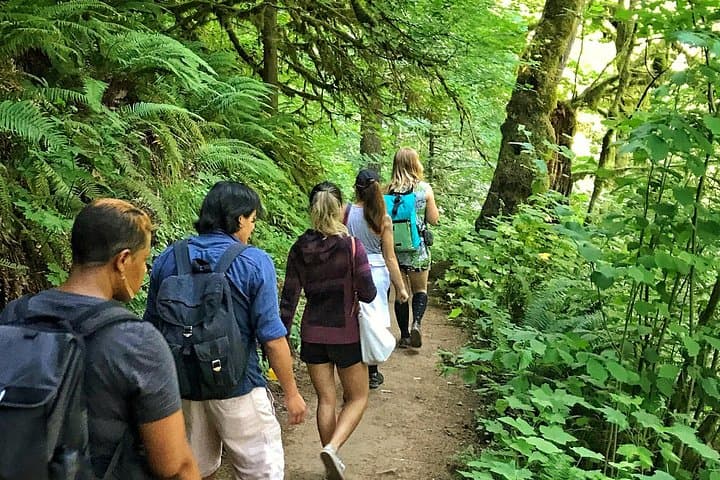
Lose the city for a few hours without leaving it: this 5-mile, 900-foot-gain Forest Park loop threads old-growth pockets, city viewpoints, and cultural landmarks for a compact taste of Portland’s wild side. Expect moss, roots, and stories.