

What the day feels like
The path to the taulas begins like most good stories on Menorca: narrow limestone lanes, the scent of rosemary and thyme rubbing the air, and the sudden hush of open countryside that lets the stones speak. Walk close to one of Menorca’s T-shaped taulas and you feel time tip sideways. The slabs—some vertical, some crowning a horizontal capstone—stand like a kind of silent parliament, a place where the island’s prehistoric communities once met, argued, and performed rites that we can only sketch from pottery shards and the geometry of stones.
On a half-day private tour of Menorca’s monuments and marvels you move through three different faces of the island: Binibeca’s whitewashed lanes that feel transported from a postcard; the dramatic coastal cleft of Cova d'en Xoroi where sea and limestone carve a private theater; and Talatí’s prehistoric complex, where taulas anchor the story. Together, these stops fold the island’s past into a single itinerary that’s as visually rich as it is easy to access—the kind of outing that suits travelers who want archaeology without a full-day slog.
Why care about taulas? These megaliths are a uniquely Menorcan phenomenon tied to the Talayotic culture, roughly spanning the first millennium BCE. They’re part shrine, part civic space, and wholly enigmatic: T-shaped monoliths set within circular enclosures, often aligned to produce a strong architectural focus. Approaching one, you notice not just scale but intent—the capstone’s weight distributed as if to press down memory itself into the earth.
Geologically, Menorca is limestone, a karst landscape carved by water and time. That limestone supplied the raw material for taulas, and the same geology fosters the island’s caves and sheltered coves—hence the Cova d'en Xoroi, where the sea has hollowed a dramatic cliffside amphitheater. Cultural layers sit atop this geology: Phoenicians, Romans, Moors, and Catalan settlers have all left traces, but it’s the prehistoric imprint—talayots, taulas, and navetas—that gives Menorca a quietly monumental quality. Talatí (often referred to in guides as Talatí de Dalt or the Talati site) offers a compact, readable example: circular walls, a central taula, and fragments of everyday life chiselled into pottery fragments.
Locally, these sites are woven into contemporary Menorca. Binibeca’s fishing village architecture—white walls, cubic houses, tiny plazas—has become a beloved visual identity of the island’s southeastern coast. Cova d'en Xoroi has evolved into a social landmark as well: by day a dramatic viewpoint, by night one of the island’s most atmospheric bars, where the sound of waves gives rhythm to a chilled gin Xoriguer. The taulas, by contrast, are solemn: you visit them with the feel of reverence and the obligation to tread lightly.
For travelers, the practical edge to this half-day is simple: you get a concentrated sense of Menorca’s past and present without a full-day commitment. Expect small amounts of walking—mostly flat, on firm limestone or packed soil—interspersed with short transfers by vehicle between stops. If you’re the sort who likes to photograph details, bring a wide lens for the taulas and a longer lens for the sea cliffs at Cova d'en Xoroi.
Timing matters. The pale rock of Menorca holds heat; mornings and late afternoons offer the most forgiving light and the coolest walking. Spring and early fall balance wildflower and shrub scents with fewer crowds—ideal for lingering at Talatí and imagining how an assembled community might have stood in this same wind. Guides on the half-day tour bring context: they’ll point out pottery fragments, explain the layout of talayotic compounds, and translate that archaeology into human decisions—where people stored grain, how they organized social space, and why the taula’s silhouette matters.
There’s also etiquette. These monuments are fragile; avoid touching weathered carvings or climbing on the stones. Photography is fine but keep to paths. A private tour means a smaller group footprint, which is better for the sites and for your experience: you’ll get space to listen to the wind between the slabs, and a guide who can answer specific curiosities about construction techniques, radiocarbon dates, or the practicalities of ancient island life.
Practicalities: bring sun protection and a refillable water bottle (there are limited services at the archaeological spots), comfortable shoes for short stretches of uneven ground, and a light wind layer—sea breezes are persistent. If you plan to visit Cova d'en Xoroi during sunset, allow extra time; the cave becomes a destination in itself and can be crowded at golden hour. If you want quieter photography, aim for first light.
The half-day loop—from Binibeca’s labyrinthine charm to the roar and hush of Cova d'en Xoroi and the quiet command of Talatí—feels like an elegant introduction to Menorca’s soul. It’s the onboarding tour for anyone who’ll stay longer. Walk away with more than postcards: an understanding of how islanders nested communities into a landscape of stone and sea, and why those same stones still hold a civic, almost conversational, power.
Whether you’re a casual traveler who wants a rich morning with minimal planning, a history buff hunting the evolution of Mediterranean societies, or a photographer chasing the geometry of ancient architecture against blue water, the taulas deliver. They ask you to slow down, to listen to what stone insists upon, and to notice how continuity threads through Menorca—from prehistoric assemblies to modern seaside gatherings. That is the charm: these places are both relics and living anchors—stones that still, somehow, gather people together.
Trail wisdom
Small choices, better day.
Visit early or late
Morning and late-afternoon light is cooler for walking and better for photography; avoid midday heat on exposed limestone.
Respect the stones
Do not climb on taulas or remove fragments; stay on marked paths to protect fragile archaeology.
Bring water and sun protection
There are few services at archaeological sites—carry a full bottle and a hat for the open sections.
Book a private guide
A guide brings archaeological context and redirects foot traffic away from sensitive features.
Local knowledge
Read the place, not just the route.
Watch for native species including Audouin’s gulls along the southern coves, Iberian hare in inland scrub.
Keep an eye out for wildlife during the transition between areas and habitats. Respect distance guidelines.
Local authorities and conservation groups manage many sites with signage and paths; small-group tours reduce wear and support preservation through fees and local stewardship.
Follow the guide's instructions on size limits, ethical handling, and leave-no-trace practices.
Small talayotic wall fragments scattered along rural lanes—quiet reminders of dispersed settlements. A lookout point near Cova d'en Xoroi that offers a secluded sunset over the southern cliffs
Locally recommended viewpoints and quiet spots known best to local operators.
Taulas are tied to the Talayotic culture of Menorca (roughly the first millennium BCE) and represent a distinctive regional approach to monumental architecture.
Maritime roots and regional tradition shape the waterways and working coasts.
Seasonal guide
Four versions of the same landscape.
Spring
Best forwildflowers and mild temperatures · quieter visits · clear light for photos
Challengesvariable showers · some coastal wind
Spring is arguably the best time—cool, fragrant, and blooming—perfect for walking between sites without the summer crush.
Summer
Best forlong daylight · combining monuments with beach time · evening visits to Cova d'en Xoroi
Challengeshigh temperatures · peak crowds at popular spots
Summer brings heat and crowds; schedule early starts and book tours in advance to avoid the busiest windows.
Fall
Best formild weather · fading tourist season · warm golden light
Challengesshortening days · some seasonal closures
Autumn mirrors spring in comfort and light, with fewer visitors and pleasant walking conditions.
Winter
Best forempty sites · dramatic skies · lower prices
Challengescooler, wetter weather · reduced visitor services
Winter offers solitude and stormy drama, but bring windproof layers and expect limited tour availability.
Pack with intention
What to bring.
Good to know
Common questions.
Yes, most taula sites are open year-round, but guided tours and visitor services are more frequent in spring and summer; weather may affect access in winter.
Plan the edges
The details that make the day easier.
The taulas are unique to Menorca and date to the Talayotic period (approximately 1000–300 BCE), a prehistoric culture distinctive to the Balearic Islands.
Pair your visit with local flavors: try caldereta de langosta (lobster stew) when available, sample Mahón-Menorca cheese, and sip a gin Xoriguer in a seaside bar—Binibeca’s narrow lanes also reveal family-run cafes and seafood spots.
- Duration
- half-day (3–4 hrs). Nearest city: Maó (Mahón). Language: Catalan
- Spanish. Currency
- EUR. Accessibility: mostly short walks; some uneven surfaces. Bring water and sun protection.
Choose small-group or private tours, stay on marked paths, and avoid touching or removing archaeological material—these practices minimize erosion and preserve sites for future visitors.
Explore by topic
Follow the threads.
Keep exploring
Make the story part of the trip.
In four hours you can move from shaded canyon ferns to wind-scoured coastal ridgelines, guided by someone who knows where the light—and the hidden views—live. This private half-day hike on the Monterey Peninsula or Big Sur is compact, curated, and perfect for travelers who want depth without a multiday commitment.
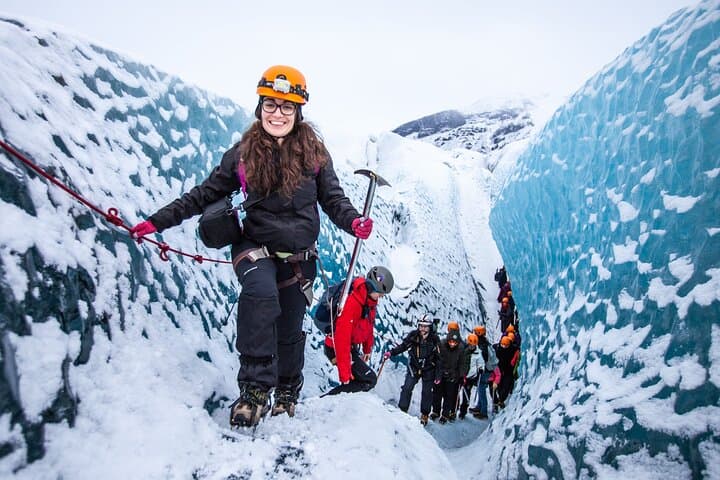 Related story
Beneath a sky of shifting light, Skaftafell’s ice reads like a map of time. This three-hour guided glacier hike mixes technical instruction with geology and culture: compact, safe, and unforgettable.
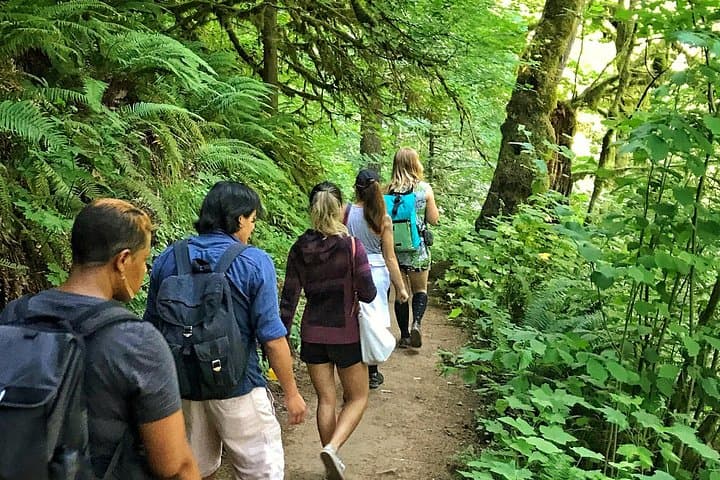 Related story
Lose the city for a few hours without leaving it: this 5-mile, 900-foot-gain Forest Park loop threads old-growth pockets, city viewpoints, and cultural landmarks for a compact taste of Portland’s wild side. Expect moss, roots, and stories.