
What the day feels like
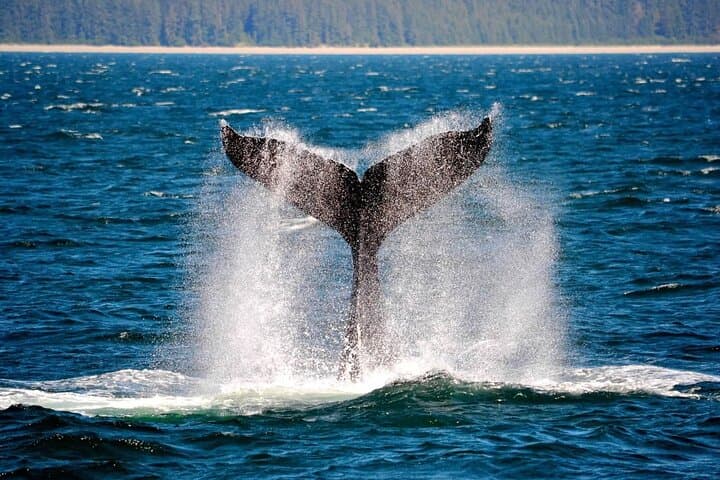
The catamaran pushes away from the dock and the town’s noise thins until it’s only gulls and the slap of water on cold hull. The sky is a hard, clean blue and the mountains wear snow like a memory. On board, there are five other people and a guide whose binoculars seem permanently glued to his forehead. With a six-person limit and a 360-degree walk-around deck, there’s no jockeying for view — only time. Time to breathe, to listen for the blow and to watch a ridged dorsal line break the horizon. When the first humpback rolls, its barnacle-stippled pectoral fin flips like a slow, deliberate signal. The animal looks incidental and enormous at once; the world seems to reframe itself around that surface and the spray that follows.
This is Icy Strait: a narrow marine highway between Chichagof Island and the mainland of Alaska where deep water and strong currents concentrate prey, and where whales come to feed in great numbers. The Icy Strait Whale & Wildlife Endeavor is a custom-built, six-passenger catamaran designed for intimacy and endurance — an enclosed heated cabin, a head, indoor seats for calm moments and a wraparound deck for every sighting. Operators keep the vessel small on purpose: fewer people means less noise, less disturbance and a better chance to watch natural behavior unfold rather than competing for a single snapshot.
The region’s geology reads like a slow-motion drama: glaciers sculpted the fjords, gouging deep valleys that now fill with ocean water and tidal currents. Those currents stir nutrient-rich water from the depths and draw clouds of herring and krill that humpbacks gorge on. The water itself is a ledger of eras — fjords cut during the ice ages, driftwood and glacial silt tracing currents and storms. Onshore, the Tongass National Forest — the largest temperate rainforest in the world — cushions the coastline with spruce and hemlock, and the Huna Tlingit people have lived and harvested here for millennia.
What visitors see from the boat is only part of the story. Hoonah and the nearby Icy Strait Point are modern hubs built on long traditions: the Huna Tlingit traded, fished and traveled these channels for generations, and today their corporation runs Icy Strait Point, blending tourism with cultural preservation. Guides will often share that context: the seasonal round of harvesting, the salmon camps, the stories etched into totem poles. The encounter with a humpback, or an eagle tearing a salmon mid-air, becomes part of a larger, human-scale narrative of place.
Practically speaking, this trip is built for people who want an immersive marine-wildlife experience without the crowds. The operator guarantees whale sightings or refunds your booking — a confidence born from seasons of experience in a corridor whales regularly use. The excursion is scheduled at about 3 hours and 45 minutes from pick-up to drop-off, giving more time on the water than many shore excursions. Pickup and return are arranged from the cruise ship port; for land-based travelers, Hoonah is the local gateway (Juneau is the nearest major commercial airport).
Expect variable conditions and plan accordingly. Wind can sharpen a calm morning into choppy water; rain and spray are part of the texture here. But the vessel’s heated cabin and indoor seating mean you can warm up between sightings; binoculars and dry layers make the difference between a tensed, cold watch and a comfortable, engaged one.
Beyond whales — humpbacks are the headline act — you’ll likely see orcas, sea otters draping themselves like rags of fur, Steller sea lions hauling out on rocky points and bald eagles that seem permanently on vigil. Guides point out feeding behavior, social interactions and the subtle signs that a patch of water contains life: birds working the surface, vaporous plumes, a sudden line of dolphins.
For photographers, the small-boat format is a blessing: fewer people, less movement, access to all sides of the vessel. But be ready to shoot quickly. A whale’s breach is spectacular and brief; set a high shutter speed, keep a telephoto on hand and have a plan for where you’ll stand. And if you get cold or seasick, step inside and rejoin when you’re steady again — being comfortable increases your chances of a good experience.
Why book this over a larger cruise-ship tour? The math is simple: more time on the water, fewer people on board, and a higher probability of meaningful encounters. At roughly four hours door-to-door, including transit and loading, the trip is manageable in a single morning or afternoon, but it feels like an expedition: deliberate, patient and tuned to what the animals will give.
If you’re planning for shore excursions, remember the logistics: the vessel’s small capacity fills quickly, and the expedition is flagged as likely to sell out. Book ahead, bring layered clothing, and prepare for a day that may swing from brilliant sun to drizzle. Respect distance guidelines around marine mammals — guides follow NOAA rules to protect both animals and visitors.
Back ashore, the day doesn’t have to end. Icy Strait Point’s boardwalks and cultural demonstrations offer a close-in way to round out the marine experience with local seafood and stories. Buy smoked salmon from local purveyors, listen to a Tlingit elder, and let the memory of cold spray and whale breath carry you until your next return.
This six-person whale-watching safari is less about ticking a box and more about being allowed to stand in the margin where ocean and land meet, and watching a wild world reveal itself on its own timetable. You go for the whales, yes, but you come away with a keener sense of how tightly a community, a coastline and an animal are bound together.
Duration: about 3 hours 45 minutes (pickup to drop-off). Group size: maximum 6. Pricing: from $258. Guarantee: whale sighting or full refund.
Trail wisdom
Small choices, better day.
Layer for a fickle ocean
Bring moisture-wicking base layers, an insulating mid-layer and a waterproof shell — temperatures and spray change quickly at sea.
Load seasickness meds ahead
Even calm days can get choppy; take preventive medication or bring patches the night before if you’re prone to motion sickness.
Use binoculars and keep them ready
A compact pair of binoculars increases your chances of noticing distant blows or bird activity that signal wildlife.
Respect wildlife distance
Follow your guide’s instructions and NOAA guidelines to avoid disturbing whales—approach rules exist to protect animals and visitors.
Local knowledge
Read the place, not just the route.
Watch for native species including Humpback Whale, Sea Otter.
Keep an eye out for wildlife during the transition between areas and habitats. Respect distance guidelines.
Operators follow NOAA approach-and-departure guidelines to minimize disturbance; visitors should give animals space and avoid feeding wildlife.
Follow the guide's instructions on size limits, ethical handling, and leave-no-trace practices.
Icy Strait Point boardwalk for close-in coastal views and cultural demonstrations. Short shoreline hikes near Hoonah for eagle and seal watching away from cruise crowds
Locally recommended viewpoints and quiet spots known best to local operators.
This coast lies within the traditional territory of the Huna Tlingit people; Icy Strait Point is owned and operated by the Huna Totem Corporation as part of cultural and economic stewardship.
Maritime roots and regional tradition shape the waterways and working coasts.
Seasonal guide
Four versions of the same landscape.
Spring
Best forMigratory return of humpbacks · Calmer early-season waters
ChallengesCooler temperatures · More rain and fog
Spring brings returning whales and fewer crowds, but expect cool, damp weather and occasional low visibility.
Summer
Best forPeak whale activity · Long daylight hours
ChallengesBusier cruise schedules · Occasional wind-driven chop
Summer is the optimal season for reliable sightings and comfortable conditions, though tours book fast during cruise season.
Fall
Best forStill-active marine life · Crisper air and light
ChallengesShortening days · Increased storm frequency
Early fall can yield strong wildlife encounters and dramatic light; later in the season, weather becomes less predictable.
Winter
Best forOff-season solitude
ChallengesLimited tours · Cold, rough seas
Winter tours are rare; while the landscape is starkly beautiful, marine-wildlife excursions are mostly suspended.
Operator details
What the booking data adds.
Included
- ✓Private transportation
- ✓Restroom on board
Good to know
- ✓Service animals allowed
- ✓Public transportation options are available nearby
- ✓Infants are required to sit on an adult’s lap
- ✓Suitable for all physical fitness levels
Pack with intention
What to bring.
Good to know
Common questions.
If no whales are sighted during your tour, the operator will issue a full refund—this policy reflects their track record and generous time-on-water.
Plan the edges
The details that make the day easier.
Icy Strait Point is owned and operated by the Huna Totem Corporation, linking tourism directly to Huna Tlingit cultural and economic initiatives.
After the boat returns, head to Icy Strait Point for locally smoked salmon, Huna cultural demonstrations and boardwalk views; Hoonah’s small community vibe rewards those who wander past the tourist hub to sample local crafts and stories.
- Closest major airport
- Juneau (JNU) with regional connections to Hoonah; Many travelers arrive by cruise ship—pickup at port; Driving access limited—Hoonah accessible by ferry or air; Cell service: intermittent in the strait; Permits: none required for tour, follow NOAA marine mammal approach rules.
This operator limits group size to reduce disturbance and follows NOAA guidelines—keep distance from whales, pack out all trash and avoid single-use plastics where possible.
Explore by topic
Follow the threads.
Keep exploring
Make the story part of the trip.
In four hours you can move from shaded canyon ferns to wind-scoured coastal ridgelines, guided by someone who knows where the light—and the hidden views—live. This private half-day hike on the Monterey Peninsula or Big Sur is compact, curated, and perfect for travelers who want depth without a multiday commitment.
 Related story
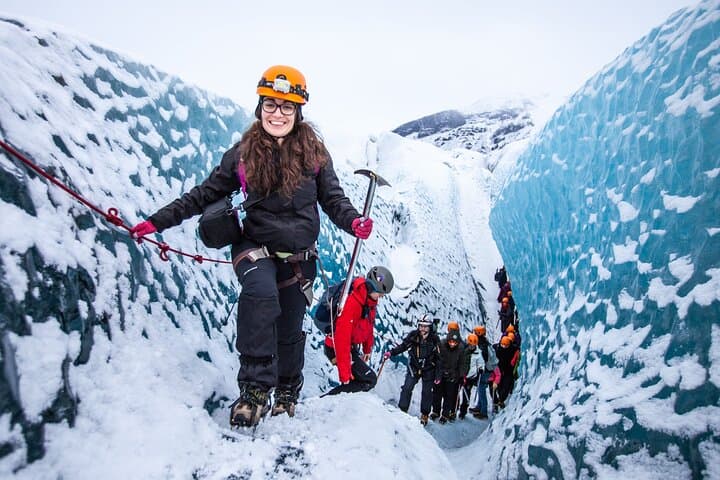
Beneath a sky of shifting light, Skaftafell’s ice reads like a map of time. This three-hour guided glacier hike mixes technical instruction with geology and culture: compact, safe, and unforgettable.
 Related story
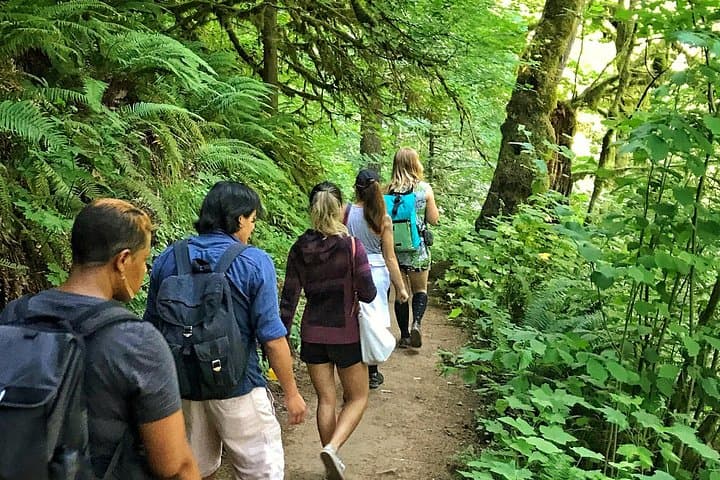
Lose the city for a few hours without leaving it: this 5-mile, 900-foot-gain Forest Park loop threads old-growth pockets, city viewpoints, and cultural landmarks for a compact taste of Portland’s wild side. Expect moss, roots, and stories.