

What the day feels like
The first time you arrive at Cerro Brujo, the beach announces itself the way a seasoned actor takes the stage: unhurried, confident, and with an eye for the small gestures that make the scene unforgettable. A short Zodiac or panga ride from Puerto Baquerizo Moreno drops you on a crescent of white sand backed by low, honey-colored cliffs—tuff cones built from fire and sea. Wind and surf choreograph the foreground: a surf hiss, a gull calling, and the constant, impatient hopping of marine iguanas onto black lava rocks. The water here is a clear, near-tropical blue that dares you to slip into it.
Cerro Brujo is small in scale and big in effect. The shoreline is not a place for long hikes but for close observation—of sea lions who loaf on the warm sand, of red-billed tropicbirds wheeling in the thermals, of waves that sculpt the sand into rippled designs every hour. There’s a short, easy walk up behind the beach to a rocky promontory, and from that vantage the island’s geology reads like a field guide to the Galápagos: overlapping lava flows, ash deposits, and the rounded silhouette of the island’s older cones. The name Cerro Brujo—"Witch Hill"—hints at the islanders’ fondness for local myth, but the place doesn’t need mystical flourish; its charisma is practical and immediate.
Geologically, Cerro Brujo is a reminder that the Galápagos are young islands. The cliffs are tuff—fragmented volcanic ash compressed into stone—and the small offshore reefs are strands of hardened lava. That youth is why the islands are such a natural laboratory: species adapt and occupy niches with astonishing speed. Botanically, the sand and scrub behind the beach show hardy coastal plants that can shrug off salt spray, and the tidal pools collect their own tiny ecosystems.
Culturally, San Cristóbal’s human history sits nearby. Puerto Baquerizo Moreno is the provincial hub and the place where most expeditions originate. The island’s fishing community still runs small pangas that double as tour boats, and the town’s Interpretation Center offers concise context on human impacts and the islands’ conservation history—a helpful primer before you step onto protected shorelines.
Most visitors access Cerro Brujo as part of a half-day or full-day boat excursion that pairs the beach with snorkeling stops—Kicker Rock or La Lobería are common bookends. Operators usually supply snorkel gear, a wetsuit in the cooler months, and a bilingual naturalist guide who points out where sea turtles graze, where sea lions sleep, and where nesting birds prefer their rocky ledges. This blend—short shore time, a calming viewpoint walk, and an hour in the water—makes Cerro Brujo a concentrated taste of the Galápagos’ dual attractions: land and sea.
Practicality is woven into the experience. Morning departures tend to deliver the calmest seas and the clearest underwater visibility; afternoon cutoffs are more likely to bring wind and chop. Operators keep group sizes small to protect wildlife and enhance viewing, and National Park rules are strict: stay on trails, keep your distance from animals, and never feed or touch wildlife. Bring reef-safe sunscreen and a light windbreaker; sea spray and sun are a persistent pair here.
If you’re a swimmer or snorkeler, expect to see sea turtles and a parade of tropical fish in the shallows near the reef. In-water encounters here feel intimate rather than cinematic—you glide quietly and the animals decide whether to come close. On land, the walk to the cliff-top viewpoint takes 10–20 minutes and is mostly flat but uneven underfoot; it’s worth the short breath to see the small bays and the island’s weathered coastline.
Cerro Brujo is also a lesson in scale—how a small, protected beach can give a visitor a measured, memorable introduction to the archipelago without the logistics of multi-day cruising. For families and first-time visitors, it’s often the most efficient way to see Galápagos wildlife comfortably and with minimal travel fatigue. For photographers, it’s a place to work close-range portraits of sea lions and birds, and to study light on volcanic textures.
Prepare simply and deliberately. Hydrate before you go. Wear reef-safe sunscreen and shoes that can handle sand and sharp stones. Respect the slow rules of the place—wildlife here moves at its own pace—and you’ll leave with the kind of vivid, quiet memories that the Galápagos specializes in: small details that keep returning to you long after the ferry trip home.
Trail wisdom
Small choices, better day.
Go early for calm water
Morning departures typically deliver the best visibility for snorkeling and calmer seas for a comfortable ride.
Use reef‑safe sunscreen
The reefs are fragile—choose mineral-based sunscreen to protect coral and marine life.
Keep your distance from wildlife
Sea lions and birds are accustomed to people but can be stressed by close approaches—observe from 2–3 meters.
Bring a light layer
Even warm days can be breezy on the water; a windbreaker keeps you comfortable for the return trip.
Local knowledge
Read the place, not just the route.
Watch for native species including Galápagos sea lion, marine iguana.
Keep an eye out for wildlife during the transition between areas and habitats. Respect distance guidelines.
Cerro Brujo lies within the Galápagos National Park; visitors must follow strict rules—stay on trails, avoid feeding wildlife, and use reef-safe products to reduce impact.
Follow the guide's instructions on size limits, ethical handling, and leave-no-trace practices.
La Lobería (sea lion colony near Puerto Baquerizo Moreno). Punta Carola beach for sunset and local surf culture
Locally recommended viewpoints and quiet spots known best to local operators.
San Cristóbal is one of the oldest inhabited islands in the archipelago and played a logistical role during World War II when Baltra served as a military base.
Maritime roots and regional tradition shape the waterways and working coasts.
Seasonal guide
Four versions of the same landscape.
Spring
Best forcalmer seas · marine bird nesting · snorkeling
Challengesoccasional rain showers · warmer temperatures
Spring (roughly Dec–May) brings warmer water and calmer seas—ideal for snorkeling and bird activity, though brief showers are possible.
Summer
Best forclear water visibility · tropical fish sightings · comfortable temperatures
Challengesmore visitors on popular days · stronger sun exposure
The warm season yields excellent underwater visibility and abundant marine life but plan for stronger sun and busier operators.
Fall
Best forfewer crowds · stable weather · good light for photography
Challengescooler mornings · periodic swell
Fall offers quieter beaches and steady light for photos; mornings can be cooler and occasional swells affect small-boat rides.
Winter
Best forlarger pelagics offshore · productive upwelling · dramatic skies
Challengescooler water temps · choppier seas · need for thicker wetsuits
The cooler season (Jun–Nov) brings nutrient-rich waters and different marine species—expect cooler swims and potential chop.
Pack with intention
What to bring.
Good to know
Common questions.
Most visitors go by panga or inflatable boat as part of a half-day tour; operators based in Puerto Baquerizo Moreno run regular departures.
Plan the edges
The details that make the day easier.
Cerro Brujo is formed from volcanic tuff—compressed ash from past eruptions—and sits on San Cristóbal Island, part of the archipelago that helped shape Charles Darwin’s ideas on evolution.
San Cristóbal’s town blends a working fishing port with small cafes serving fresh ceviche and tostadas—perfect after a morning at the beach; local guides draw on generations of island knowledge.
- Duration
- half-day (3–5 hrs); Access: boat from Puerto Baquerizo Moreno; Fee: Galápagos National Park entrance applies; Difficulty: easy; Best time: morning.
Choose operators certified by the Galápagos National Park, use reef-safe sunscreen, keep distance from wildlife, and take out any trash—small actions preserve fragile island ecosystems.
Explore by topic
Follow the threads.
Keep exploring
Make the story part of the trip.
In four hours you can move from shaded canyon ferns to wind-scoured coastal ridgelines, guided by someone who knows where the light—and the hidden views—live. This private half-day hike on the Monterey Peninsula or Big Sur is compact, curated, and perfect for travelers who want depth without a multiday commitment.
 Related story
Beneath a sky of shifting light, Skaftafell’s ice reads like a map of time. This three-hour guided glacier hike mixes technical instruction with geology and culture: compact, safe, and unforgettable.
 Related story
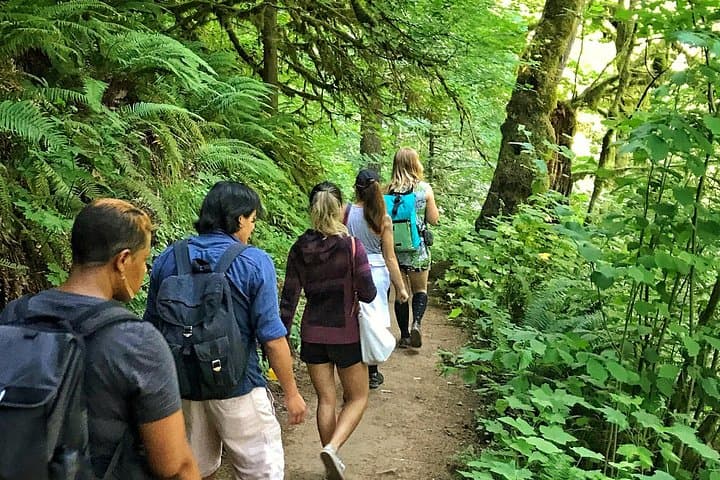
Lose the city for a few hours without leaving it: this 5-mile, 900-foot-gain Forest Park loop threads old-growth pockets, city viewpoints, and cultural landmarks for a compact taste of Portland’s wild side. Expect moss, roots, and stories.