
What the day feels like
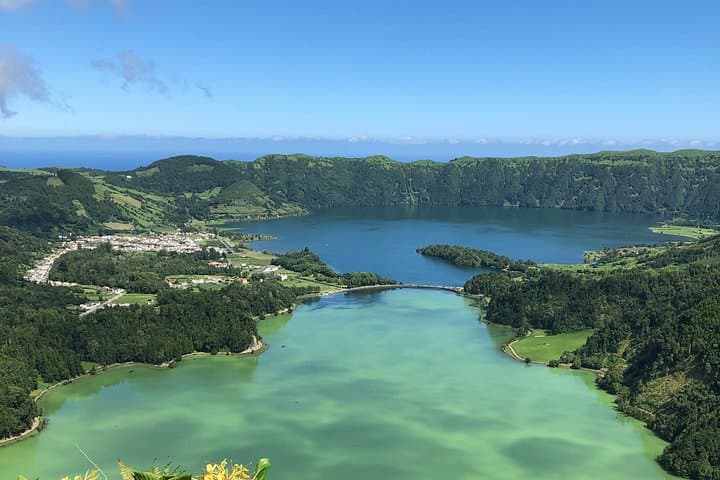
You arrive in Ponta Delgada the way the island wants you to—by sea-salted wind and a slow ribbon of green unspooling toward the horizon. The airport briefs you in low-key fashion: a quick stamp, a coffee, and then the road that climbs through hydrangea hedges and past black basalt walls. On day one the landscape announces itself with the blunt confidence of old volcanoes: calderas rimmed like ancient fortresses, crater lakes that mirror the sky, and steam rising from fissures where the island still exhales heat. The world here is physical and friendly—an environment that invites contact and rewards curiosity.
Walk any crater rim and you feel the island’s history underfoot. São Miguel is a child of fire—three main volcanic complexes welded together over 500,000 years—and the scars are beautiful and legible: Sete Cidades’ twin lakes stitched across a caldera floor, the white-pink terraces of Furnas where thermal springs have shaped gardens, and the raw Atlantic cliffs that have been gnawed by storms into stacks and gullies. Local farmers have shaped the geology further with stone walls and tea terraces, and towns have grown in the shadow of fumaroles and hot pots. This is not a manicured national park so much as a living landscape, one where geology, agriculture, and a patchwork of settlements coexist.
Culturally the island offers quiet precisions. Tea plantations at Gorreana and Porto Formoso are Europe’s oldest continuous tea producers—rows of green bushes that smell faintly of citrus on warm days. Furnas is the theatrical neighbor: local restaurants lower pots of 'cozido' into the ground where geothermal heat steams a meat-and-vegetable stew that’s a regional signature. Ponta Delgada is the tour’s human anchor—whitewashed facades, baroque churches, and bakeries that do an honest bolo lêvedo. People here move at a pace that reflects the island’s rhythms; it’s easy to match it, and advisable.
The itinerary is practical and layered. Expect sturdy walks rather than technical climbs: lagoa hikes and crater rim trails, coastal viewpoints, guided visits to thermal gardens, and easy boat options for whale and dolphin watching if you choose that add-on. Notable walks include the Lagoa do Fogo trail (roughly 10–12 km round-trip with about 400–600 m elevation change depending on where you start), the Sete Cidades rim and lake loop (a variable 6–12 km depending on your route), and shorter exploratory strolls in Furnas and around tea plantations that reward minimal effort with maximum spectacle. Trails vary from packed earth to volcanic scree; good boots and steady legs will carry you through.
Timing matters. Mornings are the clearest hours for views; afternoons often bring a brief marine layer or changeable cloud owing to the island’s microclimates. Spring through early fall delivers the best all-around weather—warm enough for swims and long days, cool enough for hiking without melting. Where possible, schedule the longer meadow and crater walks early in the day and save the geothermal pools and town evenings for late afternoon and night when clouds thin and steam shows itself better in cooler air.
Practical details tilt toward the pragmatic. Rent a car or book small-group transport—public transit exists but is slow and splintered for a seven-day itinerary. Expect many short drives between highlights (20–60 minutes typical), and calculate an hour for roads that wind and climb; distances are short, but the roads are not flat. Dress in layers: coastal winds can cut, crater tops send weather faster, and thermally heated spots are paradoxically humid and cool. Hydrate often; volcanic soils drain quickly and sun at the summit can be insistent despite a mild air temperature.
For someone plotting this trip: bring good leather-sole or sticky-rubber hiking boots for slick volcanic rock, a light waterproof shell, and a daypack with water, snacks, and a camera. Respect the thermal areas—do not stray off marked paths—and book any Furnas thermal experiences in advance if you want restaurant cozido or a timed visit to Terra Nostra Park. If whale watching is on your list, pick mornings and an operator with small groups; the Atlantic here is active but weather-controlled cancellations are common.
Why bother with a full week? São Miguel rewards slow attention. A single day will give you a postcard view; seven days lets you hear the island change its expression: fog that hides the far rim and then lifts to reveal a whole new palette, fishermen hauling nets at dawn, and the way the sea shifts from slate to cobalt. You get to understand the island as a lived place, taste its unique gastronomy, and leave with a sense of scale—the kind that’takes you from crater floor to Atlantic cliff in a morning and still gives you energy to linger in a thermal pool by sunset.
This tour is for travelers who like to move enough to earn views but prefer comfort at day’s end—a central hotel in Ponta Delgada, guided day tours, and choices of add-ons that let you push into whale watching, canyoning, or longer coastal walks. It’s not a mountaineering expedition; rather it’s a seven-day conversation with a very persuasive landscape. If you go, listen closely. The island speaks in steam and tide, in fields and black rock, and in the small, savory ritual of a cozido pot drawn from the ground—a final, delicious proof that volcanic heat can be gentle, useful, and quietly unforgettable.
Trail wisdom
Small choices, better day.
Start Early for Crater Views
Hit Lagoa do Fogo or Sete Cidades at first light to avoid clouds and crowds; morning light is also the most forgiving on steep descents.
Layer for Microclimates
Temperatures can swing 10–15°C between coast and crater rim—bring a light insulated layer and a waterproof shell.
Respect Thermal Areas
Stay on marked paths around Furnas and Terra Nostra to protect fragile geothermal features and for your safety.
Carry Local Cash
Smaller eateries and market stalls sometimes prefer cash, especially in rural villages.
Local knowledge
Read the place, not just the route.
Watch for native species including Common dolphins, Cory's shearwater.
Keep an eye out for wildlife during the transition between areas and habitats. Respect distance guidelines.
Many operators practice responsible wildlife viewing; stay on trails, dispose of waste properly, and support local guides and businesses to reduce footprint.
Follow the guide's instructions on size limits, ethical handling, and leave-no-trace practices.
Tea plantations of Gorreana at sunrise. Caldeira Velha hot waterfall and its less-crowded pools
Locally recommended viewpoints and quiet spots known best to local operators.
São Miguel’s settlements grew in the 15th century; agriculture and whaling shaped coastal towns, while tea production dates to the 19th century.
Maritime roots and regional tradition shape the waterways and working coasts.
Seasonal guide
Four versions of the same landscape.
Spring
Best forWildflowers · Mild hikes · Fewer crowds
ChallengesUnstable weather · Mud on trails
Spring brings wildflowers and comfortable temperatures but expect occasional rain and muddy trail sections after storms.
Summer
Best forSwimming · Boat wildlife trips · Long daylight hours
ChallengesHigher visitor numbers · Occasional haze
Summer offers the warmest sea temperatures and long days—book accommodations and popular tours ahead of time.
Fall
Best forCrisp viewpoints · Fewer tourists · Good surf on certain coasts
ChallengesShortening days · Rain fronts
Fall provides dramatic skies and quieter trails; storms can move in quickly so keep flexible plans.
Winter
Best forGeothermal pools · Storm-watching · Lower prices
ChallengesCooler temps · Some services reduced
Winter is quieter and ideal for enjoying hot springs; expect cool, wet weather and fewer guided options.
Operator details
What the booking data adds.
Included
- ✓Lunch
- ✓Air-conditioned vehicle
- ✓Breakfast
Not included
- —Gratuities
- —Travel insurance
- —Expenses related to obtaining products or services not included in the program
- —City tax
- —additional meals
Good to know
- ✓Infants and small children can ride in a pram or stroller
- ✓Public transportation options are available nearby
- ✓Specialized infant seats are available
- ✓Travelers should have at least a moderate level of physical fitness
- ✓Car seat from 5€ per day/per child
Pack with intention
What to bring.
Good to know
Common questions.
Yes—many restaurants use limited slots for the underground-cooked cozido; reserve ahead, especially in high season.
Plan the edges
The details that make the day easier.
São Miguel is the largest island in the Azores and home to Furnas, where local chefs use geothermal heat to cook the traditional 'cozido' stew buried in volcanic soil.
After a hike, head back to Ponta Delgada for a plate of fresh limpets or octopus, a glass of local vinho Verde, or a slow meal of Furnas cozido. For a convivial pint, look for small bars along Avenida Infante Dom Henrique where locals unwind and fishermen swap stories.
- Closest airport
- João Paulo II Airport (PDL) in Ponta Delgada
- Typical drive times
- 20–60 minutes between major sights
- Cell service
- Good in towns, patchy in remote crater rims
- Permits
- None required for typical trails, but book Furnas thermal experiences and whale-watching in advance
Respect fragile geothermal areas by staying on marked paths, use local guides for wildlife trips to minimize disturbance, and pack out all trash—support community businesses to keep tourism benefits local.
Explore by topic
Follow the threads.
Keep exploring
Make the story part of the trip.
In four hours you can move from shaded canyon ferns to wind-scoured coastal ridgelines, guided by someone who knows where the light—and the hidden views—live. This private half-day hike on the Monterey Peninsula or Big Sur is compact, curated, and perfect for travelers who want depth without a multiday commitment.
 Related story
Beneath a sky of shifting light, Skaftafell’s ice reads like a map of time. This three-hour guided glacier hike mixes technical instruction with geology and culture: compact, safe, and unforgettable.
 Related story
Lose the city for a few hours without leaving it: this 5-mile, 900-foot-gain Forest Park loop threads old-growth pockets, city viewpoints, and cultural landmarks for a compact taste of Portland’s wild side. Expect moss, roots, and stories.