
What the day feels like
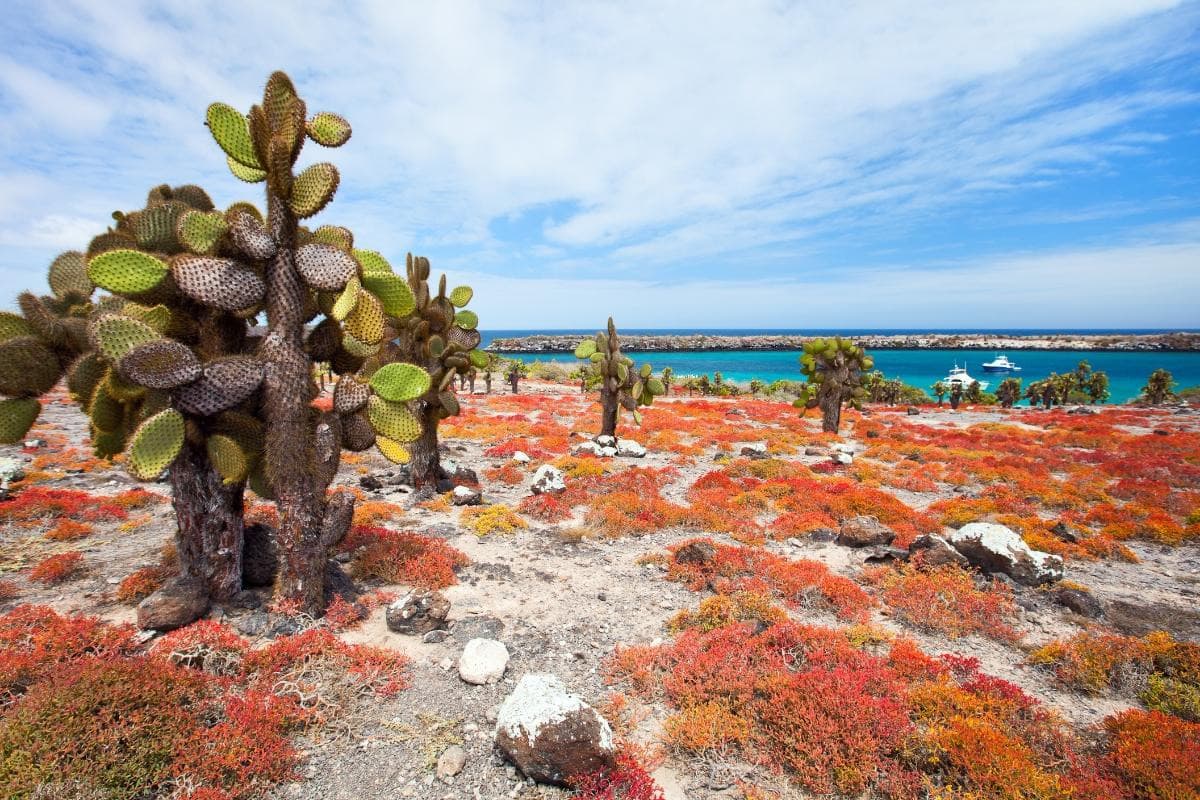
You step off the panga onto a shoreline that feels scripted for postcards: a narrow strip of white sand, a turquoise channel, and beyond it a low, wind-sculpted island draped in red. The color comes not from rock but from a small succulent—sesuvium—that turns a rusty scarlet each season and carpets entire parts of South Plaza Island like a living rug. Sea lions yawn on the rocks as if refusing to be hurried; a gang of land iguanas, anarchic and yellowed with sun, patrol the low scrub. Above, gulls and boobies wheel and call, their silhouettes cutting the bright sky.
South Plaza (Plaza Sur) does not feel like a stop on an itinerary so much as an interlude in a stranger, richer world. It’s intimate—stretching only a few hundred meters across in places—but its drama is outsized. The island’s cliffs hold nesting seabirds close to forked channels, and the land meets sea in a way that rewards both patient observation and a willingness to get wet. Punta Carrión, the little shoal off the island, is a favorite snorkeling spot; the clear channels here are often full of turtles, rays, and the sleek shapes of Galapagos sharks and white-tip reef sharks.
Geology and history are compressed on South Plaza. The Galápagos are young—volcanic islands rising from the ocean floor—and Plaza Sur is a product of that restless earth. The island’s low profile means wind and waves have shaped its edges into dramatic cliffs and narrow coves. Botanically, it’s a study in survival: low shrubs, salt-tolerant succulents and dramatic Opuntia cactus stand where richer soils never took hold. Biologically it is a mosaic, too—South Plaza is especially famous for its land iguanas and for hybrid iguanas, offspring of land and marine iguanas that have fascinated scientists for decades.
Culturally, a visit to South Plaza is inseparable from Puerto Ayora on Santa Cruz—the archipelago’s busiest town and the main jumping-off point for day trips. Naturalist guides from Puerto Ayora bring visitors here on half- and full-day excursions aboard yachts or small day boats. The Galápagos National Park tightly regulates landings, and you’ll be guided along short, well-defined trails to minimize impact. The experience is both intimate wildlife viewing and a lesson in careful stewardship: these islands exist at the meeting point of raw nature and disciplined protection.
Why go? For a short, high-density taste of what makes the Galápagos famous. In the space of a morning you can watch land iguanas root in the scrub, walk a cliff trail lined with boobies and tropicbirds, wade into clear water for a snorkeling swim with rays and turtles, and compare the behaviors of marine and terrestrial fauna. For photographers and naturalists the compression of species into a small island is irresistible—the scale lets you watch behaviors that might be scattered across larger reserves.
Practical realities: most day tours leave from Itabaca Canal on Santa Cruz and the crossing to Punta Carrión or South Plaza takes roughly 1 hour 45 minutes on typical day-tour boats. Landings are short and focused—expect an organized naturalist-led walk that lasts 45–90 minutes ashore plus time for snorkeling at Punta Carrión. Trails are short and mostly flat but exposed; wear sturdy water shoes and a sun hat. Snorkel conditions vary—calm mornings are best for visibility; bring or rent a mask and fins and consider a thin wetsuit or rashguard for comfort in cooler months.
Conservation context is never far from the surface here. The Galápagos National Park enforces strict rules: stay on the trail, avoid touching animals, never feed wildlife, and use reef-safe sunscreen. The archipelago’s ecological complexity is vulnerable to introduced species, and responsible tourism—guided visits, small group sizes, and following park regulations—are how these islands are being kept alive for future visitors.
For planning: the most accessible trips are day tours from Puerto Ayora or full itineraries that include South Plaza as one of several island landings on a multi-day cruise. The best experience ties a short, guided onshore walk with a snorkel at Punta Carrión, where the channel and nearby reefs amplify marine sightings. If you’re prone to seasickness, plan for remedies—boats can be steady but the crossing time and open water exposure mean calmer mornings are preferable.
On the trail, patience pays. Sea lions move with comic indifference but shift quickly when pups are approached; land iguanas are often stationary, sunning themselves in shallow rock hollows; and seabirds may tolerate a quietly approaching group while offering close, teachable moments—watching a fledgling struggle to flap its wings is a memory that stays. Beyond the animals, take a moment to look at the small things: the salt-scrub plants, the bleached bones at a sea lion rookery, the micro-ecology of tide pools at Punta Carrión.
If you want to stretch the visit into a broader expedition, South Plaza slots into many island-hopping itineraries that include Santa Fe, North Seymour, Bartolomé, and the marine highlights around Seymour and Bartolomé—trips that combine simple hikes with abundant snorkeling. For first-time visitors, a guided day trip that pairs South Plaza’s land walk with Punta Carrión snorkeling makes an efficient, high-impact day.
South Plaza is short on climb and long on character. It asks little in the way of exertion but asks you to slow down, watch closely, and respect the rules that keep its improbable mix of species thriving. That combination—dramatic color, close wildlife encounters, swift transitions from land to sea—makes a morning on South Plaza feel like the essence of the Galápagos: compressed, wild, instructive, and entirely unlike anywhere else on Earth.
Trail wisdom
Small choices, better day.
Bring reef-safe sunscreen
The Galápagos requires reef-safe sunscreen to protect coral and marine life—apply before boarding to avoid contaminating water on the way in.
Wear sturdy water shoes
Landings and trails are short but rocky and hot; shoes that drain and protect toes are the best choice.
Snorkel in calm conditions
Morning crossings usually offer the best visibility at Punta Carrión—plan your snorkel then for clearer water and calmer seas.
Keep distance from wildlife
Always follow your naturalist guide’s instructions—move slowly, avoid eye contact or feeding, and stay within trail boundaries.
Local knowledge
Read the place, not just the route.
Watch for native species including Land iguana, Galápagos sea lion.
Keep an eye out for wildlife during the transition between areas and habitats. Respect distance guidelines.
The Galápagos National Park enforces strict landing rules and limits; use reef-safe sunscreen, stay on trails, and support guide-led visits to reduce impact.
Follow the guide's instructions on size limits, ethical handling, and leave-no-trace practices.
The sesuvium ‘red carpet’ patches at certain viewpoints. Shallow tide-pools at Punta Carrión for close-up marine life study
Locally recommended viewpoints and quiet spots known best to local operators.
South Plaza is a product of relatively recent volcanic activity and wind-sculpting; the human history here is primarily conservation-focused since the park’s creation in the 20th century.
Maritime roots and regional tradition shape the waterways and working coasts.
Seasonal guide
Four versions of the same landscape.
Spring
Best forbird activity · milder seas · fewer crowds
Challengestransitional weather · variable visibility
Spring (around Sept–Nov transitional months) can bring cleaner skies and active birdlife, with often calmer seas for snorkeling.
Summer
Best forwarm water snorkeling · juvenile marine life · lusher vegetation
Challengesmore rain showers · hot sun
Summer (Dec–May) is warmer and greener; water temperatures are higher, making snorkeling more comfortable and marine life active.
Fall
Best forclear skies · migratory birds · pleasant hiking
Challengesvariable currents · shorter daylight
Fall (Mar–May transitional months) often delivers excellent visibility and productive snorkeling, but currents can shift quickly.
Winter
Best forseabird nesting observation · crisper light for photography · larger plankton blooms
Challengescooler water temps · garúa mist may reduce visibility
Winter (Jun–Aug) is cooler and drier with upwelling-driven productivity—great for bird colonies but bring a thin wetsuit for snorkeling.
Pack with intention
What to bring.
Good to know
Common questions.
Most day tours from Itabaca Canal in Puerto Ayora take about 1 hour 45 minutes to reach Punta Carrión or South Plaza, depending on sea conditions.
Plan the edges
The details that make the day easier.
South Plaza is one of the few places in the Galápagos where hybrid iguanas—offspring of land and marine iguanas—have been documented, illustrating the islands’ dynamic evolutionary processes.
Puerto Ayora’s waterfront offers fresh ceviche and grilled fish, artisan markets, and the Charles Darwin Research Station—an ideal place to orient before island hops.
Support operators that use naturalist guides, minimize single-use plastics, and follow the Park’s visitor limits; small-group, day-boat tours reduce ecological footprint.
Explore by topic
Follow the threads.
Keep exploring
Make the story part of the trip.
In four hours you can move from shaded canyon ferns to wind-scoured coastal ridgelines, guided by someone who knows where the light—and the hidden views—live. This private half-day hike on the Monterey Peninsula or Big Sur is compact, curated, and perfect for travelers who want depth without a multiday commitment.
 Related story
Beneath a sky of shifting light, Skaftafell’s ice reads like a map of time. This three-hour guided glacier hike mixes technical instruction with geology and culture: compact, safe, and unforgettable.
 Related story
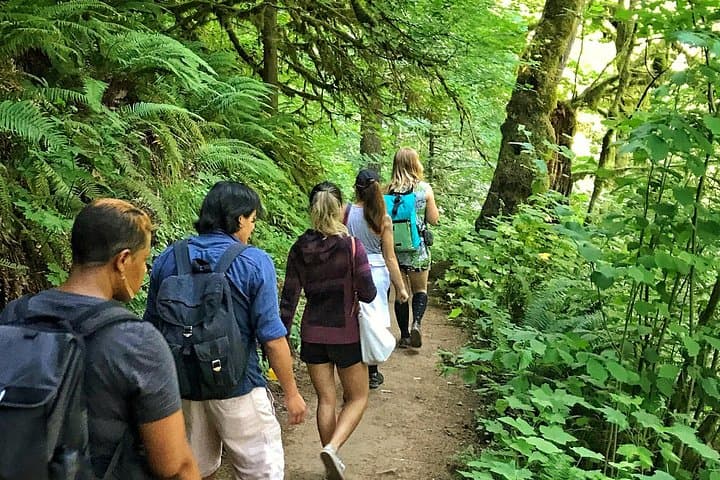
Lose the city for a few hours without leaving it: this 5-mile, 900-foot-gain Forest Park loop threads old-growth pockets, city viewpoints, and cultural landmarks for a compact taste of Portland’s wild side. Expect moss, roots, and stories.