

What the day feels like
At dawn the reservoir looks unpublished — a long, still ribbon of green cradled by low ridges and a concrete dam that feels more artifact than interruption. Cyclists clip in along the paved road that skirts the water; farther up, the trail narrows into an old service path swallowed by banyans and wind-pruned pines. The air carries a clean, mineral hush. Somewhere ahead, a stream that spent the night climbing through fern and rock says it will spill into a small waterfall. It keeps its promise.
Plover Cove Reservoir is one of Hong Kong’s quieter masterpieces: a human-made freshwater basin stitched into a coastal landscape. Built by enclosing a sea inlet with a cross-shore dam in the 1960s, it’s a place where engineering, geology and wild signage meet cleanly. Visitors who come here for the “Plover Cove Bicycling and Hiking Waterfall Adventure” — a four-hour guided loop that starts at Tai Po Market MTR Station — find a neat blend of disciplines. The ride around the water gives a sense of the reservoir’s scale; the hike into feeder highland forest uncovers the small things that make Hong Kong’s countryside feel ancient and immediate.
Geologically the Plover Cove area is an interface. Granite outcrops along the shoreline terrace down into silt and basaltic fragments, creating unexpected pockets where streams gather and plunge. The dam itself reads like a cross-section in civil-hydrology: seawall clinker, sluice gates, the sudden switch to freshwater catchment. This geology makes for fun, compact hiking — short, steep pitches, slabby rock steps, and creek beds that morph from trickles to confident cascades after rain.
Culturally, the area sits in the New Territories’ slow lane. Tai Po Market, where most guided adventures set off, is a working town with wet markets, small bakeries and teahouses. Weekends pull in families and cyclists, but the valley around the reservoir still belongs to the plants and the birds. Hong Kong’s rural custodians — small-scale farmers, local fishermen, and volunteers from hiking clubs — steward these paths and the fragile water supply that the reservoir protects.
The Plover Cove Bicycling and Hiking Waterfall Adventure is popular because it compresses all of this into a tidy, approachable outing. Expect roughly a 10–12 kilometer loop (guide-dependent) mixing paved dam-road cycling with a 2–3 kilometer forest hike into the stream-fed highlands; total elevation gain is moderate, in the order of 200–350 meters, with uneven, sometimes rocky footpaths. The trail leads to small natural pools and a seasonal waterfall — minor as waterfalls go, but atmospheric: water daring you to linger on a warm day and test its chill.
Why go now? For starters, this route is a primer in contrast. You’ll shift from steady biking rhythm to a low-stepping scramble, trade open sky for cathedral canopy, and swap the engineered scale of the reservoir for the intimate architecture of leaves and stone. It’s social but not crowded; even on busy days there’s room to breathe. For photographers and nature lovers, the mix of dam vistas and shaded stream corridors offers variety in a short window of time.
Practicalities matter here. Tours start and end at Tai Po Market MTR Station, an easy public-transport jump from central Kowloon or Hong Kong Island. The guided format usually includes bikes and helmets, route planning, and a local’s eye for the waterfalls that might be dry in a long drought. Because this is a reservoir catchment area, swimming in the main reservoir is prohibited; natural pools in the higher feeders are seasonal and best enjoyed with minimal impact.
Timing is simple: start early in cooler months to avoid midday sun, or mid-morning in late autumn when the light brings out color in the valley. Footwear should be sticky and supportive — think trail shoes rather than road cycling cleats for the hiking segment. Bring a hydration system and slip-on layer: coastal hills can flip from warm to wind-whipped across a single stream crossing.
On the trail, read the landscape. Granite slabs will show you the path when the dirt fades; moss and lichen indicate stable, wetter microhabitats where frogs and dragonflies like to hang. Birdsong is a reliable cue — if the forest goes silent, pause; you’re likely to spot an egret on the water’s edge or a kingfisher that won’t tolerate slow hands.
If you want to make the day leaner and more local, linger in Tai Po afterward. The market’s noodle shops and seafood stalls reframe the countryside in the language of flavor: salt-air prawns, simple steamed fish, and tea houses that are unapologetically functional. Leave no trace while you explore; the reservoir is both a recreational resource and a working piece of infrastructure.
For travelers used to Hong Kong’s skyline, Plover Cove is a reminder that the territory’s edges are as instructive as its towers. The Plover Cove Bicycling and Hiking Waterfall Adventure turns a single morning into a study of gradients — of slope, sound and intention. It’s an accessible, restorative outing that rewards attention. Bring sensible shoes, a willingness to get quiet, and a camera for the dam at golden hour; the rest, like the stream, will push you forward.
Trail wisdom
Small choices, better day.
Start at Tai Po Market early
Beat the heat and crowds by meeting your guide at Tai Po Market MTR Station by 8:00 AM; morning light is best on the dam.
Wear grippy trail shoes
The hike includes short rocky scrambles and wet creek beds—trail shoes give traction on mixed terrain.
Carry at least 1.5 liters of water
There are no reliable refill stations on the hike; a hydration bladder or insulated bottle keeps you going.
Respect the catchment rules
Avoid swimming in the main reservoir and pack out all trash—this area protects Hong Kong’s freshwater supply.
Local knowledge
Read the place, not just the route.
Watch for native species including egrets and herons along the shoreline, kingfishers and dragonflies near shaded streams.
Keep an eye out for wildlife during the transition between areas and habitats. Respect distance guidelines.
The reservoir is an active freshwater catchment; stick to marked trails, avoid contaminating water sources, and follow local guidance to minimize impact.
Follow the guide's instructions on size limits, ethical handling, and leave-no-trace practices.
Tai Mei Tuk dam viewpoint — a quieter vantage point for sunrise over the reservoir. Hidden feeder pools upstream of the main trail that form after sustained rain (seasonal)
Locally recommended viewpoints and quiet spots known best to local operators.
Plover Cove Reservoir was partly created by enclosing a sea inlet in the 1960s, one of the world’s early projects to convert a cove into a freshwater reservoir to supply Hong Kong.
Maritime roots and regional tradition shape the waterways and working coasts.
Seasonal guide
Four versions of the same landscape.
Spring
Best forwildflower displays · cool hiking · birdwatching
Challengesmuddy trails after rains · mosquitoes in low-lying pools
Spring brings blossoming understory and active birdlife; expect damp ground and dress with insect protection.
Summer
Best forlush waterfalls · early-morning rides · tropical greenery
Challengesheavy rain and thunderstorms · high humidity and leeches after downpours
Summer offers the fullest waterfalls but also sudden storms — plan early starts and check weather forecasts.
Fall
Best forcomfortable cycling · clear water views · photography at golden hour
Challengespopular weekends can be busy · cooler mornings require layers
Autumn is ideal: milder temperatures and clearer skies make it the best overall season for this loop.
Winter
Best forquiet trails · crisp vistas · long-distance clarity
Challengescool winds on the dam · lower waterfall flow
Winter yields crisp air and fewer crowds; waterfalls can be reduced to trickles, but the light is excellent for photos.
Pack with intention
What to bring.
Good to know
Common questions.
Most tours meet at Tai Po Market MTR Station; from central Hong Kong take the East Rail Line north to Tai Po Market and follow the meeting-point instructions provided by the operator.
Plan the edges
The details that make the day easier.
Plover Cove was one of the first major projects worldwide to convert a sea inlet into a freshwater reservoir, with construction beginning in the 1950s and completion in the 1960s to expand Hong Kong’s water supply.
Pair the hike with a Tai Po Market lunch — fresh seafood stalls and noodle houses capture the New Territories’ straightforward culinary traditions; local cycling clubs often meet here on weekends, making it a social hub for outdoors people.
- finish
- Tai Po Market MTR; Duration: ~4 hours; Difficulty: Moderate; Bring: Helmet, water, trail shoes; Note: No swimming in main reservoir.
Stick to marked trails, avoid soaps or detergents in streams, and support local guides who practice low-impact touring to protect the catchment.
Explore by topic
Follow the threads.
Keep exploring
Make the story part of the trip.
In four hours you can move from shaded canyon ferns to wind-scoured coastal ridgelines, guided by someone who knows where the light—and the hidden views—live. This private half-day hike on the Monterey Peninsula or Big Sur is compact, curated, and perfect for travelers who want depth without a multiday commitment.
 Related story
Beneath a sky of shifting light, Skaftafell’s ice reads like a map of time. This three-hour guided glacier hike mixes technical instruction with geology and culture: compact, safe, and unforgettable.
 Related story
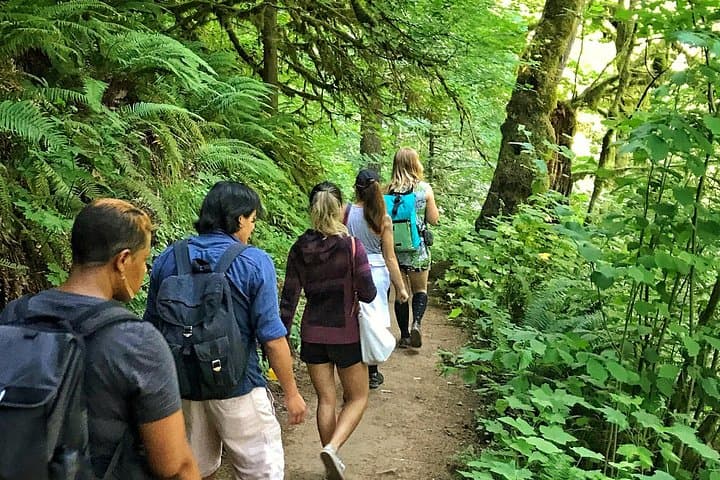
Lose the city for a few hours without leaving it: this 5-mile, 900-foot-gain Forest Park loop threads old-growth pockets, city viewpoints, and cultural landmarks for a compact taste of Portland’s wild side. Expect moss, roots, and stories.