
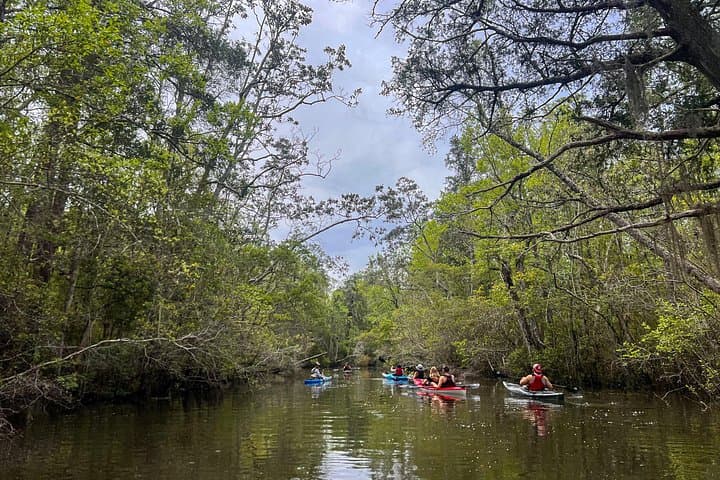
What the day feels like
You push off into glassy water and the modern world slips behind you. Cypress knees poke from the ink-dark surface like a submerged cathedral; sunlight threads through a leafy vault and scatters on ripples your paddle makes. For the next two to three hours you move on a slow, deliberate axis: 4.5 miles of backwater channels, shady bends and the kind of hush that makes you notice small things — a sun-warmed turtle flipping its shell toward the sky, the rattling-soprano of a kingfisher, leaves ticking as a breeze edges through the canopy. This is the Yellow River in the Florida Panhandle, and the best way to meet it is by kayak on the Yellow River Swamp Tour.<a href="https://app.advcollective.com/local-experts/yellow-river-swamp-kayak-tour-serene-4-5-mile-paddling-through-florida-cypress"> Book the Yellow River Swamp Kayak Tour</a> and you’ll be guided through a maze of calm channels intentionally slow, intentionally quiet — a deliberate antidote to crowds, engines and the shallowness of big-surf beach days.
The water here has a patient geography. Over millennia, the Yellow River carved a course through coastal plain sediments, depositing tannin-rich waters from cypress and tupelo swamps into bays and sounds. What you see on the surface is only part of the story; below are root systems that stabilize banks and slow storms, and microhabitats that support freshwater fish, migratory birds and the occasional shy alligator. This part of northwest Florida is where riverine swamp meets the coast — a liminal zone with an amplified sense of place.
Human history along the river runs deep. Indigenous peoples navigated and fished these channels long before European maps reached the peninsula; later, the river corridor served as a quiet conduit for small-boat travel and local subsistence. Today the Yellow River’s stewards include rural communities and conservation groups working to balance recreation with protecting fragile swamp ecosystems. Your guide on the tour will usually share local lore, point out plant names, and explain how seasonal flows change the feel of the river.
The paddling itself is straightforward: stable sit-on-top kayaks, basic guidance, and a series of sheltered channels that make navigation intuitive. The experience is fundamentally about presence rather than adrenaline — a measured journey where the environment exerts its own timing. If you’re quiet, wildlife often volunteers a show: turtles warming on logs, egrets stalking mudflats, and occasionally a black bear or otter at the water’s edge. Alligators are rare on these guided outings but present in the system; guides emphasize respectful distance and common-sense awareness.
Why go here rather than a crowded beach? The Yellow River offers introspective immersion. Paddling through the cypress tunnels and open sloughs feels like pressing slow-forward on the region’s natural rhythms. For photographers, it is a dream of high-contrast scenes and reflections; for parents, a safe, contained way to introduce kids to paddling; for anyone exhausted by the hum of modern life, a deliberate chance to recalibrate.
Practical realities matter. The tour is a 4.5-mile paddle typically lasting two to three hours and is led by guides who supply kayaks, paddles and PFDs. You’ll get a short orientation at the launch, a paced route that includes a snack break about halfway, and easy re-entry back at the put-in. Terrain is flat and the water is sheltered, so expect low technical difficulty but bring basic fitness — continuous paddling for a couple of hours benefits from a little arm and core strength.
Timing changes the trip. Spring migratory birds and blooming swamp understory make for lively natural history; summer brings lush green canopies but also higher heat and bugs; fall cools things down and sharpens colors; winter offers quiet, cooler paddles and the chance for clearer light. Guides typically run tours year-round, but conditions and wildlife vary.
Safety and respect are part of the itinerary. Hydrate pre-trip, wear sun protection and close-toed water shoes, and follow your guide’s instructions when wildlife appears. The tour operator provides the boats and safety gear, and local knowledge is part of the value: guides know where currents slacken, which channels are scenic, and how to read the water.
If you go, pair the paddle with coastal comforts: grab a seafood dinner in Destin afterward, or find a local brewery for a low-key evening beer. The river rewards slow travel — take your time getting there, leave no trace, and treat the swamp with the courtesy you’d give any fragile old-growth place. For travelers wanting a serious but accessible outdoor day, the Yellow River Swamp Tour delivers a balanced dose of calm, wildlife and local insight. To reserve your spot and get full logistical details, check this guided option: <a href="https://app.advcollective.com/local-experts/yellow-river-swamp-kayak-tour-serene-4-5-mile-paddling-through-florida-cypress">Yellow River Swamp Kayak Tour</a>. Your reward is simple: a few hours on water that asks only for quiet attention, and gives back a different pace of Florida life.
Trail wisdom
Small choices, better day.
Hydrate Before You Paddle
Carry at least 1 liter of water per person in a reusable bottle and sip frequently; sheltered shade can mask how quickly you dehydrate.
Choose Proper Footwear
Wear close-toed water shoes or sandals with straps — the launch can be muddy and submerged roots are common near shore.
Bring Insect Protection
Apply DEET or picaridin before launch and bring a small tube of insect repellent for mid-trip reapplication on calm days.
Listen to Your Guide
Guides know current patterns and wildlife behavior — follow instructions for safe viewing distances, especially around nesting sites or lurking alligators.
Local knowledge
Read the place, not just the route.
Watch for native species including Freshwater turtles, Wading birds (egrets, herons).
Keep an eye out for wildlife during the transition between areas and habitats. Respect distance guidelines.
This swamp is ecologically sensitive; operators and guides encourage staying on water, avoiding trampling banks, and packing out all trash to protect shoreline habitats.
Follow the guide's instructions on size limits, ethical handling, and leave-no-trace practices.
Shallow cypress tunnels where reflections create mirror-like photos. A quiet sandbar downstream used as a snack and wildlife-watching stop
Locally recommended viewpoints and quiet spots known best to local operators.
The Yellow River corridor has long supported Indigenous travel and subsistence fishing; later it became a quiet conduit for local rural communities in northwest Florida.
Maritime roots and regional tradition shape the waterways and working coasts.
Seasonal guide
Four versions of the same landscape.
Spring
Best forMigratory birds · Wildflowers & fresh green canopy
ChallengesHigher flows after rains · Unpredictable weather systems
Spring brings migratory birds and fresh growth; expect active wildlife and occasional rain showers that can change water levels.
Summer
Best forLush foliage · Warm water paddling
ChallengesHeat and humidity · Increased insect activity
Summer offers dense foliage and warm paddling but plan for early starts, strong sun, and prepare for mosquitoes.
Fall
Best forCooler temperatures · Clearer light for photos
ChallengesShorter daylight hours · Possibility of tropical storms late season
Fall delivers comfortable temperatures and crisp light; late-season storms can affect schedules so keep an eye on forecasts.
Winter
Best forQuiet, fewer crowds · Sharp, low-angle light
ChallengesCooler water and air temperatures · Less greenery
Winter paddles are quieter and cooler; dress in layers and bring wind protection for exposed stretches.
Operator details
What the booking data adds.
Included
- ✓All necessary kayaking gear including; Kayak, PFD, & paddle
- ✓Bottled water
- ✓Snacks
Not included
- —Not required but greatly appreciated
Good to know
- ✓Service animals allowed
- ✓Infants are required to sit on an adult’s lap
- ✓Suitable for all physical fitness levels
Pack with intention
What to bring.
Good to know
Common questions.
The route is roughly 4.5 miles and typically takes 2–3 hours; it’s rated moderate — sheltered water and stable kayaks make it accessible but expect continuous paddling for stretches.
Plan the edges
The details that make the day easier.
The Yellow River basin supports a mix of cypress-tupelo swamp and coastal plain habitats, creating crucial nursery areas for fisheries and diverse birdlife.
After your paddle, head into Destin for fresh Gulf seafood — try grilled snapper or a bowl of shrimp gumbo at a local waterfront restaurant, then check out a nearby craft brewery for a relaxed post-paddle pint.
- Closest airport
- Destin-Fort Walton Beach Airport (VPS); Typical driving time from Destin: 15–30 minutes to launch points; Cell service: intermittent in swamp channels; Permits: none for guided tours, operator provides kayaks and PFDs.
This river corridor supports sensitive swamp habitats — stay on water, avoid disturbing shoreline vegetation, pack out all trash, and follow guide instructions to minimize impact.
Explore by topic
Follow the threads.
Keep exploring
Make the story part of the trip.
In four hours you can move from shaded canyon ferns to wind-scoured coastal ridgelines, guided by someone who knows where the light—and the hidden views—live. This private half-day hike on the Monterey Peninsula or Big Sur is compact, curated, and perfect for travelers who want depth without a multiday commitment.
 Related story
Beneath a sky of shifting light, Skaftafell’s ice reads like a map of time. This three-hour guided glacier hike mixes technical instruction with geology and culture: compact, safe, and unforgettable.
 Related story
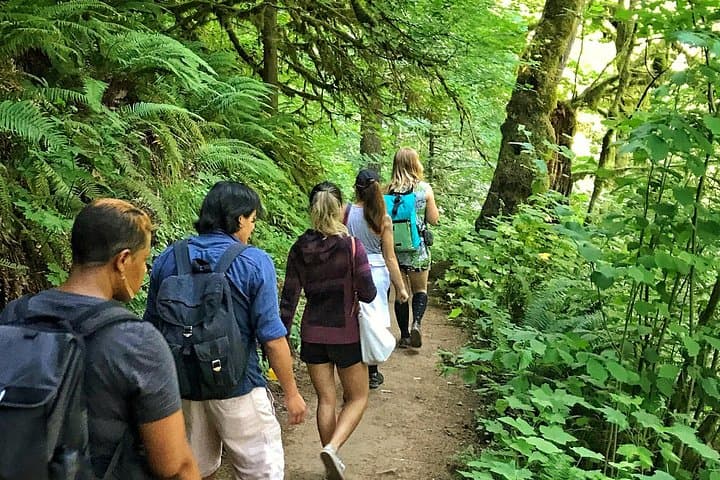
Lose the city for a few hours without leaving it: this 5-mile, 900-foot-gain Forest Park loop threads old-growth pockets, city viewpoints, and cultural landmarks for a compact taste of Portland’s wild side. Expect moss, roots, and stories.