
What the day feels like
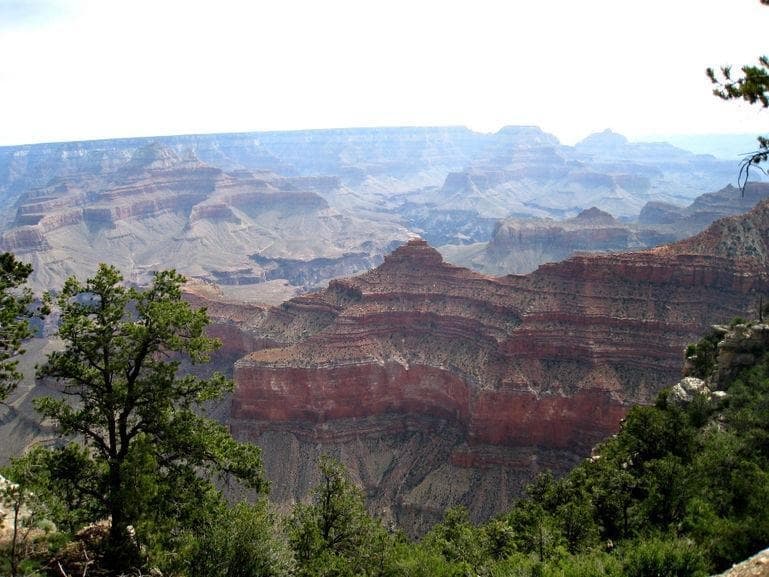
You arrive before the buses and the bright American sun: the rim is a cold, hard line against the sky, and the canyon yawns below like a map folded into itself. At Bright Angel Point the air has the thin clarity of high places — each breath feels sharper, a reminder that this ledge sits where ponderosa pines trade stories with wind. The trail from the North Rim lodge is short and doesn’t ask much of your legs, but it asks everything of your attention. Rocks have dropped away in layers and the view keeps handing you new ones — stacked plateaus, a ribbon of green river you can only imagine, and the canyon’s colors sliding from rust to purple as the morning moves.
Bright Angel Point is a study in scale. The viewpoint is compact — a half-mile round-trip, nearly paved, a wide promenade that ends at a squat outcrop. But small as the walk is, it puts you at the lip of geologic time. Look down and you can read the canyon like a vertical library: Kaibab limestone near the rim, then the Permian layers, then older redbeds and Precambrian basement rocks near the river. The effect is immediate: you feel both insignificant and wired to something much older than roads or towns.
Geology is the canyon’s native language. Over six million years the Colorado River and its tributaries carved the Grand Canyon, exposing 1.8 billion years of Earth’s history. Bright Angel Point sits on the North Rim, a higher, quieter sibling to the more-visited South Rim. The North Rim sits at roughly 8,000 feet elevation — roughly 1,000 feet higher than the South Rim — which changes everything: temperature, vegetation, and the soundtrack. Here, conifers creak and Kaibab squirrels flick tails while mule deer browse the understory. The canyon’s geology becomes a theater of light, shifting through the day as sunlight works like a slow hand over stone.
Human stories thread through the landscape as well. Indigenous peoples have known and moved through the canyon for millennia; the Havasupai, Hopi and Hualapai have deep cultural ties to these cliffs and waters. Later, explorers, miners, and early park promoters wrote their chapters across the rim. Bright Angel Point itself is a product of the park era: a deliberately short, interpretive walk that delivers the canyon’s grandeur without a long backcountry commitment. It’s where families, day-trippers, and keen photographers collide.
That mix explains why many travelers choose a guided approach. Full-day coach tours from Las Vegas or Sedona condense the logistics of traveling to the North Rim and the South Rim into a single, narratively rich day. Options range from deluxe motorcoach trips with stops at Mather Point and Bright Angel Trail to small-group sprinter-van tours that prioritize flexibility, fewer people at viewpoints, and time saved on driving. For those who want to layer experiences, add-ons like short helicopter flights or IMAX introductions to canyon geology turn a simple day trip into a multi-sensory primer on why the canyon grips the imagination.
Practicalities matter. Bright Angel Point Trail is about 0.5 miles round-trip, mostly flat but exposed. Expect loose sand, native stone, and a short, narrow promontory at the end. Elevation makes the sun stronger and the air thinner; you may feel breathless after even modest exertion. In summer monsoon season, thunderstorms can arrive fast and with little warning — avoid the exposed rim in a storm. The North Rim is seasonal: services and lodging are typically open from mid-May through mid-October; outside that window the road is usually closed by snow.
For a morning visit, aim to arrive at dawn or just before. The light softens the canyon’s palette and crowds are still being brewed in coffee lines. Midday is harsh; late afternoon softens contrasts again and sometimes delivers dramatic shadows that photographers love. Bring layers for temperature swings — mornings can be crisp even in July, and evenings on the rim cool quickly.
If you’re basing out of Las Vegas or Sedona, expect long driving days unless you fly closer and overnight at the park lodges. Many visitors opt for guided day tours that handle the pickup and narration: these tours generally include two or three canyon viewpoints, a stop at visitor centers, and time at rimwalks like Bright Angel. Small-group options are worth the premium if you value fewer passengers and a more flexible schedule.
Leave no trace is not just a slogan here. The North Rim’s forests are fragile and its wildlife accustomed to human rhythms; keep your distance, pack out trash, and stick to designated viewpoints. The park protects both the geology on display and the ecosystems clinging to the rim.
At Bright Angel Point, the canyon doesn’t shout; it waits. The edge is a place of composed drama: wind that seems to rearrange your thoughts, sun that finds some strata and not others, and if you sit long enough, the quiet conversation of birds and pine needles. It’s the kind of place that makes you recalibrate priorities — even for a short visit. Whether you reach it on your own or as part of a packaged tour, Bright Angel Point delivers a concentrated, unforgettable taste of the Grand Canyon: immediate, humbling, and strangely precise in its ability to make you look deeper.
Trail wisdom
Small choices, better day.
Acclimate to altitude
Bright Angel Point sits near 8,000 ft; move slowly on arrival and hydrate to avoid lightheadedness.
Time your visit
Aim for dawn or late afternoon for softer light and fewer people; midday is harsh and crowded.
Dress in layers
Temperatures swing rapidly from morning to afternoon — pack a windproof layer and hat.
Respect wildlife
Keep a safe distance from mule deer and Kaibab squirrels and never feed animals.
Local knowledge
Read the place, not just the route.
Watch for native species including Kaibab squirrel, Mule deer.
Keep an eye out for wildlife during the transition between areas and habitats. Respect distance guidelines.
The North Rim’s fragile high-elevation forests are particularly sensitive to trampling and fire; stick to paved viewpoints, pack out trash, and follow park regulations to minimize impact.
Follow the guide's instructions on size limits, ethical handling, and leave-no-trace practices.
Point Imperial — the highest viewpoint on the North Rim with striking first-light vistas. Cape Royal — a quieter overlook offering panoramic views of the river bends and eastern canyon
Locally recommended viewpoints and quiet spots known best to local operators.
The North Rim was developed later than the South Rim to offer a quieter vantage; early 20th-century conservationists helped establish park infrastructure to protect the canyon’s geology and forests.
Maritime roots and regional tradition shape the waterways and working coasts.
Seasonal guide
Four versions of the same landscape.
Spring
Best forWildflowers · Cooler temperatures · Fewer crowds
ChallengesVariable weather · Snow linger early season
Spring brings wildflower flushes and cool air, but higher-elevation snow can keep some North Rim services delayed.
Summer
Best forFull park services · Hiking access · Long daylight
ChallengesThunderstorms/monsoon · High visitor numbers
Summer is the primary season for North Rim access and tours, but afternoon storms and crowded viewpoints are common.
Fall
Best forCrisp air · Autumn color in pines · Light crowds
ChallengesShortening days · Lodging begins to close late season
Early fall offers cool, clear weather and thinner crowds; services start reducing after mid-October.
Winter
Best forSnow photography · Solitude · Unique perspectives
ChallengesRoad closures · Limited services
Winter delivers stark, snowy views but the North Rim road is typically closed; plan for closures and limited access.
Pack with intention
What to bring.
Good to know
Common questions.
The trail is approximately 0.5 miles round-trip and takes about 30–60 minutes depending on stops and photography.
Plan the edges
The details that make the day easier.
Bright Angel Point sits on the Grand Canyon’s North Rim at roughly 8,000 feet elevation — about 1,000 feet higher than the South Rim — producing cooler temperatures and different vegetation.
Meals at the North Rim Lodge lean toward hearty, lodge-style offerings; conversations at the rim often mix stories from local rangers, Native American guides, and long-haul road trippers — it’s a place where conservation meets hospitality.
- Location
- North Rim, Grand Canyon NP | Trail: 0.5 mi RT | Elevation: ~8,000 ft | Access: seasonal (mid-May–mid-Oct) | Facilities: lodge, visitor center, restrooms (seasonal)
Use established trails and viewpoints, avoid single-use plastics, and support park fees which fund habitat protection and visitor services.
Explore by topic
Follow the threads.
Keep exploring
Make the story part of the trip.
In four hours you can move from shaded canyon ferns to wind-scoured coastal ridgelines, guided by someone who knows where the light—and the hidden views—live. This private half-day hike on the Monterey Peninsula or Big Sur is compact, curated, and perfect for travelers who want depth without a multiday commitment.
 Related story
Beneath a sky of shifting light, Skaftafell’s ice reads like a map of time. This three-hour guided glacier hike mixes technical instruction with geology and culture: compact, safe, and unforgettable.
 Related story
Lose the city for a few hours without leaving it: this 5-mile, 900-foot-gain Forest Park loop threads old-growth pockets, city viewpoints, and cultural landmarks for a compact taste of Portland’s wild side. Expect moss, roots, and stories.