
What the day feels like
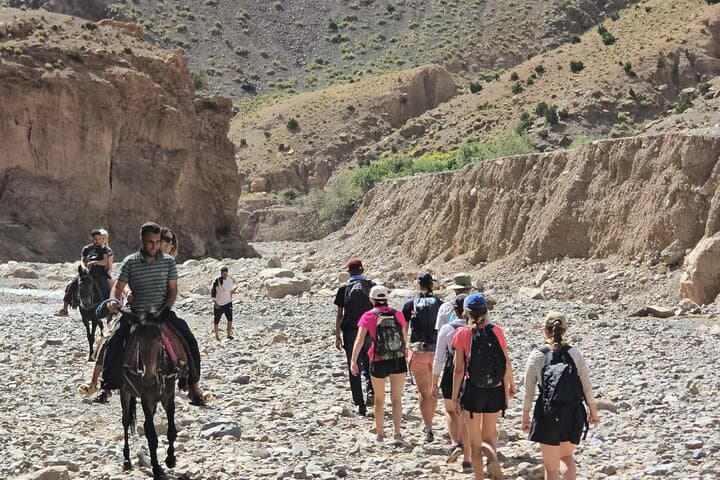
At first light the gorge breathes: a ribbon of river that dares you to follow it upstream, canyon walls warming from ochre to molten copper as the sun climbs. Your day begins with a 4x4 slipping over washboard tracks, each turn revealing another carved terrace, another squat kasbah hugged to a slope like an old secret. The driver talks quietly about places, pointing to cave openings where women still hang hand-woven rugs to dry—small flags of domestic life against a dramatic, geological backdrop. Then the mules arrive: patient, sure-footed, and suddenly the landscape feels older and slower.
This is a day where the High Atlas announces itself in texture and human scale. The route, stitched between Dades Gorge and the M'Goun valleys, threads Achaabou Gorge and climbs into remote hamlets reachable only by hoof or foot. The heart of the experience is a roughly 4-hour mule trek that carries travelers 6–10 km through terraced fields, past river pools, and into valleys where daily life persists with minimal change. Elevation varies with the route—expect several hundred meters of gain overall on switchback tracks—but the mules shoulder much of that work, leaving you to drink in the views.
Geology and history are inseparable here. The gorge exists because water insisted on a path; over millennia the river carved narrow passages through red sandstone, shale, and conglomerate to create the dramatic cliffs and hairline canyons you see today. Look closely and you'll find layers holding the memory of ancient seas and shifting tectonic plates. Human history has adapted to that geology: mudbrick kasbahs, stone terraces, and cave dwellings turn steep slopes into manageable agricultural plots. Many of the people you meet are Amazigh—better known as Berber—whose language, crafts, and hospitality give texture to every stop.
Cultural exchange is the core of the day. Hosts in cave dwellings will invite you to sit on low benches for poured mint tea—sweet, emphatic, and offered as a gesture that signals acceptance. Your guide will translate stories about seasonal grazing patterns, the communal rotation of fields, and the practicalities of living where water still dictates the calendar. A picnic by the river is as much a meal as a lesson: flatbreads, preserved olives, salads, and a tagine simmered with local vegetables and spices—simple flavors that feel true to the land.
Why travel here? Because the trip balances drama with intimacy. The 4x4 section gives you cinematic sweep—boulder-strewn valleys, moonscapes, sudden olive groves—while the mule trek narrows your focus to trail-level details: the froth of a spring, a shepherd's dog sliding down a bank, the workworn hands threading a loom. It’s an active cultural immersion: you will move through the same corridors locals use and gain a feel for how remote mountain life persists.
Practical edge: the tour runs roughly 10 hours (8:00–18:00) with return transfers included and is typically priced from around USD 81. A moderate level of fitness is helpful; while mules do the heavy lifting, you should be comfortable walking uneven terrain for short stretches and mounting/dismounting the animals. Footwear with good ankle support, a sun hat, and at least 2 liters of water are non-negotiable. Weather shifts quickly in the mountains—bring layers—and start early to avoid midday heat and to catch the canyon walls as they change color.
On the environmental side, this is a landscape that still relies on fragile water sources and seasonal agriculture. Respecting local customs, minimizing waste, and supporting community-run enterprises or local guides directly benefits the families you meet. The tourism footprint here can be small and meaningful when routed through trusted operators who share revenue locally.
If your idea of adventure is a day that stitches together off-road thrills, slow cultural exchange, and the tactile sensation of following a river upriver, this trek delivers. You’ll come home with a handful of photos—sharp ridgelines, a mule’s profile against a serrated horizon—and a handful of stories: a shepherd urging his flock, a woman offering tea, the way a valley keeps its own weather. The landscape is not just a backdrop; it shapes the people and the pace of life, and for a day it will shape yours too.
Logistics and readiness matter: choose a guide who respects both mountain safety and local customs, arrive with solid footwear and sun protection, and plan for spotty cell service. Do that, and the gorge will open—quietly, insistently—like a book you’ll want to reread.
Trail wisdom
Small choices, better day.
Hydrate before you go
Bring at least 2 liters of water and refill when possible—mountain air and sun will dry you out faster than you expect.
Choose sturdy boots
Wear ankle-supporting footwear for uneven mule tracks and short walking sections.
Dress modestly and carry a scarf
Respect local customs in villages—cover shoulders and knees; a scarf also shields from dust and sun.
Pack light for the mule
Limit your daypack to essentials—camera, water, snacks, layers—extra weight makes mule saddles tight.
Local knowledge
Read the place, not just the route.
Watch for native species including Barbary sheep (Aoudad), Griffon vultures.
Keep an eye out for wildlife during the transition between areas and habitats. Respect distance guidelines.
Water is scarce and vital here—pack out all trash, avoid single-use plastics, and book local guides to ensure tourism benefits village communities.
Follow the guide's instructions on size limits, ethical handling, and leave-no-trace practices.
Achaabou Gorge viewpoints above the picnic spot. Small terraced orchards where locals sell homemade preserves
Locally recommended viewpoints and quiet spots known best to local operators.
The M’Goun region has been inhabited by Amazigh (Berber) communities for centuries; its terraces and cave dwellings reflect millennia of adaptation to a rugged landscape.
Maritime roots and regional tradition shape the waterways and working coasts.
Seasonal guide
Four versions of the same landscape.
Spring
Best forWildflowers and green terraces · Comfortable trekking temperatures
ChallengesOccasional spring showers · Snowmelt can swell streams
Spring (April–May) brings wildflower flushes and flowing rivers—ideal for color and pleasant hiking weather, though expect occasional rain.
Summer
Best forLong daylight hours · Dry trails
ChallengesHigh daytime heat · Strong sun exposure
Summer is dry with long days; start early to avoid heat and carry ample water and sun protection.
Fall
Best forWarm afternoons and crisp mornings · Harvest activity in valleys
ChallengesCool nights · Variable weather at altitude
Autumn offers stable weather and harvest-time activity in terraces—layers are essential for temperature swings.
Winter
Best forSnow-capped peaks and quiet trails · Dramatic light contrast
ChallengesCold temperatures and snow at higher elevations · Limited accessibility on some roads
Winter can be beautiful but colder and sometimes snowy—roads and mule routes may be more difficult; dress warmly.
Pack with intention
What to bring.
Good to know
Common questions.
The guided mule trek runs about 4 hours and covers several valley kilometers with moderate elevation changes; actual distance depends on the day's route.
Plan the edges
The details that make the day easier.
Jebel M'Goun (Mount Mgoun) is Morocco's second-highest peak at about 4,071 meters—its massif and surrounding valleys create a distinct high-altitude ecosystem.
After the trek head back to Boumalne Dades for a tagine and mint tea in a local guesthouse; browse small stalls for woven rugs or argan oil products, and if time allows, visit a nearby kasbah for sunset views.
- Closest airport
- Ouarzazate (OUZ) or Marrakech (RAK) for international arrivals; driving distance: 1–3 hours from regional hubs depending on start point; cell service: intermittent in valleys; permits: none typically required—book through licensed local operators.
Support local guides, avoid single-use plastics, stick to trails to protect fragile terraces, and ask before photographing people—consent supports respectful travel.
Explore by topic
Follow the threads.
Keep exploring
Make the story part of the trip.
In four hours you can move from shaded canyon ferns to wind-scoured coastal ridgelines, guided by someone who knows where the light—and the hidden views—live. This private half-day hike on the Monterey Peninsula or Big Sur is compact, curated, and perfect for travelers who want depth without a multiday commitment.
 Related story
Beneath a sky of shifting light, Skaftafell’s ice reads like a map of time. This three-hour guided glacier hike mixes technical instruction with geology and culture: compact, safe, and unforgettable.
 Related story
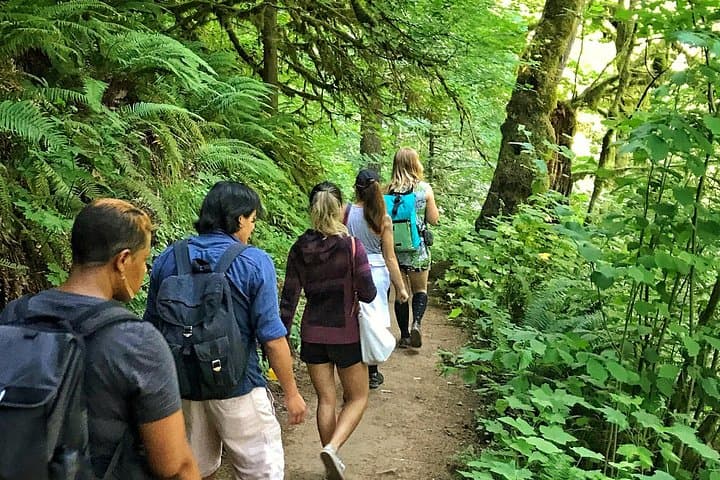
Lose the city for a few hours without leaving it: this 5-mile, 900-foot-gain Forest Park loop threads old-growth pockets, city viewpoints, and cultural landmarks for a compact taste of Portland’s wild side. Expect moss, roots, and stories.