
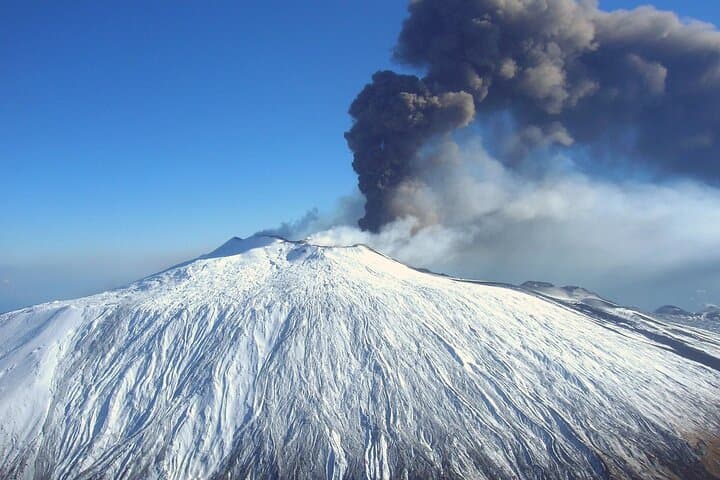
What the day feels like
You round the last hairpin above a black field of glassy rock and the mountain opens like a page you’ve been meaning to read. Wind nips at your hood; below, a ribbon of green—the Alcantara River—insists on carving a path through what looks at first like an endless scar of basalt. The guide points to a band of columnar rock that stacks like giant organ pipes and says, simply: this used to be molten. It still feels like it is.
This is the rhythm of an eight-hour day on Sicily’s volcanic north slope. The full-day Tour to Etna North Base and Alcantara Gorges moves with that push-and-pull: high, raw panoramas on Piano Provenzana and cool, narrow waterways where the Alcantara dares you to step closer. You cross small towns—Calatabiano, Castiglione di Sicilia, Linguaglossa—that look older than the maps that name them. Voices crack like dry sticks in the cafés; black lava rock frames terraced vineyards where Etna DOC grapes make wines that taste of ash and sun.
Geology runs the show here. When lava met water, it chilled in vertical fractures and birthed the hexagonal columns that make Alcantara’s gorges feel like a man-made cathedral. Mount Etna, Europe’s most active volcano, is not a static monument but a living landscape—smoke, new flows, and fresh rock are all part of the itinerary’s backdrop. Culture is folded into that geology: villages have learned to farm, build, and celebrate on volcanic soil, and the botanical and geological park at the gorge is as much a lesson as it is a staging point for lunch and tasting local products.
What distinguishes this outing from a generic sightseeing loop is the pace—the slow exposure to two very different modes of terrain. In the morning you climb (or drive) into lunar fields around Piano Provenzana, where scrub and resilient pines annotate the lava. The wind changes the soundscape; silence enlarges. In the afternoon, you descend into the Alcantara Gorges, use the elevator to reach the canyon floor, and find a river that cools heat-warped senses. Ice-clear cascades push at boulders, and basalt columns stand like sentries along the water’s edge.
Practical travelers will appreciate the itinerary’s clarity. The tour runs roughly eight hours, giving time to stop in scenic medieval towns for espresso, sample cheeses and organic honey at the botanical park, and still linger where the canyon narrows. Expect short, uneven walking; steps and slick surfaces in the gorge; and stretches of loose volcanic rock at higher elevations. The guide’s local knowledge—when to walk, where to eat, which vineyards offer a proper Etna rosato—turns a natural history lesson into a seamless day on the mountain.
Timing is everything. Spring and early summer bring wildflowers and milder temperatures on the slopes; late summer can bake the lava fields, and winter becomes a high-country experience with snow on Etna’s ridges. Mid-morning departures capture the best light on the basalt cliffs and avoid the midday crush in the Alcantara parking lots. Sturdy footwear matters: trail shoes with good tread make the basalt slick and the river stones less treacherous. Hydration is not optional—bring a liter for the morning and plan to top up at village cafés.
If you want stories with your scenery, ask about recent flows and the towns that rebuilt after eruptions. The Alcantara’s elevator access is a small but decisive convenience—without it, the gorge’s steep sides are a tougher descent. The tour is priced accessibly (from around US$60) and is structured for instant confirmation, which suits travelers closing plans from a base in Taormina or Catania. For a deeper dive, linger afterward at a family-run agriturismo for an Etna DOC glass and a plate of pasta made from local wheat; the soil here flavors both wine and dinner.
On a practical note: bring a light layer for wind on the mountaintop, a waterproof shell if you plan to get near the river, and a camera with a wide-angle lens—the columns demand context. If you want to stretch the day into an overnight, pick a B&B in Castiglione di Sicilia and wake to vineyard views backed by the mountain.
For those who come to test their pace and curiosity, this tour balances drama with accessibility. The lava fields are merciless and magnificent in equal measure; the Alcantara’s cold current is an honest, immediate counterpoint. Together they make a day that feels like a cross-section of Sicily itself: elemental, cultivated, and thoroughly alive. Book a seat, bring sensible shoes, and let the mountain and the river do the rest. For details on guides, departures, and local expertise, check this Etna North Base and Alcantara Gorges day tour for booking and local tips.
Trail wisdom
Small choices, better day.
Choose footwear for mixed terrain
Wear sturdy trail shoes with good tread—you’ll encounter loose volcanic scree on the slopes and slippery stones in the gorge.
Bring water and snacks
Carry at least 1–1.5L of water for the morning and plan to refill in town; local snacks make for efficient fuel between stops.
Timing for best light and fewer crowds
Start mid-morning to capture soft light on basalt and avoid midday parking congestion at Alcantara.
Respect river access rules
Follow park signage when entering the gorge—some areas are protected and fragile; use designated paths and the elevator access.
Local knowledge
Read the place, not just the route.
Watch for native species including Red fox, Various migratory birds and raptors.
Keep an eye out for wildlife during the transition between areas and habitats. Respect distance guidelines.
The Alcantara Gorges are protected within a regional geological park—stay on marked paths, pack out waste, and avoid disturbing flora and river habitats.
Follow the guide's instructions on size limits, ethical handling, and leave-no-trace practices.
Linguaglossa’s old town for a quick espresso and pastry between stops. A short detour to the medieval core of Castiglione di Sicilia for panoramic vineyard views
Locally recommended viewpoints and quiet spots known best to local operators.
Local communities have built terraces and vineyards on volcanic soils for centuries; the Alcantara Gorges were historically a route and resource for nearby towns.
Maritime roots and regional tradition shape the waterways and working coasts.
Seasonal guide
Four versions of the same landscape.
Spring
Best forWildflowers on Etna · Mild hiking temperatures
ChallengesUnpredictable showers · Mud in the gorge after rains
Spring offers the most pleasant temperatures on the slopes and bright contrasts in the Alcantara—pack a light rain jacket.
Summer
Best forLong daylight · Village festivals
ChallengesHigh heat on lava fields · Crowds in July–August
Summer brings strong sun on the black rock; early starts and sun protection are essential.
Fall
Best forHarvest-time wines · Crisp mountain air
ChallengesShorter daylight · Cooler evenings
Autumn’s grape harvest and cooler days make fall an ideal time to combine walking with tastings in local wineries.
Winter
Best forSnow-capped Etna vistas · Dramatic weather photography
ChallengesPossible road closures · Cold and snow on higher slopes
Winter can be spectacular with snow on Etna, but check road conditions and expect colder temperatures at elevation.
Operator details
What the booking data adds.
Included
- ✓Air-conditioned vehicle
Not included
- —Equipment can be rented on site. Cost around €10.
- —Lunch
- —Brunch
Good to know
- ✓Infants and small children can ride in a pram or stroller
- ✓Service animals allowed
- ✓Infants are required to sit on an adult’s lap
- ✓Not recommended for pregnant travelers
- ✓Not recommended for travelers with poor cardiovascular health
- ✓Suitable for all physical fitness levels
Pack with intention
What to bring.
Good to know
Common questions.
The tour lasts about eight hours and includes several short to moderate walks: viewing stops on Etna’s north base and a descent into the Alcantara Gorges (including elevator access), but it is not an extended technical hike.
Plan the edges
The details that make the day easier.
The Alcantara Gorges’ vertical basalt columns were formed when lava from Etna cooled rapidly and contracted into characteristic hexagonal pillars—an effect similar to the Giant’s Causeway in Ireland.
After the tour, stop in Castiglione di Sicilia or Linguaglossa for rustic Sicilian plates—caponata, local cheeses, and a glass of Etna DOC red or rosato. For something lighter, try granita with brioche in Taormina and finish with a local craft beer at a small enoteca.
- trailhead
- Catania-Fontanarossa (CTA)
- Piano Provenzana; Driving distance from nearest town
- ~40–60 minutes from Catania, ~30–40 minutes from Taormina; Cell service: patchy at higher elevations; Permits or passes: none for day access—park fees may apply at Alcantara visitor area.
The Alcantara Gorges are part of a regional geological park—please stick to marked trails, avoid entering protected pools, and carry out any trash to preserve fragile riverine habitats.
Explore by topic
Follow the threads.
Keep exploring
Make the story part of the trip.
In four hours you can move from shaded canyon ferns to wind-scoured coastal ridgelines, guided by someone who knows where the light—and the hidden views—live. This private half-day hike on the Monterey Peninsula or Big Sur is compact, curated, and perfect for travelers who want depth without a multiday commitment.
 Related story
Beneath a sky of shifting light, Skaftafell’s ice reads like a map of time. This three-hour guided glacier hike mixes technical instruction with geology and culture: compact, safe, and unforgettable.
 Related story
Lose the city for a few hours without leaving it: this 5-mile, 900-foot-gain Forest Park loop threads old-growth pockets, city viewpoints, and cultural landmarks for a compact taste of Portland’s wild side. Expect moss, roots, and stories.