
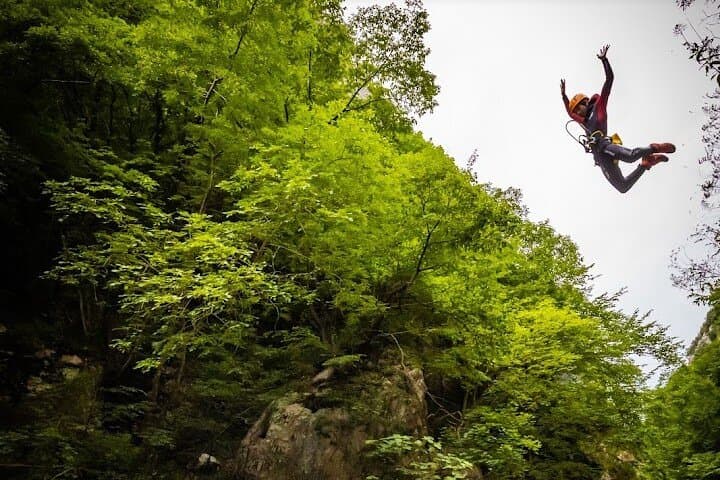
What the day feels like
You step off the shuttle onto a sun-cut ribbon of stone and the air changes: cooler, mineral, flavored with river spray. Below, the Loup threads through a slot of mossy walls and shelves—pools the color of crushed glass, narrow ledges that funnel water into playful slides, and the kind of clear basins that make you consider the physics of jumping. This is the Gorges du Loup—Wolf Gorge in English—and within an hour of Nice, Cannes, or Antibes you can trade the Mediterranean hum for the focused choreography of canyoning. Rappels, short swims, natural slides, and optional jumps (2 to 8 meters) are strung across a tight, two-hour route that feels wild without being remote.
The gorge wears history in its seams. The Loup river carved this limestone band over millennia, cutting terraces and plunge pools into a geology of fossils and compacted shell. Local villages—Le Bar-sur-Loup and Pont du Loup—grew on the edges of that slow work, their stone houses and citrus groves overlooking a landscape that used to be a coastal plain. ‘Loup’ means wolf in French; wolves once prowled these cliffs, and the name sticks as a reminder of a wilder mainland before roads and resorts reshaped the Riviera.
The route marketed as Canyoning of the Wolf Gorge is designed as an introduction with thrills. You won’t need prior experience: guides rig harnesses, feed clear instructions, and open the route so everyone can bypass more exposed features. The tradeoff is exactly what makes it brilliant—the environment still feels raw. Water has personhood here: it dares you with a slick slab, teases you with a lazy eddy, and pushes you forward into another short rappel. The sensation is immediate and tactile; canyoning compresses landscape into action. It’s refreshing in the way a sudden sea plunge is refreshing—practical, piston-like, and perfectly timed.
Beyond adrenaline, the canyon rewards curiosity. Look for fossilized impressions in the limestone ledges and the old terraces where mills once harnessed Loup’s flow. The valley supports a surprisingly verdant microclimate—laurel and chestnut trees, fragrant herbs, and a chorus of swifts and wagtails circling above. Local guides will point out how the gorge's tight geometry accelerates the river through constrictions and creates the very features you’re using—a geology lesson you feel in your grip on the rope.
Practical notes: the tour is a half-day, about two hours in the water and on the rock, and is suitable for families and first-timers who are comfortable in water and mobile on foot. The outfitter provides wetsuits, helmets, harnesses, and safety briefings; every obstacle can be bypassed if you prefer to walk it out. Most participants travel from Nice, Cannes, or Antibes in under 45 minutes, which makes this an excellent morning after a flight or a restorative afternoon between seaside stops.
Preparation tips are straightforward. Wear sport shoes that grip wet rock—canyoning shoes or sturdy trail shoes—and bring a towel and a small dry bag for essentials. Hydrate before you arrive and eat a light meal; heavy lunching before jumps or rappels is never comfortable. Book an early slot in summer to avoid overheating on approach paths and to enjoy clearer water after morning runoff calms. If you’re traveling with kids, check the operator's age limits; many routes welcome adolescents and provide a graded progression of obstacles.
Safety is given its due. Guides lead with simple rope-work and constant communication; the harness-to-anchor systems are set up for beginners. That said, canyoning asks for basic swimming ability, feet-first landings on shallow basins, and a readiness to follow instructions under pressure. If you’re new to ropes or have vertigo, tell the guide—many sections can be bypassed without diminishing the experience.
When you climb out, consider an unhurried descent into one of the nearby hill towns. Grasse is 20–30 minutes away and offers perfume museums and Provençal dining; Le Bar-sur-Loup and Pont du Loup have small cafés where you can trade wet suits for coffee and calissons. The contrast—Mediterranean light and historic villages after a river-carved immersion—captures the Riviera’s best trait: proximity to diverse landscapes.
Who will love it? Families with slightly older kids, active travelers wanting an accessible but technical taste of canyoning, and anyone who wants a short, concentrated outdoor dose without committing to a multi-day trek. If you’re a canyoning obsessive, this won’t replace a multi-pitch descent in the Pyrenees, but it will remind you why the sport is addictive: constant movement, immediate feedback from the environment, and the quiet reward of a river pool on a hot day.
Book a guided session with a reputable outfitter offering wetsuits, helmets, harnesses, and emergency protocols. Go for early starts in summer, bring a sense of play, and leave space in your itinerary to savor the local food and small-town rhythms. The Wolf Gorge is short enough to fit between flights and sunbathing, but wild enough to leave you feeling like you’ve truly stepped away from the coast—if only for a couple of hours.
Trail wisdom
Small choices, better day.
Wear grippy footwear
Canyoning shoes or sturdy trail shoes with a good sole improve traction on wet rock and protect your toes on entries and exits.
Know your swim comfort
Basic swimming ability is required—most pools are shallow but some moves require feet-first entries or short swims between basins.
Sun and hydration
Book morning slots in summer and hydrate before you arrive; shade in the gorge is limited on approach trails.
Listen to your guide
All obstacles can be bypassed; communicate if you feel unsure and follow safety instructions for rappels and jumps.
Local knowledge
Read the place, not just the route.
Watch for native species including European kestrel, Mediterranean newt.
Keep an eye out for wildlife during the transition between areas and habitats. Respect distance guidelines.
Stick to marked approaches, avoid entering closed pools, and use local guides who follow low-impact protocols to protect riparian habitats.
Follow the guide's instructions on size limits, ethical handling, and leave-no-trace practices.
Pont du Loup scenic bridge and short riverside walk. Quiet terraces above Le Bar-sur-Loup with views of citrus groves
Locally recommended viewpoints and quiet spots known best to local operators.
The Gorges du Loup was carved from limestone by millennia of river action; nearby villages like Grasse developed around trade in citrus and perfume, benefiting from the valley's microclimate.
Maritime roots and regional tradition shape the waterways and working coasts.
Seasonal guide
Four versions of the same landscape.
Spring
Best forCool water flows · Fewer crowds · Wildflower scenery
ChallengesHigher flows after rain · Cooler water temperatures
Spring brings higher river flows that energize slides and rappels but may require thicker wetsuits; expect verdant banks and fewer tourists.
Summer
Best forWarm water swims · Family outings · Stable weather
ChallengesMidday heat on approaches · Peak season bookings
Summer offers the most comfortable water temperatures and ideal canyoning conditions—book early to secure a morning or late-afternoon slot.
Fall
Best forEmpty trails · Crisp light for photos · Fresh water clarity
ChallengesVariable flows after storms · Cooler air temperatures
Fall provides excellent visibility and quieter operations, though recent rain can change route difficulty; check conditions with the outfitter.
Winter
Best forLow visitor numbers · Off-season training · Dramatic river geometry
ChallengesCold water requiring thicker wetsuits · Limited operating schedules
Winter canyoning is possible but colder; confirm operator availability and expect the need for higher-grade thermal protection.
Operator details
What the booking data adds.
Included
- ✓Supervision by canyoning state graduate guides
- ✓Parking
- ✓Neoprene wetsuit, helmet and harness
- ✓Shuttle transport EN Check-out DE our grounds in the Gorges du Loup
Not included
- —swimsuit and shoe
Good to know
- ✓Public transportation options are available nearby
- ✓Not recommended for travelers with spinal injuries
- ✓Not recommended for pregnant travelers
- ✓Not recommended for travelers with poor cardiovascular health
- ✓Suitable for all physical fitness levels
Pack with intention
What to bring.
Good to know
Common questions.
No—this route is designed for first-timers with guided instruction; guides also offer bypasses for more technical obstacles.
Plan the edges
The details that make the day easier.
The Loup river gives the Gorges du Loup its name—'loup' means wolf in French—and the area contains several notable waterfalls, including the Cascade de Courmes.
After canyoning, head into Grasse for Provençal dining and a visit to its perfume museums, or stop in Le Bar-sur-Loup for a café and calissons. Try Niçoise specialties like socca or salade niçoise with a local rosé to cool down.
- Closest airport
- Nice Côte d'Azur (NCE); typical trailhead: Pont du Loup parking near Le Bar-sur-Loup; driving time: 35–45 minutes from Nice; cell service: patchy inside the gorge; permits: none required but guided tours recommended and often required for safety.
Use a local outfitter that follows low-impact practices; pack out all trash, avoid chalk or soap in pools, and stay on established paths to protect riparian vegetation.
Explore by topic
Follow the threads.
Keep exploring
Make the story part of the trip.
In four hours you can move from shaded canyon ferns to wind-scoured coastal ridgelines, guided by someone who knows where the light—and the hidden views—live. This private half-day hike on the Monterey Peninsula or Big Sur is compact, curated, and perfect for travelers who want depth without a multiday commitment.
 Related story
Beneath a sky of shifting light, Skaftafell’s ice reads like a map of time. This three-hour guided glacier hike mixes technical instruction with geology and culture: compact, safe, and unforgettable.
 Related story
Lose the city for a few hours without leaving it: this 5-mile, 900-foot-gain Forest Park loop threads old-growth pockets, city viewpoints, and cultural landmarks for a compact taste of Portland’s wild side. Expect moss, roots, and stories.