
What the day feels like
The bus hums along the Historic Columbia River Highway as the Gorge widens and the air sharpens with river-sprung coolness. Trees lean toward the highway like travelers craning for a better view; cliffs, dressed in moss and basalt, keep watch. At the first stop the stone vista wall frames a bowl of forest and river: Crown Point’s Vista House looks out like a lighthouse for travelers—timeless, tidy, insistently Oregonic. A guide cracks a window to point out the next ribbon of white: the first waterfall of the day, already announcing itself with a roar.
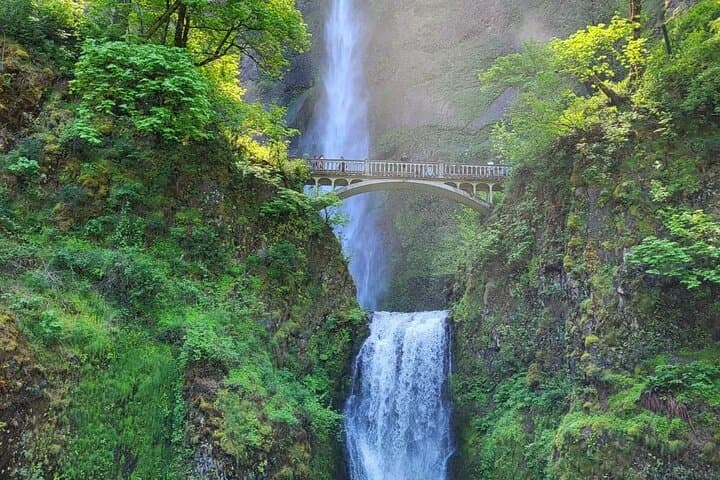
This is not a slog. It’s a short, kinetic pilgrimage along a road built to show off the landscape—the kind of trip that fits into a morning or an afternoon but leaves a full day’s worth of impressions. On the three-hour Waterfalls and Wonder tour you move like someone traveling with intent: you park, step into the spray, cross a stone bridge, and listen to the river dare you forward. Multnomah Falls, the headline act, is a theatrical 620-foot drop that makes the air feel charged; Latourell Falls offers a basalt amphitheater where water chisels its own drama. Between them are viewpoints, historic stops, and a handful of lesser-known cascades that reward brief walks and patient eyes.
Geology and human history are braided here. The Gorge was carved by catastrophic ice-age floods; columnar basalt cliffs record volcanic episodes and slow, patient cooling. The Historic Columbia River Highway, completed in the 1910s, was an early example of scenic-road design—engineers bent the road to the land rather than bending the land to the road. Vista House, completed in 1918, sits on Crown Point as a moment of civic grace, a rotunda for people who wanted to feel small before something immovable.
Culturally, the Gorge is a crossroads. Native peoples have lived in the corridor for millennia; salmon runs shaped economies and cosmologies. Later came pioneer routes, railways, and then the highway itself—each layer adding stories you hear on the walk. Your guide will fold in these threads: stories of Indigenous ties, engineering daring, and conservation battles that eventually led to the Columbia River Gorge National Scenic Area designation.
Practicalities are refreshingly simple. This is a sightseeing tour with short hikes and paved viewing platforms—most stops require a few hundred yards to a mile of easy walking on maintained trails. Expect wet spray near falls, slick stone near bridges, and sections where the scent of cedar and fir is so strong it feels like the forest is breathing. Bring a waterproof shell and shoes with grip; if you want the bridge-crossing photo at Multnomah Falls, be prepared to step into a fine, constant mist. For an instant booking and a local-led experience, check the Columbia River Gorge Waterfalls Tour online for schedules and pickup options (<a href="https://app.advcollective.com/local-experts/columbia-river-gorge-waterfalls-tour-from-portland-multnomah-latourell-vista-house">Columbia River Gorge Waterfalls Tour</a>).
Why go? Because the Gorge compresses a large, dramatic landscape into accessible moments. You’ll stand on a stone bridge under mist that looks like a veil for a waterfall, and minutes later you’ll be on a cliff-top terrace scanning the Columbia’s wide current below. The tour stitches together the best of the Gorge without demanding a full day of planning or a vehicle. Guides add value—context about geology, local lore, and the best shots to take—so you don’t come away with just photos, but with a map of the place in your head.
Timing matters. Spring and early summer deliver the fullest flows and wildflower edges. Fall paints the slopes in russet and gold and softens the light. Summer is busiest, and weekends fill quickly; visiting midweek or booking a guided trip reduces the stress of parking. For safety and comfort, treat the short trails like any mountain walk: stay on trail, watch your footing, and carry water.
If you want more than a quick taste, use this tour as an orientation. From here you can return for longer hikes—Eagle Creek and Hamilton Falls reward full-day efforts—or turn the day into a multi-stop loop that includes Hood River wineries and local breweries downstream. And even if you only have a morning, you’ll leave with a string of memories: the shock of cold spray on your face, basalt columns that look engineered, a viewpoint where the river seems to push the world along.
Practical snapshot: the full experience typically lasts about three hours with light walking at multiple stops. Trails are mostly well-maintained and low-elevation; however, surfaces can be wet and uneven. Guides often run small groups, which keeps stops efficient and allows time for questions, photos, and a coffee at the Multnomah Falls Lodge if the group lingers.
The Columbia River Gorge is a place to be moved by water and geology, but also to leave light footprints. Stick to trails, respect closures, and take your trash with you. Do that, and you get one of the most rewarding short outdoor days in the Pacific Northwest—a compact, civilized, and wild set of experiences that feels both immediate and deeply rooted.
For bookings, logistics, and to secure a spot on a local-led trip, see the detailed tour page here: <a href="https://app.advcollective.com/local-experts/columbia-river-gorge-waterfalls-tour-from-portland-multnomah-latourell-vista-house">Columbia River Gorge Waterfalls Tour</a>.
Trail wisdom
Small choices, better day.
Expect Mist
Multnomah Falls throws a constant spray—bring a waterproof jacket and keep electronics in a dry pocket.
Shoes with Grip
Trails and viewpoints can be wet and slippery; wear shoes with good traction rather than smooth-soled sneakers.
Timed Visits
Arrive early or join a guided tour to avoid parking headaches during summer weekends.
Carry a Reusable Bottle
There are short hikes but limited services; refill before you leave Portland or at visitor centers.
Local knowledge
Read the place, not just the route.
Watch for native species including Bald eagle, Black-tailed deer.
Keep an eye out for wildlife during the transition between areas and habitats. Respect distance guidelines.
The Gorge is part of the Columbia River Gorge National Scenic Area—stay on trails, pack out waste, and respect closures to protect riparian habitats and salmon spawning areas.
Follow the guide's instructions on size limits, ethical handling, and leave-no-trace practices.
Multnomah Creek Falls—a quieter cascade north of the main trail. The patch of basalt columns at Latourell Falls that looks like man-made masonry
Locally recommended viewpoints and quiet spots known best to local operators.
The Historic Columbia River Highway, completed in the 1910s, was designed to follow the land’s contours; Vista House opened in 1918 as a rest stop and viewpoint.
Maritime roots and regional tradition shape the waterways and working coasts.
Seasonal guide
Four versions of the same landscape.
Spring
Best forHigh water flows · Wildflowers · Cool temperatures
ChallengesMud and slick boardwalks · Variable weather · Crowds on holidays
Spring brings peak waterfall volume and fresh green; pack layers and waterproofs and expect some mud.
Summer
Best forWarm days · Longer light for photos · Shuttle access
ChallengesCrowds and parking limits · Lower flows late in season · Hot valley temperatures
Summer is sunny and accessible but busiest—book ahead or visit early in the day.
Fall
Best forFall color · Softer light · Fewer tourists
ChallengesCooler mornings · Possible early storms · Shorter daylight
Fall offers crisp light and color; layers are key as temperatures swing from morning to afternoon.
Winter
Best forIcicle-laden falls · Quieter trails · Dramatic skies
ChallengesIcy sections and road closures · Limited services · Short daylight
Winter can be magnificent but slick—microspikes and caution are recommended on icy paths.
Operator details
What the booking data adds.
Included
- ✓Bottled water
- ✓We pick up on the PARK AVENUE SIDE of Director Park, 815 SW Park Avenue, Portland, OR 97205.
Not included
- —Tips are customary, and they are greatly appreciated. For your convenience, most guides accept cash and most forms of digital payment
Good to know
- ✓Public transportation options are available nearby
- ✓Suitable for all physical fitness levels
Pack with intention
What to bring.
Good to know
Common questions.
The tour runs about three hours and includes multiple short stops and easy walks at each waterfall and viewpoint.
Plan the edges
The details that make the day easier.
Multnomah Falls drops a total of 620 feet, making it the tallest waterfall in Oregon; Vista House at Crown Point opened in 1918 as a scenic rest stop on the historic highway.
After the hike, grab a bite at Multnomah Falls Lodge or head east to Hood River for craft beer and waterfront views—local orchards and wineries also offer seasonal tastings and cider, connecting the Gorge’s landscape to its food and drink.
- Closest airport
- Portland International Airport (PDX)
- Trailhead
- Multnomah Falls parking area and Vista House at Crown Point
- Driving from Portland
- 30–60 minutes depending on traffic
- Cell service
- Patchy in places, reliable at major viewpoints
- Permits
- No day-use permit required but parking and shuttle rules apply in high season
The Columbia River Gorge is a protected National Scenic Area—stay on trails, pack out what you bring, avoid trampling fragile riparian zones, and follow local guidance to protect salmon habitat.
Explore by topic
Follow the threads.
Keep exploring
Make the story part of the trip.
In four hours you can move from shaded canyon ferns to wind-scoured coastal ridgelines, guided by someone who knows where the light—and the hidden views—live. This private half-day hike on the Monterey Peninsula or Big Sur is compact, curated, and perfect for travelers who want depth without a multiday commitment.
 Related story
Beneath a sky of shifting light, Skaftafell’s ice reads like a map of time. This three-hour guided glacier hike mixes technical instruction with geology and culture: compact, safe, and unforgettable.
 Related story
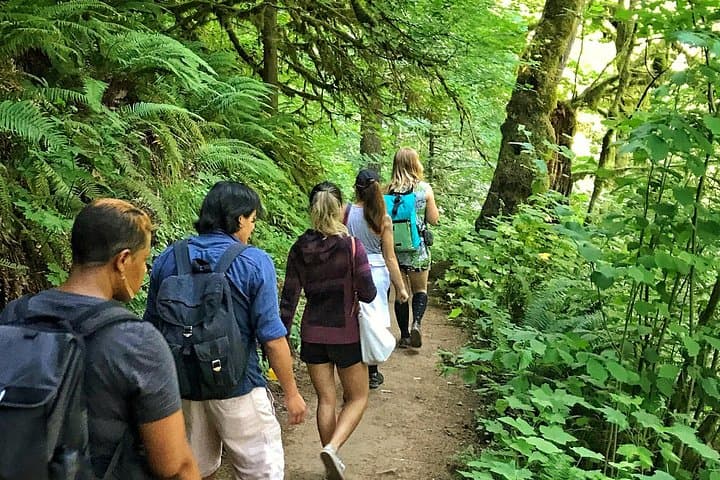
Lose the city for a few hours without leaving it: this 5-mile, 900-foot-gain Forest Park loop threads old-growth pockets, city viewpoints, and cultural landmarks for a compact taste of Portland’s wild side. Expect moss, roots, and stories.