

What the day feels like
The first time the island appears, it feels as if the sea itself has decided to deposit a small, stubborn country of stone and wind into the Strait of Magellan. From the deck the approach is cinematic: a low, fluted coastline under a sky that can be sunlit and slate in the same breath. The boat thrusts forward through a traffic of kelp and white-capped swells; porpoises arc and commerson’s dolphins braid through the bow wake as if to escort you. Then the island draws near and, impossibly, the beach becomes a moving carpet of tuxedoed birds.
Magdalena Island (Isla Magdalena) is not remote in the sense of inaccessibility—it's a day trip from Punta Arenas—but it maintains a sense of being on the ragged edge of the world. It is home to one of the southern hemisphere's most visible colonies of Magellanic penguins, the species that arrives each breeding season like clockwork. Approaching the landing you notice the rock is less an inert backdrop and more an actor in the drama, shaped by gale and current for millennia; the cliffs, sandy spits and sparse grass are written in geological patience.
A full-day navigation out of Punta Arenas—often sold as “Whales, Penguins & Glaciers Navigation”—is the most sensible way to see the island. The itinerary typically stitches together several of southern Patagonia’s signature motifs: a wildlife-rich passage through the Strait of Magellan, glimpses of distant glaciers and an obligatory turn toward Cape Froward, the most southerly point of the South American continental landmass. On the way you’ll watch for humpback and sei whales, piebald and Commerson’s dolphins, and flocks of sea birds. For most visitors the real gravity is the penguin colony: tens of thousands of adults and chicks that shuffle, preen and squawk with an unbothered authority.
History is present in small marks: a lighthouse on Magdalena Island built to guide wooden schooners through these channels, the memory of explorers like Ferdinand Magellan who first navigated these waters, and the invisible ledger of maritime routes that turned Punta Arenas into an outpost of 19th-century industry and sheep farming. The local culture is stitched to the sea and the land—fishermen, estancias, and a city whose wool-bale wealth once paid for ornate municipal buildings. You’ll hear stories from crew about how weather can rearrange plans; on some days the captain chooses a narrower channel to give everyone a better chance of whale sightings. The ocean has agency here; it decides when to give an audience.
Geologically, the Strait of Magellan is an alluvial corridor, scoured and dropped by ancient glacial action. Magdalena’s black basalt cliffs and pebble beaches are the punctuation to that history. The island’s ecology is resilient: lichens and tough grasses cling to thin soils, and the colony’s nutrient input helps sustain a surprising food web. That ecological richness is precisely why protected status and managed visitation matter—landings are controlled, trails are roped, and guides emphasize distance and respect.
Practicalities: most departures are early morning from Punta Arenas and return by evening—expect 8–10 hours onboard (including transit). Landings on Magdalena use a small gangway and a short, maintained trail to a wooden observation platform; visitors are asked to stay on the path. Wear a windproof shell, layered clothing and sturdy shoes for the beach and boardwalk. A binocular and a mid-range zoom lens make the wildlife close without crowding it. Bring water, snacks, sunscreen and a charged camera battery; the light here changes fast, and you’ll want to be ready.
Why go? Partly because the experience shrugs off the clichés of wildlife watching: here, animals set the tempo. Penguins move like punctuation, dolphins braid the water into bright commas, and whales arrive with a slower, more diplomatic cadence. It’s intimate without being invasive—when permitted and managed correctly, you get the essential Patagonia feeling: large-scale nature that also has room for small, humane encounters.
Timing matters. The breeding season—southern spring into summer—brings penguins ashore and chicks into view. In shoulder seasons the weather can be raw and the sea choppier; in high summer the island can feel crowded with day-trippers from Punta Arenas. Regardless, the sea remains the deciding factor; operators often have contingency plans or alternative routing to make the day worthwhile even when the winds are up.
On arrival, the island’s wooden walkways keep human feet off the most sensitive areas. Guides move through the penguin colony like interpreters, relaying behavior and ecosystem connections: how penguins time their breeding with fish runs, or how marine mammals follow the same prey highways. It’s education and ethics combined—leave no litter, avoid loud noise, and never attempt to touch wildlife. These are not just rules; they are the conditions that make the place sustainable for future visitors.
If you’re a photographer, a naturalist, or someone simply hungry for the tactile feeling of being at a place where nature is both unruly and ordered, Magdalena is a tidy day that delivers. It’s good for travelers who want a well-curated wildlife experience without committing to a week of trekking. For those with more time, the navigation can be the start of a wider exploration of Tierra del Fuego’s coasts, estancias and fjords.
Whether it’s the slap of wind against your ears as the boat turns into a channel, the indignantly slow march of a penguin across a pebble beach, or a distant whale exhaling like a small apology, Magdalena Island gives you a compact, authentic sample of southern Patagonia’s big moods. It’s a place where the sea asserts itself—not violently, but insistently—and where human presence has learned to step lightly. If you come prepared, the island will give you plenty back: clarity, awe and a clear reminder that some of the world’s best wildlife encounters are still best earned by patience and respect.
Trail wisdom
Small choices, better day.
Layer for wind
Bring a windproof shell over warm base layers—temperatures can feel much colder on the water even in summer.
Respect the boardwalks
Stay on the marked trail and viewing platforms to protect nesting areas and follow guide instructions during landings.
Bring binoculars and a mid-zoom lens
Binoculars help spot distant whales and dolphins; a 70–200mm lens is ideal for penguins without needing to approach them.
Motion readiness
If you’re prone to seasickness, take preventive measures before departure—ginger, patches or medication—and sit mid-ship for the steadiest ride.
Local knowledge
Read the place, not just the route.
Watch for native species including Magellanic penguin, Commerson's dolphin.
Keep an eye out for wildlife during the transition between areas and habitats. Respect distance guidelines.
Magdalena Island is visited under strict rules to protect nesting birds; operators are required to limit numbers and maintain boardwalks to reduce impact.
Follow the guide's instructions on size limits, ethical handling, and leave-no-trace practices.
Turn toward Cape Froward from the boat to glimpse the southernmost continental headland. Ask guides about nearby Isla Marta for quieter shorelines and seabird concentrations
Locally recommended viewpoints and quiet spots known best to local operators.
The Strait of Magellan was first navigated by Ferdinand Magellan in 1520; Punta Arenas later became a key port and sheep-farming hub during the 19th century.
Maritime roots and regional tradition shape the waterways and working coasts.
Seasonal guide
Four versions of the same landscape.
Spring
Best forPenguin courtship displays · Milder sea conditions · Migratory seabirds
ChallengesChangeable weather · Cool temperatures · Reduced daylight vs. summer
Spring (Sept–Nov) brings returning penguins and active courtship; expect crisp air and variable weather.
Summer
Best forChick sightings · Warmer temperatures · Long daylight hours
ChallengesMore visitors · Occasional fog · Stronger afternoon winds
Summer (Dec–Feb) is peak season for penguin colonies and the best chance for calm seas and long light.
Fall
Best forDramatic light · Fewer crowds · Whale passage sightings
ChallengesCooling temps · Shortening days · Possibly rougher seas
Autumn (Mar–May) offers softer light and fewer tour groups but a greater chance of wind and swell.
Winter
Best forStorm-scape photography · Solitude on shore · Dramatic wave action
ChallengesMany operators suspend landings · Cold, wet conditions · Short daylight
Winter (Jun–Aug) is raw and dramatic; most tours are weather-dependent and landings may be restricted.
Pack with intention
What to bring.
Good to know
Common questions.
Most operators run full-day trips that total about 8–10 hours door-to-door, with several hours spent transiting, wildlife watching and a shore landing on the island.
Plan the edges
The details that make the day easier.
Magellanic penguins nest in burrows or under vegetation and return to the same colony sites each breeding season, often displaying strong site fidelity.
Punta Arenas offers hearty patagonian lamb, calafate jam and a gaucho cowboy (huaso) culture—pair your wildlife day with an estancia visit or a museum stop to understand regional history.
- Departure
- Punta Arenas harbor; Duration: full day (8–10 hrs); Accessibility: moderate, small gangway landing; Best time: Dec–Feb; Book: reserve in advance during high season.
Choose operators who follow park guidelines, maintain distance from wildlife, limit group sizes and support local conservation fees—these practices protect the colony and ensure long-term access.
Explore by topic
Follow the threads.
Keep exploring
Make the story part of the trip.
In four hours you can move from shaded canyon ferns to wind-scoured coastal ridgelines, guided by someone who knows where the light—and the hidden views—live. This private half-day hike on the Monterey Peninsula or Big Sur is compact, curated, and perfect for travelers who want depth without a multiday commitment.
 Related story
Beneath a sky of shifting light, Skaftafell’s ice reads like a map of time. This three-hour guided glacier hike mixes technical instruction with geology and culture: compact, safe, and unforgettable.
 Related story
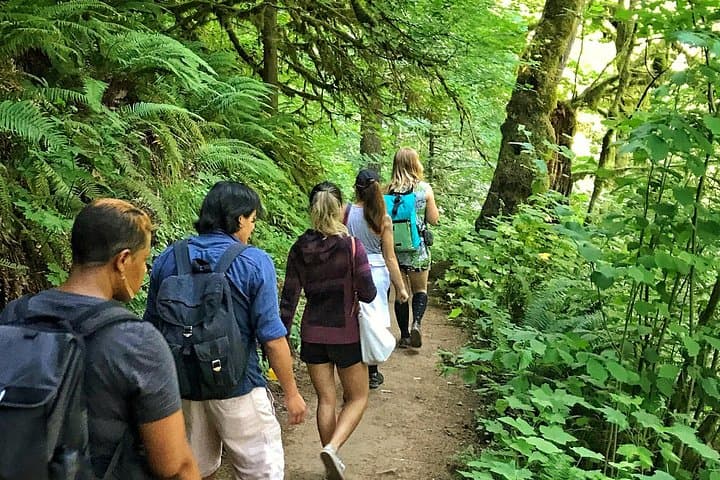
Lose the city for a few hours without leaving it: this 5-mile, 900-foot-gain Forest Park loop threads old-growth pockets, city viewpoints, and cultural landmarks for a compact taste of Portland’s wild side. Expect moss, roots, and stories.