
What the day feels like
By the time the minivan slows and the canyon narrows, the air changes—dry limestone heat giving way to a cooler, shaded corridor where stone cliffs lean in like attentive readers. You step off the vehicle and into a throat of wind that has carved a thousand stories into the rocks: Kourtaliotiko Gorge. In the morning light the gorge feels theatrical—streaked walls, a ribbon of trail, the occasional scrabble of rockfall—yet it also moves at a human pace. The hike unspools with short, honest pitches: switchbacks, a riverbed that at times is a trickle and at other seasons a press of water, and viewpoints that open onto the southern Cretan sea.
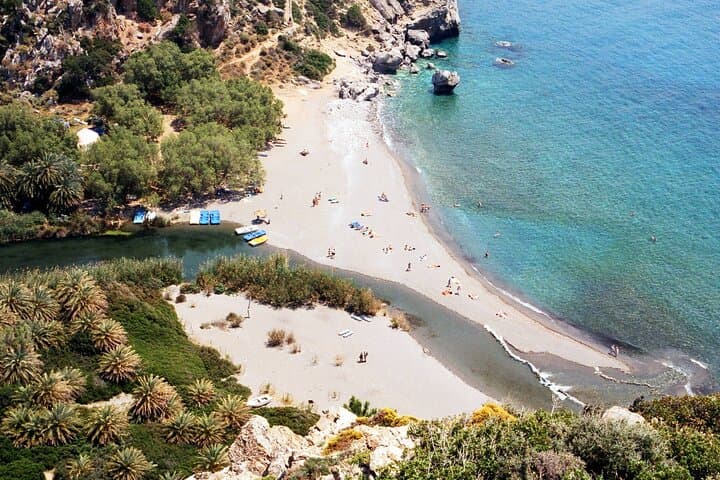
This is not a postcard itinerary; it’s a day of transitions. From the raw, tectonic geometry of Kourtaliotiko you step into a different ecosystem: the hilltop serenity of the 17th-century Monastery of Preveli, its whitewashed buildings and frescoed chapel standing like a quiet sentinel, and finally down to Preveli Beach, where a plateau of palms and the Libyan Sea meet in improbable company. There, the palms—Phoenix theophrasti—shade a tidal lagoon. Rocks and sand make room for swimming and a slow, restorative end to a full day of moving through place.
Kourtaliotiko Gorge and the trail to Preveli stitch together southern Crete’s geology, monastic history, and maritime culture. The gorge itself is the product of millions of years of uplift and erosion, its limestone cliffs folded and fractured by the same forces that created Crete. Historically, gorges like Kourtaliotiko were more than scenic features: they provided routes for shepherds and locals and offered refuge in times of conflict. The Monastery of Preveli, perched above the valley, has ties to resistance movements during Ottoman and World War II eras—its stones carry more than religious memory.
Culturally, the day also lands you in Plakias, a small coastal town where taverna tables and seaside cafés are social infrastructure: you’ll find grilled fish, dakos (Cretan barley rusks with tomato and cheese), and local raki served with warm hospitality. The route is compact enough for a day but rich in variety—cliff walking, cultural pause, and coastal cool-down—making it ideal for travelers who want a single, concentrated slice of what southern Crete offers.
If you’re plotting the practicalities: the private tour runs about six hours, includes guided hiking through Kourtaliotiko Gorge, a stop at the Monastery of Preveli, and free time at Preveli Beach and in Plakias. Bookings for guided routes like this can be arranged through local operators (see https://app.advcollective.com/local-experts/kourtaliotiko-gorge-to-preveli-plakias-private-day-hike-monastery-beach), which provide the local knowledge to navigate seasonal water crossings and to place your stops for the best light and swimming conditions. Expect roughly 3–6 miles of walking, moderate elevation changes, and a mix of rocky trail and coastal sand—this is a day designed for steady hikers more than technical scramblers.
Timing matters. Spring and early summer deliver wildflowers and cool riverbeds; late summer gives brilliant, baked rock and the most reliable sea conditions for swimming. Footwear should be sturdy with good tread; a daypack with water, sun protection, and a quick-dry shirt keeps the day moving at a comfortable clip. Hydration is non-negotiable: water sources along the route are limited and often seasonal. Guided tours can manage logistics—transport, local insight, and timing—so you can focus on the landscape rather than the clock.
Practical notes for planning: aim to arrive the evening before in Plakias or Rethymno, start early to avoid mid-day heat, and bring swimwear if you want the full Preveli experience. The route’s contrasts—the gorge’s raw verticality, the monastery’s quiet stone, the palm-lined beach and open sea—mean you’ll move through microclimates and varied terrain in a single day. That variety is the trip’s strength: each step is a change of scene with a clear sensory payoff.
For photographers and curious travelers, the play of light in the canyon at golden hour is worth arranging the schedule around; at the beach, the palms and lagoon make a classic composition that rewards patience. For those who want to go deeper, combining this hike with a slow afternoon in Plakias—watching boats, sampling a taverna dinner, or walking the headland—turns a single day into a meaningful encounter with southern Crete’s rhythms.
If you want to book or learn route specifics from a vetted local, see the full local-expert listing here: https://app.advcollective.com/local-experts/kourtaliotiko-gorge-to-preveli-plakias-private-day-hike-monastery-beach. It’s the kind of day that asks for modest effort and returns landscape variety, cultural context, and a memorable swim—practical, accessible, and unapologetically Cretan.
Trail wisdom
Small choices, better day.
Start Early
Begin the hike in the morning to avoid the strongest sun and to secure cooler, quieter canyon conditions.
Footwear Matters
Use trail shoes with good grip for loose scree and occasional wet rocks in the gorge.
Bring a Swim System
Pack a lightweight towel and swimwear for the lagoon and Preveli Beach—conditions vary but swimming is often the best finish.
Respect the Monastery
Dress modestly when visiting the Monastery of Preveli and be mindful of quiet times for worshippers.
Local knowledge
Read the place, not just the route.
Watch for native species including Cretan wild goat (kri-kri), Many migratory seabirds and local raptors.
Keep an eye out for wildlife during the transition between areas and habitats. Respect distance guidelines.
The palm grove at Preveli is fragile; visitors should stay on paths and avoid trampling seedlings to protect the rare Phoenix theophrasti population.
Follow the guide's instructions on size limits, ethical handling, and leave-no-trace practices.
A small viewpoint halfway down the gorge with sea vistas—ask your guide to stop. A tucked-away taverna in Plakias that serves wood-grilled octopus off the main strip
Locally recommended viewpoints and quiet spots known best to local operators.
The Monastery of Preveli has a history of resistance—its monks aided Crete’s resistance fighters during WWII and earlier Ottoman occupations.
Maritime roots and regional tradition shape the waterways and working coasts.
Seasonal guide
Four versions of the same landscape.
Spring
Best forWildflowers · Cooler hiking · Birdwatching
ChallengesOccasional wet trails · Unpredictable river flow
Spring brings wildflowers, fewer crowds, and comfortable hiking temperatures—watch for wet or muddy sections after rain.
Summer
Best forSwimming · Clear sea · Long daylight
ChallengesHigh heat mid-day · Crowds at popular beaches
Summer offers reliable sea swimming and sunshine; hike early and plan a shaded midday break at the monastery or beach.
Fall
Best forMild temperatures · Empty trails · Pleasant swimming
ChallengesShorter days · Possible autumn storms
Fall is ideal for balanced conditions—warm water and cooler hiking—but keep an eye on weather forecasts for late-season storms.
Winter
Best forQuiet landscapes · Storm watching · Photography of dramatic skies
ChallengesSome trails may be slippery · Limited services in Plakias
Winter is quiet and atmospheric; wear waterproof layers and check local access as some services reduce hours.
Operator details
What the booking data adds.
Included
- ✓Private transportation
- ✓Bottled Water
- ✓Hotel Pickup & Drop-off
- ✓Air-conditioned vehicle
Not included
- —Beverages and meals
- —Entrance fees for Preveli Monastery (approx. 3-4€)
- —Official tour guide of attractions
Good to know
- ✓Specialized infant seats are available
- ✓Not recommended for travelers with poor cardiovascular health
- ✓Service animals allowed
- ✓Public transportation options are available nearby
- ✓Travelers should have at least a moderate level of physical fitness
Pack with intention
What to bring.
Good to know
Common questions.
The full experience including transport, monastery visit, and beach time is about 4–6 hours; the walking sections are moderate with some uneven and rocky terrain.
Plan the edges
The details that make the day easier.
Preveli’s palm forest hosts Phoenix theophrasti, one of only a few native palm species in Europe and a relic of a warmer, prehistoric Mediterranean climate.
After the hike, head to Plakias’ waterfront tavernas for grilled fish, dakos, and a small glass of raki; evening strolls along the harbor reveal local fishermen and relaxed seaside nightlife.
- Closest airport
- Chania (CHQ) or Heraklion (HER); Typical driving: 1–2 hours from regional airports depending on start point; Cell service: intermittent in the gorge, reliable in towns; Permits: none required for day hikes, but guided access recommended for safety.
The palm grove at Preveli is ecologically sensitive—stay on trails, pack out all waste, and avoid disturbing shoreline vegetation to help preserve this rare habitat.
Explore by topic
Follow the threads.
Keep exploring
Make the story part of the trip.
In four hours you can move from shaded canyon ferns to wind-scoured coastal ridgelines, guided by someone who knows where the light—and the hidden views—live. This private half-day hike on the Monterey Peninsula or Big Sur is compact, curated, and perfect for travelers who want depth without a multiday commitment.
 Related story
Beneath a sky of shifting light, Skaftafell’s ice reads like a map of time. This three-hour guided glacier hike mixes technical instruction with geology and culture: compact, safe, and unforgettable.
 Related story
Lose the city for a few hours without leaving it: this 5-mile, 900-foot-gain Forest Park loop threads old-growth pockets, city viewpoints, and cultural landmarks for a compact taste of Portland’s wild side. Expect moss, roots, and stories.