

What the day feels like
The trail begins as a ribbon of stony riverbed and scrub that pushes up into the Andes like a finger pointing at the skyline. At first the valley is roomy—wild grasses and tamarisk dotted with the rust-colored stains of mineral-rich springs—but every hour the mountains close in, their slopes stacking like cards until a wall of granite and ice fills the view. You breathe a little harder as the path steepens; the air is thinner, and the glacier ahead seems to wait, a patient, luminous thing that has been sculpting this valley for millennia.
El Morado Natural Monument, tucked into the eastern fringe of the Santiago Metropolitan Region, is a day-trip that feels like an expedition. The most common route starts in the tiny mountain hamlet of Baños Morales (roughly 93 km from central Santiago) and climbs from about 1,900 meters up to a San Francisco Glacier viewpoint at roughly 2,500 meters. Depending on the itinerary you choose, you’ll end at the Morales Lagoon, a still, ice-blue pool rimmed with moraine and flecked with bergy fragments of glacier. On clear days the south face of Cerro El Morado throws back the light in a way that makes you forget the city exists.
Geology and hydrology write the story here. The valley’s banded sedimentary rocks are stained by iron and other minerals; they are the reason the Panimávida springs bubble brown and carbonated directly out of the ground. Those mineral outcrops are not just scenic—they mark the slow chemistry that has shaped local ecosystems and made this corridor a refuge for high-Andean flora. And the glacier itself, part of the San Francisco system, is a living record of climate. Walking to Morales Lagoon feels like moving through geological time: scree and polished bedrock give way to moraine ridges and finally to the glassy lagoon where ice meets water.
There’s also a human story. San José de Maipo, the nearest larger town, began as a crossroads for miners and mule trains; today its colonial-era church and the chocolate-house cafés along the plaza nod to a quieter mountain culture. The springs have been a draw for locals and travelers for generations—therapeutic waters and hot springs remain a way to close an alpine day. In recent years operators have built guided options that combine single-day glacier lookouts, snowshoe hikes in winter, and even multi-day treks with nights by hot springs—choices that make El Morado accessible to a wide range of visitors.
On the trail you’ll meet a rhythm: an hour of steady, sometimes steep ascent through scrub and mineral outcrops, an hour where the grade eases and the valley opens, and a final approach to the moraine and lagoon where the glacier’s presence is unmistakable. Guides recommend expecting about 600 meters (1,900 feet) of elevation gain; a full 16-kilometer outing is common on longer circuits. Fitness matters—many tours classify the route as high or challenging—yet the trail is not technical: good boots, a steady pace, and respect for altitude go a long way. In winter the same valley flips its personality. Snowshoe routes follow the same broad path but feel quieter, the mountains muffled under snow, and the glacier becomes a distant, white promise.
Why go? Because the Andes at El Morado are immediate. The glacier’s blues and whites have a brittle, luminous quality; the Panimávida springs fizz at your feet; the valley’s silence presses close. It’s a place that rewards both the eye—wide panoramas and intimate mineral textures—and the body—a sustained climb that leaves you warm and present. For travelers based in Santiago, the day offers a clean contrast to city life: cold water, warm stones, and a horizon that knows nothing of skyscrapers.
Practicalities are simple but important. Most departures run from Santiago or San José de Maipo; vehicle access to Baños Morales is on a paved road that becomes narrower and more alpine as you go. Expect 1.5–2 hours of driving from Santiago depending on traffic. A guided tour is recommended year-round: in summer you get clearer skies and wildflower patches; in winter you gain the safety and gear (snowshoes) that make the snowfield approachable.
Pack for sun and changeable weather. At altitude a bluebird morning can become wind and cloud by afternoon. Hydrate early and often—altitude steals moisture—and bring snacks with calories that are easy to eat on the move. If you’re planning a multi-day trip, operators offer nights near hot springs, which is a thoughtful cap to long hiking days: a hot soak while stars prickle the clear Andean sky is one of the region’s quiet rewards.
On the conservation front, the glacier’s retreat is visible even to casual observers; the moraine and lagoon have shifted in recent decades. Leave-no-trace ethics matter here—pack out what you bring, stick to trails, and consider booking a local guide to support the small mountain communities. Whether you walk to Morales Lagoon in the spill of late spring bloom or strap on snowshoes in a winter hush, El Morado delivers a compact but powerful Andean experience—a day full of high-country geology, thermal water lore, and glacier light that makes the approach from Santiago worth every kilometer.
If you go: Start early to avoid afternoon weather and maximize light at the lagoon; acclimatize in San José de Maipo if you’re prone to altitude effects; and leave time afterward for a soak if your itinerary includes hot springs. The mountains here demand effort but offer immediacy—an alpine encounter that feels, in plain terms, like coming home to high country you didn’t know you needed.
Trail wisdom
Small choices, better day.
Acclimatize before you climb
Spend a night in San José de Maipo or arrive early to reduce altitude effects—the hike gains roughly 600 m (1,900 ft).
Bring sun protection and a spare layer
High-altitude UV is intense and weather can change quickly; a sun hat, sunscreen and a wind shell are musts.
Footing matters
Wear sturdy hiking boots with good tread—trail switches from riverbed cobbles to scree and moraine near the lagoon.
Plan for water and snacks
Carry at least 1.5–2 liters of water and calorie-dense snacks—there are no services on the trail.
Local knowledge
Read the place, not just the route.
Watch for native species including Andean condor (occasionally seen soaring), Vizcacha (rock-dwelling lagomorph often spotted on rocky slopes).
Keep an eye out for wildlife during the transition between areas and habitats. Respect distance guidelines.
Glacial retreat is observable in the San Francisco system; visitors are encouraged to stay on trails, carry out waste, and book local guides who support community conservation efforts.
Follow the guide's instructions on size limits, ethical handling, and leave-no-trace practices.
Aguas de Panimávida mineral springs—iron-rich carbonated waters that bubble from the earth. The village of Baños Morales—small cafés and mountain hospitality away from busier trailheads
Locally recommended viewpoints and quiet spots known best to local operators.
The Cajón del Maipo corridor has long been a transit and mining route; San José de Maipo’s plaza and church reflect the 19th-century settlement that supported miners and muleteers.
Maritime roots and regional tradition shape the waterways and working coasts.
Seasonal guide
Four versions of the same landscape.
Spring
Best forwildflowers and thawing streams · less crowded trails
Challengesvariable snow patches · muddy sections after melt
Spring (Sept–Nov) brings thaw, wildflowers and melting snow—expect mixed footing and rapidly changing conditions.
Summer
Best forclear glacier views · longer daylight hours
Challengesstrong sun · occasional afternoon storms
Summer (Dec–Mar) offers the most stable weather and the best visibility for glacier and lagoon photography, but pack sun protection.
Fall
Best forcooler hiking temperatures · crisper air for photography
Challengesshorter days · early snow at higher elevations
Fall (Apr–May) delivers cool, clear days and excellent light, though nights get cold and snow can begin to appear at altitude.
Winter
Best forsnowshoeing and winter landscapes · quiet trails
Challengesdeep snow and cold · route changes due to weather
Winter (Jun–Aug) transforms the valley into a snow-scape; guided snowshoe tours are the safest way to experience it.
Pack with intention
What to bring.
Good to know
Common questions.
Many guided routes are around 16 km round-trip with roughly 600 meters (1,900 ft) of total elevation gain from Baños Morales to the San Francisco Glacier viewpoint and Morales Lagoon.
Plan the edges
The details that make the day easier.
El Morado Natural Monument sits about 93 km southeast of Santiago and protects the San Francisco Glacier and Morales Lagoon, a landscape shaped by glacial erosion and mineral springs.
Taste mountain Chile: pisco sours, hearty empanadas and artisan chocolates in San José de Maipo, and small cafés in Baños Morales offering hot drinks and local hospitality after a day on the trail.
- Distance from Santiago
- ~93 km; trailhead elevation: ~1,900 m; glacier viewpoint elevation: ~2,500 m; expected gain: ~600 m; permit: none for day hikes but guided tours recommended.
Glaciers are receding; choose responsible operators who minimize waste, respect wildlife, and contribute to local conservation or community projects.
Explore by topic
Follow the threads.
Keep exploring
Make the story part of the trip.
In four hours you can move from shaded canyon ferns to wind-scoured coastal ridgelines, guided by someone who knows where the light—and the hidden views—live. This private half-day hike on the Monterey Peninsula or Big Sur is compact, curated, and perfect for travelers who want depth without a multiday commitment.
 Related story
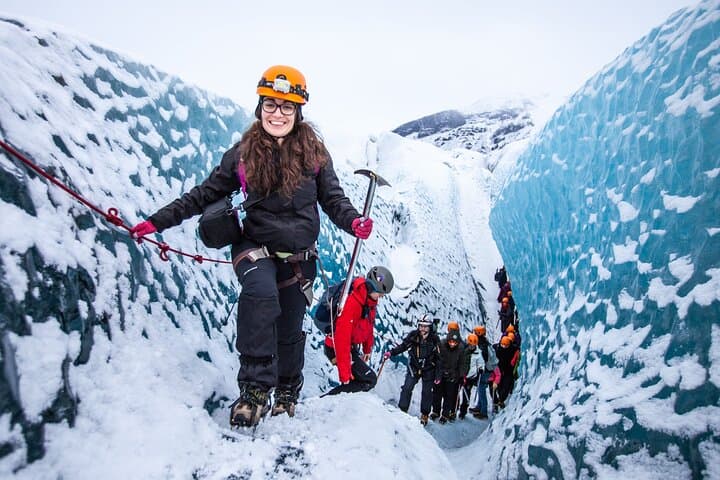
Beneath a sky of shifting light, Skaftafell’s ice reads like a map of time. This three-hour guided glacier hike mixes technical instruction with geology and culture: compact, safe, and unforgettable.
 Related story
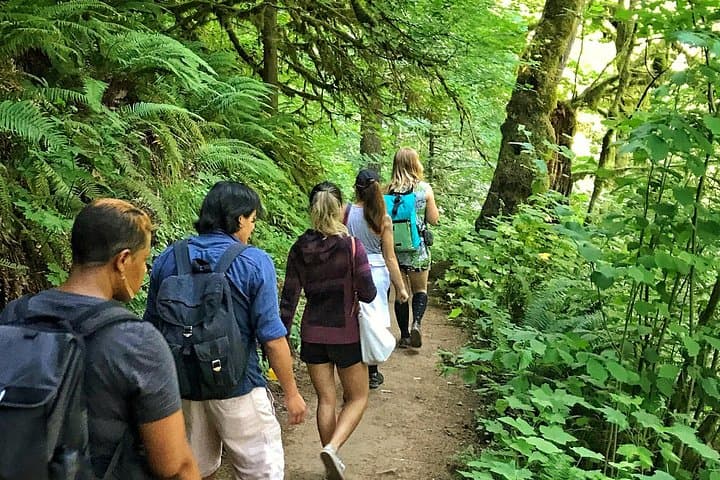
Lose the city for a few hours without leaving it: this 5-mile, 900-foot-gain Forest Park loop threads old-growth pockets, city viewpoints, and cultural landmarks for a compact taste of Portland’s wild side. Expect moss, roots, and stories.