

What the day feels like
You round a slow bend in the jungle road and the air changes — cooler, tinged with limestone and damp leaves — and somewhere ahead a layered roar gathers like applause. At the park entrance, bamboo stalls sell sticky rice and cold coconut, and children point at the map showing seven blue-green circles climbing the mountain: the tiers of Erawan Falls. The first cascade greets you like a promise — broad, shallow pools rimmed by ferns. By the time you reach the fourth tier the forest hushes; lianas loop from branch to branch and sunlight knifes down in shafts through the canopy, turning each pool into a plate of jade.
Erawan is an exercise in contrasts: a popular day trip from Bangkok and a place where, on the right morning, the water still sounds like something private. The waterfall tumbles down the western escarpment of the Tenasserim Hills in Kanchanaburi Province, carving emerald pools in folded limestone. Locals named the falls after Erawan, the three-headed elephant of Hindu myth — and there’s something elephantine about the tiers, a slow, deliberate descent of water that swells and rests and swells again.
The geology is plain to feel underfoot: fossil-rich limestone cliffs pocked with caves and slow-drip basins that have been scoured smooth by centuries of flowing water. Vegetation moves up the slope in bands — riverine plants at the lower levels, then semi-evergreen forest higher up — and the pools themselves host a hand-sized fish population that nibbles at ankles as if to remind you you are in their house.
Erawan’s popularity means the park lives at a crossroads of nature, culture, and history. Most organized tours combine a visit here with Kanchanaburi’s wartime sites — the Bridge over the River Kwai and the Death Railway — a short bus ride away. That juxtaposition is part of the region’s gravity: you come for limestone, swim in jade basins, and leave with an education in 20th-century history. Several local operators run full-day itineraries (Day Tour Kanchanaburi Erawan Waterfall; Erawan Waterfall and River Kwai Experience) or combine the falls with caves (Erawan Waterfalls and Phra That Cave Adventure Tour), while scenic combos (Damnoen Saduak Floating Market & Erawan Waterfall) let you pair a jungle hike with market culture.
On the trail, the experience is tactile and clear. Levels 1–4 are wide, well-signed, and mostly gentle — perfect for cooling off and watching families wade. Past tier four, the path steepens: rock steps, short scrambles, and a few sections where tree roots are the best footholds. Expect roughly 2 km of hiking to reach the seventh tier with an elevation gain in the realm of 200–300 meters; times vary, but plan on 1.5–3 hours of moving time depending on how often you stop to swim and shoot photos. Levels 5–7 demand steady footing and a head for heights; the pools up top feel like rewards for a little effort: clear, deep, and framed by cliff faces and small caves.
Practical planning matters. The park opens early and the mood at 8 a.m. is very different to noon: morning light makes the emerald color sing and the crowds are thinner. Most day tours depart Bangkok before dawn to maximize time here. Bring a sturdy pair of trail sandals or light hikers (wet rock and boardwalks are slick), reef-safe sunscreen (to protect both you and the pools), and a dry bag for phones. Vendors near the entrance sell snacks and lockers are sometimes available, but carry cash — park fees are typically collected on-site.
Wildlife is subtle but present. Keep an eye and ear out for gibbons and hornbills echoing in the canopy; monkeys near the parking areas can be bold with food. The park has caves where Buddhist shrines sit tucked inside — the cave visits included in some tours (Pra That Cave) add a cultural counterpoint to the freshwater bathing ritual.
If you want a deeper day, consider a private Kanchanaburi tour that pairs the falls with the River Kwai, the Death Railway train ride, or the Thailand–Burma Railway Centre for context on wartime labor and engineering. For photographers and slow walkers, linger at lower tiers where shallow shelves let you compose reflections and long exposures without having to climb.
Respecting the place keeps it worth visiting. Swim without tanks and avoid foam or heavy lotions that cloud the pools; stay on marked trails to protect fragile limestone plant communities; and pack out anything you bring in. If you arrive with an organized tour, ask your guide about quieter times and routes — many small-group operators will customize your visit to avoid the busiest hours.
Erawan is not a remote expedition, nor is it a manicured resort; it is a living limestone theater where the curtain of water lifts and falls in seven acts. Whether you’re chasing a sunrise dip in the jade bowl of tier three or pushing to the top tier for solitude and a view down the valley, the park delivers a compact, memorable mountain-and-water day that pairs especially well with the layered history of Kanchanaburi. Bring sensible footwear, water, and curiosity — and let the falls do the rest.
Trail wisdom
Small choices, better day.
Start early for solitude
Arrive at opening (about 8:00) to enjoy quieter pools and softer light; crowds swell after late morning.
Wear grippy footwear
Expect wet limestone and wooden boardwalks — light hiking shoes or sturdy sandals with traction are best.
Use reef-safe sunscreen
Chemical sunscreens discolor pools and harm aquatic life; mineral-based options reduce impact.
Bring cash and a dry bag
Vendors and park fees often require cash; a small dry bag protects valuables while you swim.
Local knowledge
Read the place, not just the route.
Watch for native species including White-handed gibbon, Asian water monitor and various small forest birds.
Keep an eye out for wildlife during the transition between areas and habitats. Respect distance guidelines.
The park manages visitor access to protect limestone formations and aquatic habitats; use reef-safe sunscreen and stay on paths to minimize impact.
Follow the guide's instructions on size limits, ethical handling, and leave-no-trace practices.
Tier 3 at early morning for glassy reflections and fewer swimmers. Pra That Cave (included in combined tours) for a limestone cave shrine experience
Locally recommended viewpoints and quiet spots known best to local operators.
Erawan sits in Kanchanaburi Province, a region that is also home to WWII sites like the Bridge over the River Kwai and sections of the Death Railway.
Maritime roots and regional tradition shape the waterways and working coasts.
Seasonal guide
Four versions of the same landscape.
Spring
Best forLush foliage · Water flow increasing
ChallengesOccasional heavy rains · Slippery trails after storms
Spring (March–May) brings warming days and strong flows early in the season; expect green jungle and occasional showers that make paths slick.
Summer
Best forFull pools · Warm swimming
ChallengesHigh heat and humidity · Afternoon thunderstorms
Summer is hot and humid but the pools are inviting — plan hikes for morning and watch for sudden afternoon storms.
Fall
Best forClear skies · Lower water turbidity
ChallengesVariable flow if dry season sets in early · Shorter daylight
Fall (October–November) often brings clearer water and comfortable temperatures; flows may lessen late in the season.
Winter
Best forCooler hiking · Best visibility
ChallengesHigher visitor numbers (peak tourist season) · Cool mornings
Thailand’s cool-dry season delivers the most pleasant hiking conditions; arrive early to beat peak crowds.
Pack with intention
What to bring.
Good to know
Common questions.
Expect about 2 km one-way to the seventh tier with roughly 200–300 meters of cumulative elevation; allow 1.5–3 hours depending on stops and swimming.
Plan the edges
The details that make the day easier.
Erawan Falls is named for the three-headed elephant 'Erawan' of Hindu mythology and is famous for its seven distinct tiers, each with its own emerald pool.
Kanchanaburi’s riverside restaurants serve grilled river fish and pla pao (salt-crusted fish); combine a waterfall morning with a riverside lunch and a visit to a local market for homemade sweets.
- Park hours roughly 08
- 00–16:30; foreigner entrance fees are paid at the gate (bring cash); most day tours include hotel pickup from Bangkok and return the same evening; tiers 1–4 are family-friendly, 5–7 are steeper.
Use mineral-based sunscreen, avoid single-use plastics, stay on designated routes, and don’t feed wildlife — small choices preserve water clarity and native species.
Explore by topic
Follow the threads.
Keep exploring
Make the story part of the trip.
In four hours you can move from shaded canyon ferns to wind-scoured coastal ridgelines, guided by someone who knows where the light—and the hidden views—live. This private half-day hike on the Monterey Peninsula or Big Sur is compact, curated, and perfect for travelers who want depth without a multiday commitment.
 Related story
Beneath a sky of shifting light, Skaftafell’s ice reads like a map of time. This three-hour guided glacier hike mixes technical instruction with geology and culture: compact, safe, and unforgettable.
 Related story
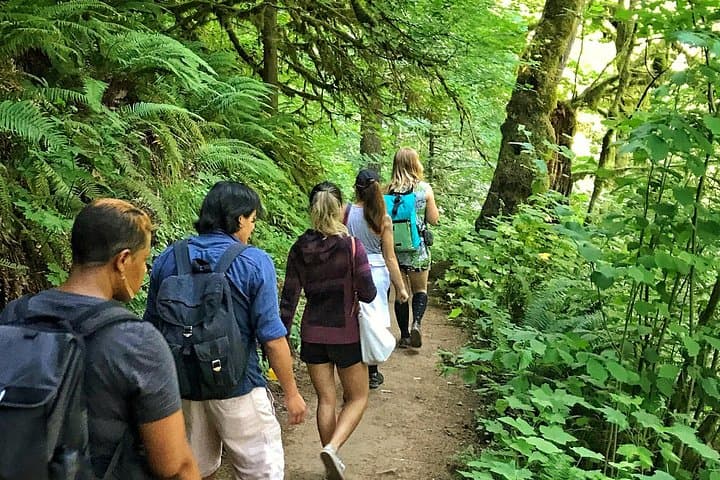
Lose the city for a few hours without leaving it: this 5-mile, 900-foot-gain Forest Park loop threads old-growth pockets, city viewpoints, and cultural landmarks for a compact taste of Portland’s wild side. Expect moss, roots, and stories.