
What the day feels like
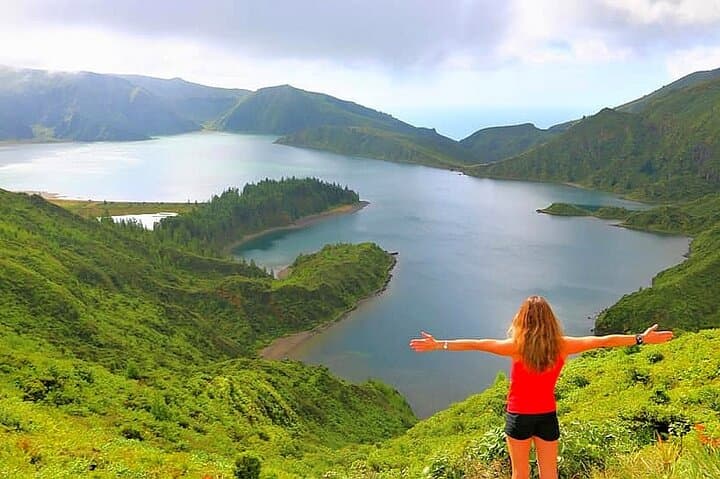
By late morning the caldera breathes in mist. You arrive in a small, rented van—your guide at the wheel, a map folded into the glove box but barely needed—and the road threads down toward a green bowl where two lakes sit like a pair of watchful eyes. Sete Cidades is not a postcard; it is a slow-motion performance: basalt cliffs leaning in, pines and hydrangeas pushing color into each ravine, and a mirror-smooth blue cheek and a darker green one that shift with the wind. Here, the land seems to hold memory and rumor—of eruptions that shaped hollowed basins and of a local legend about a princess and a shepherd whose tears made the twin lakes. The story is sweet, but the geology is older and louder.
This private, customizable tour on São Miguel is exactly what its name promises: you pick the pace, the sights, and how much of each valley you want to walk. For seven to eight hours you’ll follow a westward loop that stitches together the island’s most dramatic calderas. Sete Cidades hangs on the western flank of the island: a volcanic crater rim where viewpoints like Vista do Rei give you a cinematic sweep across Lagoa Azul and Lagoa Verde. Later you’ll climb or drive into the heart of the island to Lagoa do Fogo, an almost perfectly round lake sitting in its own crater, fog often pooling low like a shy guest refusing to be photographed.
What makes this day different from a rote sightseeing shuttle is the permission to slow. Your guide will suggest short, restorative walks—think 1–3 km rim strolls with minimal elevation, perfect for stretching stiff legs—or a longer ascent/descent to Lagoa do Fogo that can run 6–12 km round-trip with roughly 350–550 m of elevation change depending on your route. If you want to keep the day mellow, the driver drops you at prime viewpoints and walks a few minutes with you; if you want to stretch into a true hike, the trail into Lagoa do Fogo rewards with a quieter shoreline and expansive views seldom shared with mass-tour buses.
Geologically this is young land by continental standards. São Miguel’s calderas are products of repeated eruptions and collapses; each rim is the fingerprint of a violent past, the lakes born where magma once simmered underneath. The island’s volcanic soils feed thick pastures and orchards, and hydrangeas—so readily associated with the Azores—frame roadways in saturated blues and pinks, quietly announcing that humans and geology have been negotiating this landscape for centuries.
Culturally, the west of São Miguel is a retreat from Ponta Delgada’s portside bustle. Villages like Sete Cidades and coastal outposts like Mosteiros cling to old fishing lines and newer tourism economies. The people here serve seafood, bake bread, and will happily point you to a quiet miradouro (viewpoint) if you ask. Because this tour is private, there’s room to stitch local stops into the day: a seaside coffee, a short detour to a volcanic black-sand beach, or a bakery for fresh bread and cheese.
Practicalities are simple but matter. The tour runs 7–8 hours (approx. 420–480 minutes) and accommodates up to 4 passengers by car or up to 8 in a minivan; pricing starts around $359.88 USD. It’s a manual confirmation booking with free cancellation policies that let you plan without locking everything in. Bring layers; the coast and caldera floors frequently differ by several degrees. Footwear matters—there’s loose volcanic scree on some trails and slick boardwalks nearer certain viewpoints. Water, wind protection, and a camera are non-negotiable. If you plan to hike down to Lagoa do Fogo’s shore, expect moderate exertion and a return climb that rewards you with views and solitude.
Timing is everything. Early light gives the lakes depth and long shadows on the rims; midday offers cleaner, more saturated colors for photographs but also more visitors. Late afternoon softens the landscape and can produce spectacular color in the low clouds. Because the tour is private, you control whether you fight for a sunrise slot or linger over a late lunch at a rural village cafe.
Sustainability threads through the experience. Lagoa do Fogo sits inside a protected reserve; guides encourage staying on established trails and avoiding shoreline disturbance. That’s not just bureaucracy—it preserves fragile peat and endemic flora, and it keeps water clear for future swimmers and paddlers.
Why book this private loop? For one, it lets you pick your adventure level on the fly—an accessible day of scenic stops or a fuller outing with an ambitious lakeside hike. For another, the personality of São Miguel—the warmth of small villages, the volcanic shapes, the sudden weather—feels at its most immediate when you aren’t rushed. Finally, it’s a landscape that rewards curiosity: the more you explore, the more quiet viewpoints you’ll discover.
If you go, move deliberately: listen for the wind as it pushes across the crater like an impatient traveler; let the lakes hold their reflections a moment longer; buy a pastry from a local padaria and eat it watching waves on rocky Mosteiros. This tour is an invitation to learn the island’s contours with your feet and its stories with your eyes.
Trail wisdom
Small choices, better day.
Bring layered clothing
Microclimates change quickly between the coast, rim, and crater floor—pack a windproof shell and midlayer.
Carry 2 liters of water
Even on short walks, the combination of sun and uphill return stretches makes hydration essential.
Sturdy shoes for scree
Trails can be rocky and slip-prone; hiking shoes with good grip reduce risk and increase comfort.
Time your photos
Visit Vista do Rei early or late for dramatic light and fewer crowds—midday brings stronger contrast but more people.
Local knowledge
Read the place, not just the route.
Watch for native species including Azores Bullfinch (endemic to São Miguel), Cory's Shearwater and other seabirds offshore.
Keep an eye out for wildlife during the transition between areas and habitats. Respect distance guidelines.
Lagoa do Fogo lies within a protected reserve—visitors should stick to paths, avoid trampling peat bogs, and pack out all waste to protect endemic flora and water quality.
Follow the guide's instructions on size limits, ethical handling, and leave-no-trace practices.
Mosteiros rock stacks and tidal pools (west coast). Pico do Carvão viewpoints between Sete Cidades and the north coast
Locally recommended viewpoints and quiet spots known best to local operators.
São Miguel’s landscape is shaped by successive volcanic eruptions and caldera collapses; the twin lakes of Sete Cidades are both geological features and subjects of local legend.
Maritime roots and regional tradition shape the waterways and working coasts.
Seasonal guide
Four versions of the same landscape.
Spring
Best forWildflowers and hydrangeas · Milder temperatures
ChallengesUnpredictable showers · Foggy mornings
Spring brings lush greens and blooming hedgerows; expect cool mornings and variable weather—pack a rain shell.
Summer
Best forClear views · Long daylight hours
ChallengesBusier viewpoints · Stronger sun exposure
Summer offers the most reliable visibility and longer days—ideal for extended hikes, but plan earlier starts to avoid crowds.
Fall
Best forCrisp light for photos · Fewer tourists
ChallengesOccasional Atlantic storms · Shorter days
Fall delivers beautiful light and quieter trails; bring warm layers for cool mornings and evenings.
Winter
Best forDramatic skies · Lower visitor numbers
ChallengesHigher chance of rain and wind · Some trails muddy or closed
Winter is moody and photogenic but wetter—expect slick trails and plan flexible timing for outdoor stops.
Operator details
What the booking data adds.
Included
- ✓Hotel pickup and drop-off
- ✓Private tour
- ✓Driver/guide
Not included
- —Lunch
- —Gratuities
Good to know
- ✓Specialized infant seats are available
- ✓Infants and small children can ride in a pram or stroller
- ✓Suitable for all physical fitness levels
- ✓Refunds will not be issued if tour/activity is missed due to late or non-arrival of cruise ship
- ✓Please advise any specific dietary requirements at time of booking
Pack with intention
What to bring.
Good to know
Common questions.
The tour runs approximately 7–8 hours (420–480 minutes), giving time for viewpoints, short walks, and an optional longer hike to Lagoa do Fogo.
Plan the edges
The details that make the day easier.
Lagoa do Fogo sits inside a protected natural reserve and is one of the largest crater lakes on São Miguel, formed by volcanic activity.
After a day among craters, head back to Ponta Delgada for fresh seafood, bolos lêvedos or local cheeses, and a small cafe—the island’s food scene is simple and seasonal, often centered on fish, dairy, and garden produce.
- Closest airport
- João Paulo II Airport (PDL)
- Trailhead
- multiple drop-off points at Sete Cidades and Lagoa do Fogo
- Driving distance
- ~25–35 km (30–45 minutes) from Ponta Delgada to Sete Cidades
- Cell service
- generally good on main roads, patchy in crater bottoms
- Permits
- none, but respect protected reserve rules at Lagoa do Fogo
Lagoa do Fogo is in a protected reserve—stay on marked trails, pack out waste, and avoid disturbing shoreline vegetation to protect fragile habitats and water clarity.
Explore by topic
Follow the threads.
Keep exploring
Make the story part of the trip.
In four hours you can move from shaded canyon ferns to wind-scoured coastal ridgelines, guided by someone who knows where the light—and the hidden views—live. This private half-day hike on the Monterey Peninsula or Big Sur is compact, curated, and perfect for travelers who want depth without a multiday commitment.
 Related story
Beneath a sky of shifting light, Skaftafell’s ice reads like a map of time. This three-hour guided glacier hike mixes technical instruction with geology and culture: compact, safe, and unforgettable.
 Related story
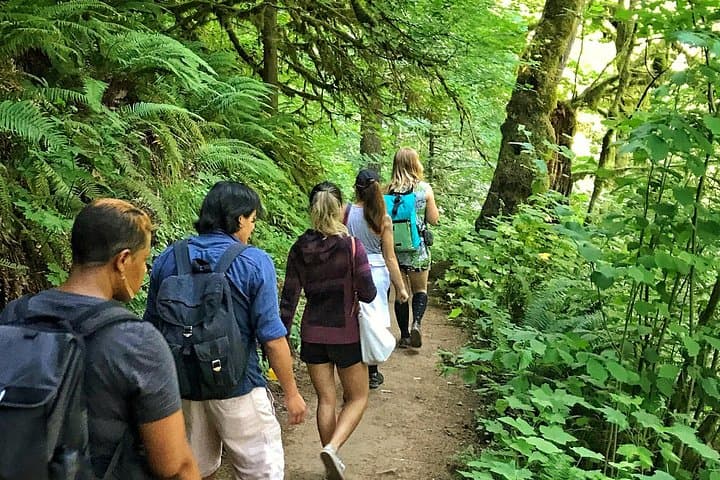
Lose the city for a few hours without leaving it: this 5-mile, 900-foot-gain Forest Park loop threads old-growth pockets, city viewpoints, and cultural landmarks for a compact taste of Portland’s wild side. Expect moss, roots, and stories.