
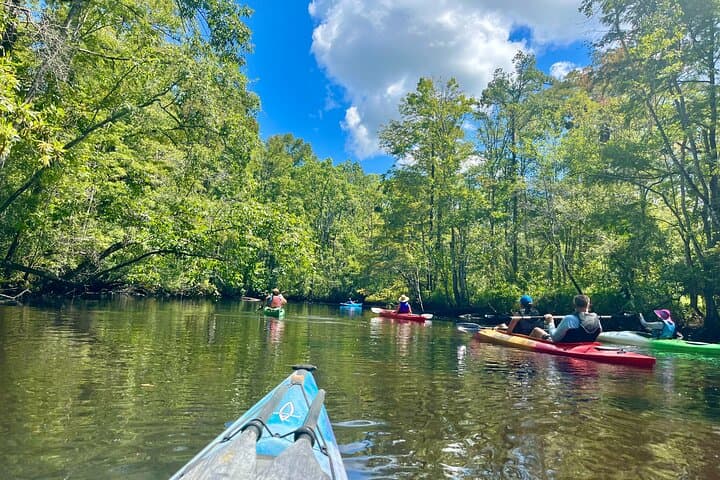
What the day feels like
You push off into water the color of coffee and, within a dozen strokes, the world narrows to the canyon of cypress and shadow. Bald cypress knees puncture the creek like teeth; their buttressed trunks, some ancient and pocked with time, rise from the blackwater as if holding up the sky. Sunlight finds narrow ribbons through the canopy and lights up the undersides of Spanish moss. The only sounds are the whisper of your paddle, a kingfisher’s ratcheting call, and water nudging the hull. For two hours you are moving through a landscape that insists on being felt slowly. That intimacy is the draw of the 2-Hr Blackwater Kayak Tour just outside Charleston—an accessible immersion into the subtropical swamp country that has shaped the Lowcountry’s ecology and culture for centuries. The creek you paddle is a tributary of the Santee River and threads through the Francis Marion National Forest’s protected Wambaw swamp landscapes. This waterway was paddled for thousands of years by Santee and Coastal Plain Indigenous people; later, the banks were molded by colonial rice plantations whose earthen dikes now lie submerged, leaving a drowned field of giants and a memory in the marsh. Geology here is patient and precise: low-gradient tidal systems, peat-rich soils, and a delicate salinity gradient that creates habitats from freshwater swamps to tidal marshes. The biggest trees are history-books—1000-year-old bald cypresses whose rings mark centuries of floods, droughts and human change. Birdlife reads like a field guide. Prothonotary warblers flash like golden coins among the tangles; barred owls keep counsel from dim alcoves. You can expect turtles sunning on logs, the lazy blink of an alligator’s back, and the nervous streak of a river otter. Because the creek sits close to Charleston—roughly a 50-minute drive—the tour is a perfect half-day for visitors who want to get out of the city without a big logistical lift. The route is designed for relaxation and sighting: steady paddling, quiet channels, slow turns through backwater sloughs and occasional open pools where reflections are so clear the trees seem doubled. The best moments are the small ones: a sudden chorus of marsh birds, a flooded rice dike revealing the outline of a vanished field, the way your boat glides almost silently across glassy water. Practicalities are simple but matter. The trip is two hours on the water, guided, and priced from about $52; it’s appropriate for beginners and experienced paddlers who want a low-effort wildlife-focused paddle. Timing matters more than technical skill: water level and tide influence how far into the maze you’ll get and where wildlife concentrates. Morning light and rising tides tend to concentrate birds and make navigation gentle; late afternoon can produce dramatic color but may require more attentive route-finding. Bring insect repellent, a small dry bag for a phone and binoculars, a lightweight layer in shoulder seasons, and sunscreen—the Lowcountry sun takes no prisoners. Respecting the creek is part of the experience: stay in the main channel, avoid pulling kayaks over delicate banks, and keep a respectful distance from wildlife. That sense of stewardship echoes through local history. The rice plantations that once profited off these waters altered hydrology and shaped the cultural landscape; now, protected areas like Wambaw serve as reminders that these tidal systems are finite and resilient only if we are careful. For photographers the place is generous: look for backlit cypress scenes, reflections that mirror tree canopies, and bird-action near transition zones where swamp meets marsh. Binoculars and a mid-tele zoom make the small drama readable. Booking is straightforward and an excellent complement to a Charleston itinerary—pair it with a morning in town and a seafood dinner afterward. You can reserve your spot via the local operator’s page to secure a guided launch and get pre-trip logistics. If you go in spring you’ll catch migration and nesting; in summer expect chorus and slow, humid days; fall light is crisp and beautiful; and winter brings quieter waterways and clearer views into the forest skeletons. The trip is an invitation: two calm hours in a landscape that reads like a natural history museum, but one you can cross with your own hands. It’s not about adrenaline so much as attention—watching the Lowcountry reveal how water shapes place and people. For anyone who wants an abbreviated but deeply satisfying taste of Charleston’s wild edges, a paddle on Wambaw Creek is among the best accessible options.
Trail wisdom
Small choices, better day.
Time your tide
Morning high or rising tides concentrate birds and make channel navigation easier; ask your guide about local tide windows.
Protect your electronics
Bring a small dry bag or waterproof case—phones, cameras and wallets should stay dry in a swamp environment.
Quiet approach
Paddle slowly near wildlife; sudden noise will send birds and otters into hiding and reduce viewing opportunities.
Insect defense
Wear long sleeves and apply DEET or picaridin repellents during warm months—mosquitoes can be persistent along blackwater creeks.
Local knowledge
Read the place, not just the route.
Watch for native species including Prothonotary Warbler, River Otter.
Keep an eye out for wildlife during the transition between areas and habitats. Respect distance guidelines.
The Wambaw and surrounding swamps are protected within Francis Marion National Forest; stick to launched channels, pack out all trash, and avoid disturbing nesting birds and shoreline vegetation.
Follow the guide's instructions on size limits, ethical handling, and leave-no-trace practices.
Paddle under the upper cypress tunnel where trunks form a near-archway. Look for small side channels that open onto flooded rice fields—these reveal old plantation hydrology
Locally recommended viewpoints and quiet spots known best to local operators.
This creek flows through landscapes shaped by Indigenous canoe travel and later rice plantations; earthen dikes from the Rice Era remain visible as submerged ridges.
Maritime roots and regional tradition shape the waterways and working coasts.
Seasonal guide
Four versions of the same landscape.
Spring
Best forMigratory birding · Comfortable paddling temps · Flowering swamp plants
ChallengesBug activity increases · Variable rains
Spring is peak bird migration—expect bright warblers and active wildlife, but bring repellant for rising insect activity.
Summer
Best forDense foliage · Amphibian and reptile sightings · Lush green scenery
ChallengesHigh heat and humidity · Heavy mosquito presence
Summer delivers full canopies and active marsh life; go early to avoid heat and the worst of the bugs.
Fall
Best forCrisp light for photography · Calmer insect numbers · Mild paddling conditions
ChallengesShorter daylight hours · Occasional storms
Fall offers clear light and pleasant temperatures—great for photos and comfortable paddles, but check forecasts for tropical systems.
Winter
Best forQuiet waterways · Clearer views into the swamp structure · Cool-weather birding
ChallengesCool morning temps · Possibility of colder water
Winter brings quieter creeks and excellent visibility; dress in layers and expect cooler water temperatures.
Operator details
What the booking data adds.
Included
- ✓Kayak Use, Paddle, and PFD
- ✓Professional ACA Certified Kayak Guide
Not included
- —Gratuities
Good to know
- ✓Not recommended for travelers with spinal injuries
- ✓Not recommended for pregnant travelers
- ✓Not recommended for travelers with poor cardiovascular health
- ✓Travelers should have at least a moderate level of physical fitness
Pack with intention
What to bring.
Good to know
Common questions.
No—this guided two-hour tour is beginner-friendly; guides provide basic instruction and keep routes suitable for novices.
Plan the edges
The details that make the day easier.
Wambaw Creek and its surrounding swamplands are part of a protected stretch of the Francis Marion National Forest, and the area contains remnants of rice plantation earthen dikes that shaped the Lowcountry landscape.
After your paddle, head back toward Charleston for fresh Lowcountry fare—Bowens Island Restaurant offers classic seafood in a marsh-front setting, or pick a downtown spot for she-crab soup and local oysters to round out the day.
- Closest airport
- Charleston International Airport (CHS); Typical drive: ~50 minutes from downtown Charleston; Cell service: intermittent in the swamp—download directions and emergency contacts; Permits: none required for guided commercial tours, but stick to operator rules and NF land-use guidelines.
This creek lies within federally protected forest—help protect it by packing out waste, staying in the main channel, and cleaning gear to prevent spreading aquatic invasives.
Explore by topic
Follow the threads.
Keep exploring
Make the story part of the trip.
In four hours you can move from shaded canyon ferns to wind-scoured coastal ridgelines, guided by someone who knows where the light—and the hidden views—live. This private half-day hike on the Monterey Peninsula or Big Sur is compact, curated, and perfect for travelers who want depth without a multiday commitment.
 Related story
Beneath a sky of shifting light, Skaftafell’s ice reads like a map of time. This three-hour guided glacier hike mixes technical instruction with geology and culture: compact, safe, and unforgettable.
 Related story
Lose the city for a few hours without leaving it: this 5-mile, 900-foot-gain Forest Park loop threads old-growth pockets, city viewpoints, and cultural landmarks for a compact taste of Portland’s wild side. Expect moss, roots, and stories.