

What the day feels like
You meet under the single tamarind tree at San Francisco Park, the town of Puerto Ayora still waking up around you. Salt and fruit—citrus, guava—hang in the air. A heap of well-tuned bikes waits against the low wall; a naturalist greets you without fanfare and hands you a helmet. Within twenty minutes you’ve left the seafront behind and are pedaling toward the island’s highlands, where the road bends into shaded pistes and the world feels older and slower.
Laguna de las Ninfas is not a single cinematic vista so much as a sequence of small, sideways epiphanies: a giant tortoise lifting its head along the roadside like an ancient boulder come alive; a band of Darwin’s finches flitting through the transition forest; the hush of trees that harbor plants found nowhere else on Earth. The day’s crescendo is deeper underground—a pair of lava tunnels where recent stalactites and stalagmites still glint. You crouch and step through corridors of black glassy stone and feel the island’s origin story underfoot: fire turned to rock, then to caves, then to this fragile ecology that has evolved in isolation.
The BiciTour that threads these experiences together is efficient and intentional. From San Francisco Park you take a short bus lift to Los Guayabillos, then descend into the reserve by bicycle. The route covers a mix of paved roads, packed dirt, and rough volcanic track—about 10–15 kilometers of riding with short climbs and pleasantly steep descents, so plan on roughly 3–4 hours for the active part of the tour, plus interpretation time with your guide. The naturalist accompanying the tour—many guides here have decades of field experience—translates the visual into context: which plants are endemic, why the giant tortoise’s grazing shapes the highland grass, how lava flows cooled into the tunnels you’re about to enter.
Geology and ecology arrive hand in glove. The Galápagos archipelago rose from the sea as volcanic eruptions from a hotspot; over millions of years, life colonized the islands and then diverged. On Santa Cruz, the transition forest around Laguna de las Ninfas represents one of the areas of highest plant endemism in the Galápagos. That concentration of unique species is what makes a guided visit so necessary: these ecosystems are delicate, and a patient naturalist will show you the signs—lichen patterns on lava, the track lines of tortoises, the nesting habits of a barn owl—and tell you not just what you’re looking at, but why it matters.
Culturally, Puerto Ayora remains a practical port town built around conservation and tourism. Many of the guides were born on the islands or moved here decades ago and carry stories that trace both scientific expeditions and the local efforts to protect wildlife. The tours finish simply—fresh juice from fruit trees in the reserve, a last look at a tortoise re-entering the brush—then you’re back in town with time to sample fresh ceviche or a cold drink on the waterfront.
Practicalities are straightforward but matter. The cycling is friendly to casual riders who are reasonably fit; it’s not a technical mountain-bike route but expect some uneven surfaces and a few short climbs. Lava tunnels require a bit of ducking and steady footing; bring a headlamp if you’re prone to lingering in the dark. Weather is equatorial but seasonally split—there’s a warm, wet season when flowers and hatchlings abound, and a cooler, drier period that’s calmer on the trails. Morning departures are the sweet spot: softer light for photography, fewer people, cooler temperatures.
Why go? Because the Galápagos is no single snapshot; it’s a camera roll of moments that only add up when you move slowly through them. A bike short-circuits the island’s compact scale: you cover more ground than on foot, stay connected to the environment more than in a vehicle, and the cadence of pedaling syncs you to the island’s pace. You’ll see species you’ve read about—the giant tortoise, Darwin’s finches, occasionally a barn owl in the caves—up close, and you’ll leave having learned how geology and evolution wrote each scene.
Prepare with common sense: bring sun protection, hydration, and shoes that can handle volcanic rock. Respect the rules—no touching wildlife, staying on trails—so that this place endures for the next set of riders. If you want a truly memorable half‑day that mixes movement, wildlife, and a tangible sense of place, Laguna de las Ninfas and its bike tours deliver a compact Galápagos experience—equal parts natural history lecture, gentle workout, and small, astonishing miracles.
Distance & Terrain (practical summary) - Approximate cycling distance: 10–15 km of mixed pavement and packed dirt - Elevation change: modest; short climbs and steep but brief descents, cumulative gain ~150–250 m - Surface: paved town roads, gravel highland tracks, rocky approaches to lava tunnels - Time: plan 3–5 hours including transport, guided walks, and breaks
A final note: in a place where species evolved without many terrestrial predators, animals don’t fear visitors the way they do elsewhere; that intimacy imposes responsibility. Show up prepared, move deliberately, and leave no trace so Laguna de las Ninfas remains an island of small wonders.
Trail wisdom
Small choices, better day.
Start early
Morning departures avoid heat and crowds and give you the best light for photos in both the highlands and lava tunnels.
Hydrate and snack
Bring at least 1.5–2 liters of water and light snacks; the ride is short but the equatorial sun is unforgiving.
Footwear matters
Wear sturdy trail shoes—lava rock is slippery and tunnel floors can be uneven and damp.
Respect wildlife
Keep 2–3 meters from tortoises and birds, and follow your guide’s instructions about staying on trails.
Local knowledge
Read the place, not just the route.
Watch for native species including Giant tortoise, Darwin’s finches.
Keep an eye out for wildlife during the transition between areas and habitats. Respect distance guidelines.
Visits are regulated by Galápagos National Park—stay on trails, don’t feed wildlife, and use certified guides to minimize impact.
Follow the guide's instructions on size limits, ethical handling, and leave-no-trace practices.
Los Gemelos twin sinkholes—lush highland forest with unique plants. El Chato Reserve—another excellent spot for resident giant tortoises and interpretive trails
Locally recommended viewpoints and quiet spots known best to local operators.
The Galápagos formed from volcanic hotspot activity; islands’ isolation led to high rates of endemism that famously informed Charles Darwin’s work.
Maritime roots and regional tradition shape the waterways and working coasts.
Seasonal guide
Four versions of the same landscape.
Spring
Best forwarmer seas · bird activity · flowering plants
Challengesoccasional showers · sticky humidity
Spring brings warmer, wetter weather and lush vegetation—good for hatchling sightings but expect some rain.
Summer
Best forhatchlings and fruiting plants · calmer trails · lively guide commentary
Challengesstrong sun · higher humidity
Summer is warm and green, ideal for botanically rich walks—protect against sun and insects.
Fall
Best fordry trails · clear skies · comfortable cycling
Challengescooler water for swimming · variable winds
Fall (Sep–Nov) is typically drier and cooler—excellent for biking and exploring lava tunnels with fewer slick surfaces.
Winter
Best forcalmer seas for boat excursions · clear air · good visibility
Challengescooler temperatures · chilly offshore breezes
Winter brings cooler, drier conditions; layers are useful for morning and evening temperature swings.
Pack with intention
What to bring.
Good to know
Common questions.
Expect 3–5 hours total, with roughly 10–15 km of mixed-surface cycling plus guided walks and a bus transfer to the highlands.
Plan the edges
The details that make the day easier.
Giant tortoises in the Galápagos can live over 100 years and were central to early scientific studies that influenced Charles Darwin’s ideas on evolution.
Puerto Ayora’s waterfront is a lively place to decompress after a tour—sample local ceviche, fresh fruit juices, and chat with guides who often double as community conservation educators.
- Meeting point
- San Francisco Park (Puerto Ayora). Duration: half day. Bring water, sun protection, and sturdy shoes. Expect short bus transfer to highlands and mostly flat-to-rolling cycling terrain.
Use certified naturalist guides, maintain distance from wildlife, carry out all trash, and favor reusable water containers to reduce single‑use plastics in the islands.
Explore by topic
Follow the threads.
Keep exploring
Make the story part of the trip.
In four hours you can move from shaded canyon ferns to wind-scoured coastal ridgelines, guided by someone who knows where the light—and the hidden views—live. This private half-day hike on the Monterey Peninsula or Big Sur is compact, curated, and perfect for travelers who want depth without a multiday commitment.
 Related story
Beneath a sky of shifting light, Skaftafell’s ice reads like a map of time. This three-hour guided glacier hike mixes technical instruction with geology and culture: compact, safe, and unforgettable.
 Related story
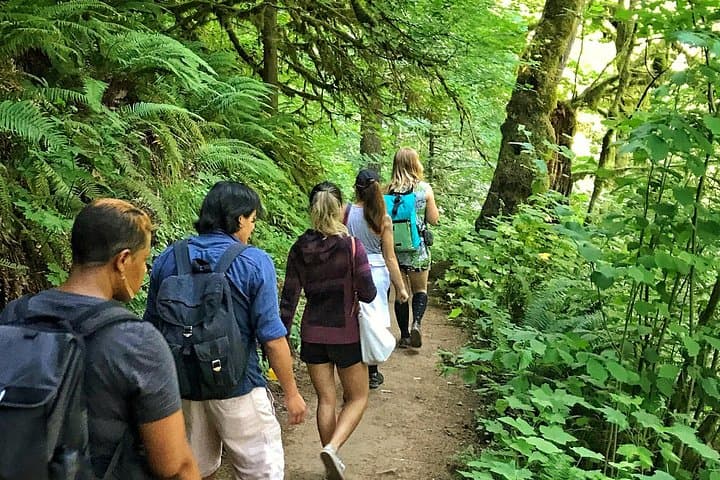
Lose the city for a few hours without leaving it: this 5-mile, 900-foot-gain Forest Park loop threads old-growth pockets, city viewpoints, and cultural landmarks for a compact taste of Portland’s wild side. Expect moss, roots, and stories.