
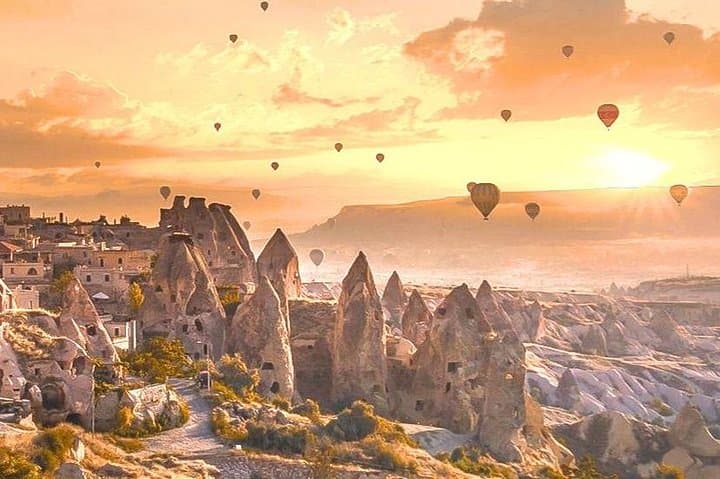
What the day feels like
You start the day before most of Göreme is awake: a sliver of dawn light softening the jagged silhouette of fairy chimneys while minivans line up like patient beasts outside town hotels. The road to Derinkuyu drops away from the high plain into a patchwork of orchards and bare volcanic ridges, the landscape shifting from open steppe to honeycombed stone that looks as if a giant sculptor had chosen this valley as a practice studio. By the time the guide calls for boots and daypacks, the air smells faintly of cold earth and brewing tea.
Derinkuyu is the obvious headline — an underground city dug deep into the tuff by early Christians who needed an invisible refuge. You descend narrow staircases past carved rooms, wine presses and stables; the stone feels cool and patient under your palm. The chambers remind you that the land here has been lived in sideways as much as above: whole communities carving safety into the earth, leaving ventilation shafts and rolling stone doors designed to hide a civilization in plain sight. Today, the corridors are quiet and you feel the place breathe; in the soft cave light it’s easy to imagine muffled footsteps, whispered prayers, and the steady rhythm of daily life in a subterranean town.
Outside again, Melendiz River catches the sun and pulls you toward Peristerema — the Valley of Sky. The valley earns its name: cliffs and pinnacles lean inward, sky squeezed into narrow lanes. You walk four kilometers along a shaded trail, boots crunching on packed dirt and fallen rock, sometimes threading under overhangs smudged with centuries-old frescoes. The river dares you to notice it — small riffles that shine like live silver, cool air that seems to roll downhill to meet you. Birdsong is constant, occasionally punctuated by a pigeon cooing from niches deliberately carved into cliffs for messenger birds. These pigeonholes, visible later in Pigeon Valley, were part utility, part fertilizer economy; people here farmed the stone as carefully as the soil.
The day’s rhythm — cave, river, valley, lookout — feels curated to reveal Cappadocia’s layered identity: geological spectacle, Byzantine faith, and a rural life that adapted ingeniously to a difficult terrain. You’re shepherded through sites by a local guide who threads in history without flattening the mystery: mentions of Hittites, early Christian hermits, the Seljuk and Ottoman eras. The region’s geological story is simple in outline and absurd in ambition — eruptions millions of years ago laid down tuff, and wind and water later carved that soft rock into towers, chimneys, and hollowed-out homes. Humanity then took that malleable stone and carved more than homes: entire subterranean cities.
There’s an accessible practicality to the day. The hike through Peristerema is only 4 km, but there are steps and uneven terrain — nothing technical, but it keeps you honest about footwear and hydration. The underground city is cool and low-ceilinged; claustrophobic visitors should plan accordingly. Lunch is usually a practical, local affair: a shared table with lentil soup, gözleme (flatbreads filled on order), and a slow pot of Turkish tea — the type of meal that reconnects you to why people have long lived here despite the starkness of the land.
Travelers come for postcard panoramas but stay for tactile encounters: running a finger along a chiseled doorway, peering into a pigeon house, or pausing where a fresco is still stubbornly bright. The Pigeon Valley hike back toward Göreme gives you a late-afternoon light that fibers the landscape into warm honey-gold, the towers suddenly intimate, like a village of stone sentinels. By the time you’re dropped off in Göreme you’re sun-worn and keen for a Turkish coffee that tastes like reward.
Practical notes: the full-day tour spans about eight hours and covers driving between sites, a 4 km valley hike, and extensive walking in archaeological areas. You’ll want sturdy shoes, a light daypack, water, sun protection and a sense of curiosity. This isn’t technical mountaineering; it’s active cultural exploration. The routes are family-friendly, but watch small kids in the underground corridors.
Why go? Cappadocia feels designed to trigger the something-else in you — a sense that landscape and human ingenuity have conspired to create a place where every climb, cave, and river bend has a story. This particular southern loop gives you the big-ticket geology and the intimate human scale: subterranean cities carved for survival, rivers that shaped routes, and valleys that shelter frescoes and pigeons alike. It’s an efficient, moving day for travelers who want to leave Göreme with more than photographs — with tactile memories and context about how people have lived with this volcanic region for millennia.
If you go, pace yourself. Let the underground quiet sink in. Walk slowly in Peristerema and listen for the river finding its route. These are the moments that turn a checklist into a day you remember.
Practical details at a glance: the tour departs from Goreme, lasts around eight hours, includes hotel pickup and drop-off, and typically features a light lunch stop. Average budget: expect to pay in the neighborhood of $95–100 per person, depending on season and operator. Bring layers: the underground city can be cool even in summer, and wind across the plains can bite. Above all, bring curiosity — the sites reward attention.
Trail wisdom
Small choices, better day.
Bring sturdy shoes
The 4 km valley walk and the stairways in Derinkuyu require grippy, supportive footwear to navigate uneven, rocky ground.
Carry water and electrolytes
There are limited vendor stops during the hike; bring at least 1–1.5 liters per person and a small electrolyte option for hot days.
Expect cool underground temperatures
Derinkuyu stays noticeably cooler than the surface—pack a light insulating layer even in warm months.
Respect fragile features
Don’t touch faded frescoes or climb on fairy chimneys — oils from hands and added wear accelerate deterioration.
Local knowledge
Read the place, not just the route.
Watch for native species including Rock dove (wild pigeon), Rufous-tailed scrub-robin and other valley songbirds.
Keep an eye out for wildlife during the transition between areas and habitats. Respect distance guidelines.
The soft tuff and centuries-old frescoes are fragile—stay on marked trails, don’t climb formations, and avoid touching painted surfaces.
Follow the guide's instructions on size limits, ethical handling, and leave-no-trace practices.
Small frescoed chapels in side gullies of Peristerema (less busy than main churches). A local family-run teahouse near the river that serves gözleme and strong tea in the afternoon
Locally recommended viewpoints and quiet spots known best to local operators.
Cappadocia’s tuff was formed by volcanic eruptions millions of years ago; its softness made it possible for centuries of human carving, including underground cities used as refuges.
Maritime roots and regional tradition shape the waterways and working coasts.
Seasonal guide
Four versions of the same landscape.
Spring
Best forWildflowers · Pleasant hiking temperatures · Photography at golden hour
ChallengesOccasional rain · Crowds at Easter weeks
Spring (April–May) offers mild weather, blooming valleys and excellent light for photos; expect occasional showers and increasing visitor numbers.
Summer
Best forStable weather · Long daylight hours
ChallengesHigh daytime heat · Busier tours
Summer brings long, sunny days but also strong heat on exposed trails—start early and plan for sun protection and extra water.
Fall
Best forCrisp air for hiking · Rich autumnal colors · Fewer crowds
ChallengesShorter days · Cooler nights
Fall (September–October) often offers the best balance of comfortable hiking temps, dramatic light, and thinner crowds—ideal for photographers.
Winter
Best forSnow-dusted landscapes · Fewer tourists
ChallengesCold temperatures · Occasional snow or icy paths limiting access
Winter can be magical with snow on the chimneys, but check local conditions and tour operation schedules; dress warmly for a chilly underground city.
Operator details
What the booking data adds.
Included
- ✓Hotel pickup and drop-off
- ✓Buffet lunch
- ✓Professional guide
- ✓National Park fees
- ✓All taxes, fees and handling charges
Not included
- —Drinks
- —Gratuities
Good to know
- ✓Infants are required to sit on an adult’s lap
- ✓Suitable for all physical fitness levels
- ✓Children must be accompanied by an adult
Pack with intention
What to bring.
Good to know
Common questions.
The guided walk in Peristerema is approximately 4 km with mixed terrain and some elevation change; expect 1.5–2 hours including stops.
Plan the edges
The details that make the day easier.
Derinkuyu Underground City reaches about 60 meters deep and could shelter up to approximately 20,000 people during times of threat—its rediscovery by modern villagers began in 1963 after a resident removed a wall in his home.
After the hike, head back to Göreme for a late lunch of testi kebabı (pottery-cooked meat) or gözleme at a family-run spot, then grab Turkish tea or a local Anatolian wine at a terrace café while watching the sunset over chimneys.
- Closest airports
- Nevşehir Kapadokya Airport (NAV) ~40 km; Kayseri Erkilet Airport (ASR) ~75 km. Driving distance from Göreme to Derinkuyu ~35 km. Cell service: generally available in towns, intermittent in narrow valleys. Permits: no special permits beyond standard site entrance fees.
This area’s soft tuff and ancient frescoes are vulnerable—stay on trails, avoid climbing rock formations, and pack out all trash to preserve sites for future visitors.
Explore by topic
Follow the threads.
Keep exploring
Make the story part of the trip.
In four hours you can move from shaded canyon ferns to wind-scoured coastal ridgelines, guided by someone who knows where the light—and the hidden views—live. This private half-day hike on the Monterey Peninsula or Big Sur is compact, curated, and perfect for travelers who want depth without a multiday commitment.
 Related story
Beneath a sky of shifting light, Skaftafell’s ice reads like a map of time. This three-hour guided glacier hike mixes technical instruction with geology and culture: compact, safe, and unforgettable.
 Related story
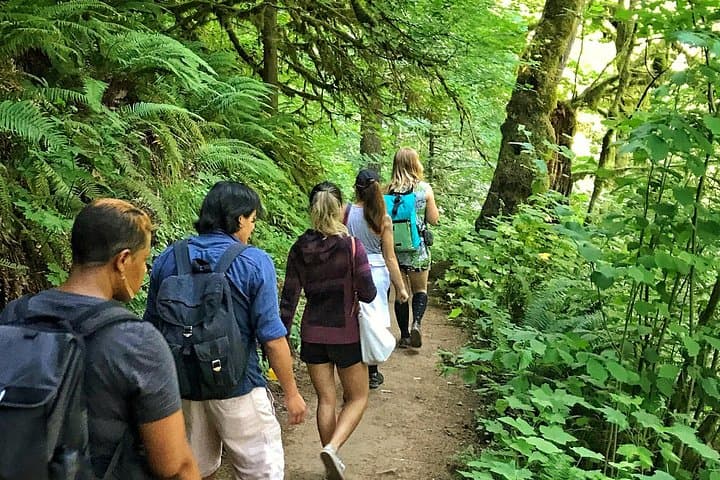
Lose the city for a few hours without leaving it: this 5-mile, 900-foot-gain Forest Park loop threads old-growth pockets, city viewpoints, and cultural landmarks for a compact taste of Portland’s wild side. Expect moss, roots, and stories.