
What the day feels like
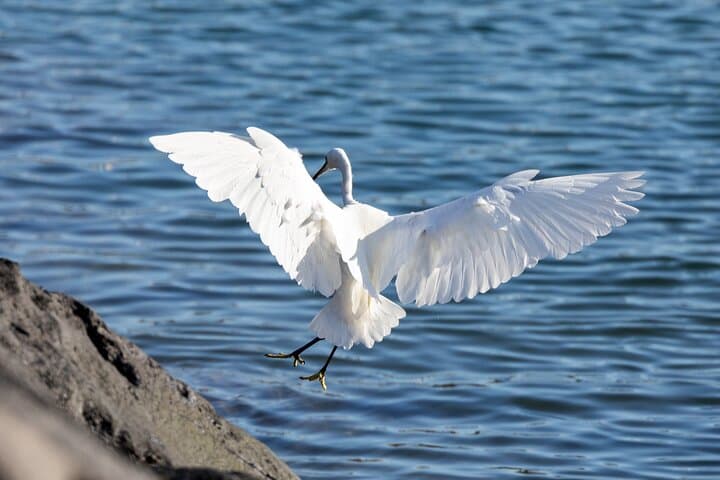
The boat rocks with a confident, ocean-born rhythm, rudder cutting a silver seam through the swell. Spray arcs past the bow and the first dark shapes appear—streaks of wings, paper-thin and relentless—skimming the water as if reading invisible currents. You lean into the wind, binoculars cold in your hands, and a biologist at your shoulder names them matter-of-factly: Cory's shearwater, Bulwer's petrel, a passing skua that dares the flock. It is immediate and intimate, a classroom where every sighting rewrites what you thought you knew about the Atlantic.
This is the Azores Marine Birdwatching Expedition w/ Biologist Guide, a three-hour RIB tour launched from São Miguel that puts you into the patchwork of currents and coastal cliffs that make the Azores an essential waypoint for Atlantic seabirds. The archipelago sits where warm Gulf Stream eddies meet cooler waters, and those gradients collect food and life like a magnet. To ride these water highways is to watch migration and breeding behavior unfold against a backdrop of basalt cliffs and rolling green hills. If you want a nature experience that marries scientific curiosity with the visceral thrill of being at sea, this is it.
The story of birding in the Azores is tied to the islands' volcanic bones and their wobble in the open Atlantic. São Miguel, the largest island, was built by eruptions and later sculpted by waves; rocky promontories and offshore islets now host nesting colonies that have adapted to the islands' isolation. Human history here is maritime—fishermen, whalers, and transatlantic sailors used these islands as navigational beacons—and that human presence has shaped bird populations over centuries. More recently, naturalists have documented not only resident breeders but also a parade of migrants and vagrants that arrive with the spring and autumn currents.
On this expedition you’re not simply spotting birds; you are seeing ecology in motion. A biologist guide explains why shearwaters work the wind shear above the swell, why storm-petrels patrol the chop at dusk, and how seasonal upwellings flush baitfish to the surface, drawing birds in like clockwork. The guides know the local colonies, the best sea-state windows, and the respectful distance that protects nesting birds. That knowledge transforms a boat trip into an informed field day—one where conservation context is part of the narrative.
Practical details are compact and straightforward. The tour runs roughly three hours and accommodates a range of abilities; the RIB platform gets you close to action without the sluggishness of a larger vessel. Expect some spray, steady wind, and sudden bursts of avian drama. The cost is modest and bookings are often available with free cancellation options, making this an easy add-on if your itinerary centers on Ponta Delgada. Peak bird abundance shows in spring and again in autumn when migrants pass, but there are year-round sightings that make any visit worthwhile.
For photographers, the trip is a study in contrasts: fast-moving subjects, changing light, and salt spray. Bring a fast telephoto or a zoom with image stabilization, and use continuous autofocus—this is not a sit-and-wait shoot. For casual travelers, the payoff is in the immediacy: oceanic species you may never have seen before, identified by guide commentary and close enough to reveal quirky behaviors—pellets, food handoffs, and the nervous hovering of chick-fed parents.
Booking logistics are simple: meet in Ponta Delgada, board a RIB, and head for the fringes where seabirds wheel. Cell service may drop once you are offshore, but guides typically carry VHF and safety gear. Wear layers and a waterproof outer shell; the ocean air is brisk even in summer. If you are prone to seasickness, take precautions: ginger, pressure-band bracelets, or an over-the-counter medicine taken before departure will improve comfort and concentration.
Beyond the birds, this kind of tour connects you to local culture in subtle ways. The Azoreans are sailors by history, and many of the guides are fishermen-turned-naturalists whose knowledge combines generations of seamanship with formal biology training. After the trip, stroll the marina for a coffee or fresh seafood—grilled limpets, local tuna, and the Azorean pineapple in a dessert are small cultural notes that tie the sea back to the kitchen.
Why go? Because this expedition compresses a swath of Atlantic natural history into a short, exhilarating session at sea. You’ll leave with more than photos: a clearer sense of how the ocean moves life across continents, of how protected colonies hinge on local stewardship, and of how a well-run RIB trip can bring you face-to-face with seabirds that rarely land on land. For travelers who want science with scenery, and for anyone who wants to feel the Atlantic under their feet, this expedition delivers a rare, concentrated dose of both.
Trail wisdom
Small choices, better day.
Bring sea-sickness prevention
Take medication or use acupressure bands before boarding; conditions can change quickly offshore.
Binoculars and a notebook
A 8–10x binocular and a small notebook or phone app help you track species and behavior described by the guide.
Dress in layers
Wind and spray make ocean trips colder than shore; pack a waterproof jacket and an insulating mid-layer.
Follow guide distance rules
The biologist will set approach limits to avoid disturbing nesting colonies—respect them for better sightings and conservation.
Local knowledge
Read the place, not just the route.
Watch for native species including Cory's shearwater, Bulwer's petrel.
Keep an eye out for wildlife during the transition between areas and habitats. Respect distance guidelines.
Guides follow best practices to minimize disturbance to nesting colonies and the tour supports local monitoring efforts—keep distance and follow instructions to reduce impact.
Follow the guide's instructions on size limits, ethical handling, and leave-no-trace practices.
Offshore islets with small colony ledges best viewed at low swell. Coastal promontories on São Miguel that are good for pre- or post-trip land-based birdwatching
Locally recommended viewpoints and quiet spots known best to local operators.
The Azores have long been a maritime crossroads; local knowledge combines centuries of fishing tradition with modern conservation science.
Maritime roots and regional tradition shape the waterways and working coasts.
Seasonal guide
Four versions of the same landscape.
Spring
Best forPeak migration sightings · Breeding behavior · Milder sea conditions
ChallengesUnpredictable rain · Strong spring winds
Spring is one of the best times for migrant and breeding seabirds—expect abundant activity though weather can vary.
Summer
Best forCalmer seas · Stable daylight hours · Family-friendly outings
ChallengesFewer migrants · Stronger sun exposure
Summer offers gentler waters and long days, making it comfortable for photographers and families.
Fall
Best forAutumn migrants · Interesting vagrant species · Cooler temperatures
ChallengesRougher seas possible · Less predictable weather
Autumn brings a new wave of migrants and rare visitors, though sea state can be choppier.
Winter
Best forResident species observation · Storm-petal study
ChallengesLimited trips in stormy weather · Colder, rougher seas
Winter is quieter but offers unique sightings; operations depend on sea conditions and safety.
Operator details
What the booking data adds.
Included
- ✓Impermeable Full Suit and Life Vest
- ✓Knowledgeable Wildlife Guide
- ✓0% Carbon 0% Noise HPDE e-Boat
- ✓Experienced Skipper
- ✓Insurance
- ✓All Necessary Equipment
Not included
- —Personal Water supply
- —Sunscreen and Lip Balm
- —Hotel Pickup & Drop-off (available separately)
Good to know
- ✓Service animals allowed
- ✓Public transportation options are available nearby
- ✓Specialized infant seats are available
- ✓Not recommended for travelers with spinal injuries
- ✓Not recommended for pregnant travelers
- ✓Not recommended for travelers with poor cardiovascular health
- ✓Suitable for all physical fitness levels
- ✓IT IS IMPORTANT TO UNDERSTAND THAT it is not possible to control animals' behavior in the wild, or to guarantee that you will see a specific species at a specific time frame.
- ✓This is a high conservational risk activity - a qualified Guide will always be there to ensure the best environmental & conservation standards during tour.
- ✓English is the official language, but our team is multinational and will do their best to accommodate your preferred language (this is not guaranteed).
- ✓No Children under the age of 4
Pack with intention
What to bring.
Good to know
Common questions.
The expedition is approximately three hours and typically departs from a harbor in Ponta Delgada on São Miguel island.
Plan the edges
The details that make the day easier.
The Azores support significant breeding populations of Cory's shearwater (Calonectris borealis), making the archipelago a key site for North Atlantic seabird conservation.
After the trip, head to Ponta Delgada's marina for grilled seafood and local pineapple desserts; chat with guides over a coffee to hear fishing lore and conservation stories that connect the ocean to island life.
- Closest airport
- João Paulo II Airport (PDL). Typical meeting point: Ponta Delgada marina. Driving from central Ponta Delgada to harbor: under 15 minutes. Cell service: reliable in town, patchy offshore. Permits: none required for visitors; follow guide instructions.
Operators adhere to approach distances and avoid disturbing colonies; travelers should avoid discarding waste at sea and follow all guide instructions to protect nesting sites.
Explore by topic
Follow the threads.
Keep exploring
Make the story part of the trip.
In four hours you can move from shaded canyon ferns to wind-scoured coastal ridgelines, guided by someone who knows where the light—and the hidden views—live. This private half-day hike on the Monterey Peninsula or Big Sur is compact, curated, and perfect for travelers who want depth without a multiday commitment.
 Related story
Beneath a sky of shifting light, Skaftafell’s ice reads like a map of time. This three-hour guided glacier hike mixes technical instruction with geology and culture: compact, safe, and unforgettable.
 Related story
Lose the city for a few hours without leaving it: this 5-mile, 900-foot-gain Forest Park loop threads old-growth pockets, city viewpoints, and cultural landmarks for a compact taste of Portland’s wild side. Expect moss, roots, and stories.