

What the day feels like
You step out of the van into a lunar sea of sand and broken granite, the air a clean, thin whisper at 2 a.m. The world here keeps its own hours — a sky so heavy with stars it feels close enough to touch, and a cold that darts at exposed skin. Ahead, a roughly hewn line of headlamps threads up the slope like a constellation of tiny, determined planets. This is Mount Sinai at night: austere, quietly theological, and insistently physical. It asks you for breath and focus, and in return it gives light.
Mt. Sinai (Jabal Musa) rises to 2,285 meters (7,497 feet), a granite backbone in Egypt’s South Sinai range. For millennia it’s been a crossroads where the terrestrial and the sacred overlap — the mountain most often associated with Moses and the Ten Commandments, and the valley below that shelters St. Catherine’s Monastery, a 6th‑century Byzantine outpost built around the reputed site of the Burning Bush. The story of Sinai is not one story but a palimpsest: Bedouin survival lore, Byzantine architecture, and modern tourism layered across wind-polished rock.
The climb itself is straightforward in plan and exacting in practice. Most visitors leave Sharm el Sheikh in the night by coach, a three‑ to four‑hour desert drive that lets the desert dim slowly into predawn. From the monastery guest area there are two main approaches: the “Steps” — locally known as the Siket Sayidna Musa — a steep line of roughly 750 carved steps that runs directly to the summit chapel, and a gentler, longer goat track that winds higher and steadier through scree. Guides time groups so arrival matches sunrise; the last stretch of the ascent is done in a hush broken only by breath and the soft scrape of footwear.
Geologically, Sinai is granite carved by eons of wind and temperature shifts. That granite is honest and unadorned — large slabs, broken faces, and sand pockets that move under boot. The summit is a small plateau with a chapel and a mosque, where early light spills over a floor that has borne pilgrim prayers as long as human memory here. From the peak the landscape opens into serrated ridgelines, far deserts, and the pale ribbon of the Red Sea far to the east. The sunrise is not a single spectacular salvo; it is graduated — first a cool purple, then edges of copper slicing across rock faces, then the desert waking in color.
St. Catherine’s Monastery deserves as much time as the climb. Founded in the 6th century and a UNESCO World Heritage Site, it still functions as a living monastery and houses one of the most important collections of early Christian manuscripts and icons outside the Vatican. Its courtyard and small museum give a quiet, tactile sense of the area’s long religious significance. The monastery village down below is modest: a collection of guesthouses, sparse shops, and Bedouin vendors whose tea is as warming as the small portable braziers they keep between them.
Practicality is part of the romance here. The night hike is doable for many fit travelers but expect steep, sustained effort. Guided groups typically note ascent times of 2–4 hours, with total tour durations (including travel and a monastery visit) running from 8 to 12 hours for day departures and longer if you choose the overnight option. Many operators offer an option for a camel-assisted approach to the lower slopes; camels shorten the easy section but not the final climb. For a quieter experience, arrive from Dahab or book a private overnight stay in the monastery guesthouse — sunrise from the top is the same, but the night feels different when you aren’t on a packed group schedule.
Safety and comfort come down to preparation. A warm layer (temperatures near the summit can be cold year-round), a reliable headlamp, sturdy hiking shoes with good grip, and two liters of water are minimums. The trail is well worn but uneven in places; trekking poles help on the descent. Respect is also part of the local protocol: St. Catherine’s remains a religious site; dress modestly and follow monastery rules about photography and access. Book with local operators whenever possible — Bedouin guides provide cultural context and their knowledge of the mountain’s routes is invaluable.
There’s a rhythm to the place that doesn’t translate to a checklist. The slow, headlamp-lit climb gives you time to notice the small things: the scent of tea warming in a Bedouin cup, a fox padding away down a gulley, the way the rock seems to change texture as the sun lifts. The payoff is both physical — the sense of having moved across height and distance — and existential: standing where generations have stood and feeling the deliberate quiet of altitude and desert.
Mt. Sinai is not a casual sunset stroll, nor a place to rush. It rewards early mornings, respect, and the willingness to be slightly uncomfortable. If you go for the sunrise, time your approach so the final thirty minutes are with other hikers; the shared hush at dawn is part of the experience. If history and solitude pull you, plan a longer stay and walk the valleys and rocky ridgelines by day. Either way, you’ll come away with the kind of memory that keeps you turning desert sand in your hand and thinking about it for a long time afterwards.
Trail wisdom
Small choices, better day.
Start with a headlamp and spare batteries
You’ll be climbing pre-dawn on uneven stone steps; hands-free light is essential for safety and efficient pacing.
Layer for temperature swings
Temperatures can drop sharply before dawn and warm rapidly after sunrise—pack an insulated layer and a wind shell.
Bring at least 2 liters of water
Desert air and physical exertion dehydrate quickly; sip regularly rather than waiting until you’re thirsty.
Use trekking poles for the descent
Poles ease strain on knees over steep, loose rock and make the long down-step sections more controlled.
Local knowledge
Read the place, not just the route.
Watch for native species including Nubian ibex, Sinai agama (rock lizard).
Keep an eye out for wildlife during the transition between areas and habitats. Respect distance guidelines.
Respect the monastery’s rules, avoid littering on trails, and support local Bedouin guides to keep tourism benefits in the community.
Follow the guide's instructions on size limits, ethical handling, and leave-no-trace practices.
Walk the Holy Valley near the monastery at midday for quieter views and ancient rock inscriptions. A short ridge hike near the monastery rewards with sweeping views of sunrise light on surrounding peaks
Locally recommended viewpoints and quiet spots known best to local operators.
St. Catherine’s Monastery was established in the 6th century (by order of Byzantine authorities) and preserves an extensive collection of early Christian manuscripts and icons.
Maritime roots and regional tradition shape the waterways and working coasts.
Seasonal guide
Four versions of the same landscape.
Spring
Best forcooler climbing conditions · wildflower sightings in lower valleys
Challengesoccasional wind storms · cool nights
Spring brings milder daytime temperatures and clearer skies, but nights can still be cold and windier than summer.
Summer
Best forlong daylight for day hikes · combination trips with Red Sea activities
Challengeshigh daytime heat at lower elevations · limited nighttime cooling
Summer heat is intense in the valley and lower slopes—plan night ascents and travel early to avoid midday exposure.
Fall
Best forcomfortable climbing temperatures · stable weather for clear sunrises
Challengesshorter daylight hours later in season · busy tourist periods
Autumn is ideal for temperate mornings and crisp sunrises; it’s the most popular time, so book accommodations and tours in advance.
Winter
Best forstargazing and quiet trails · firm ground on cooler days
Challengescold nights near summit and potential icy patches · fewer services open in the area
Winter brings very cold nights but some of the clearest skies for star-lit approaches; dress for freezing conditions at altitude.
Pack with intention
What to bring.
Good to know
Common questions.
Plan on 2–4 hours to reach the summit depending on your pace and route; most guided tours allow 3–6 hours roundtrip for the hike itself.
Plan the edges
The details that make the day easier.
St. Catherine’s Monastery is one of the world’s oldest continuously operating Christian monasteries, founded in the 6th century and inscribed as a UNESCO World Heritage Site.
Bedouin hospitality is integral: local guides often serve sweet mint tea, tell oral histories of the mountain, and sell handmade silver and woven goods—buying locally supports these communities.
- Summit
- 2,285 m | Typical ascent: 2–4 hrs | Transfer from Sharm el Sheikh: ~3–4 hrs | Dress: modest at monastery | Permits: none required but monastery entry fee applies.
Choose licensed local guides, avoid single‑use plastics on the trail, and follow monastery rules to minimize cultural and ecological impact.
Explore by topic
Follow the threads.
Keep exploring
Make the story part of the trip.
In four hours you can move from shaded canyon ferns to wind-scoured coastal ridgelines, guided by someone who knows where the light—and the hidden views—live. This private half-day hike on the Monterey Peninsula or Big Sur is compact, curated, and perfect for travelers who want depth without a multiday commitment.
 Related story
Beneath a sky of shifting light, Skaftafell’s ice reads like a map of time. This three-hour guided glacier hike mixes technical instruction with geology and culture: compact, safe, and unforgettable.
 Related story
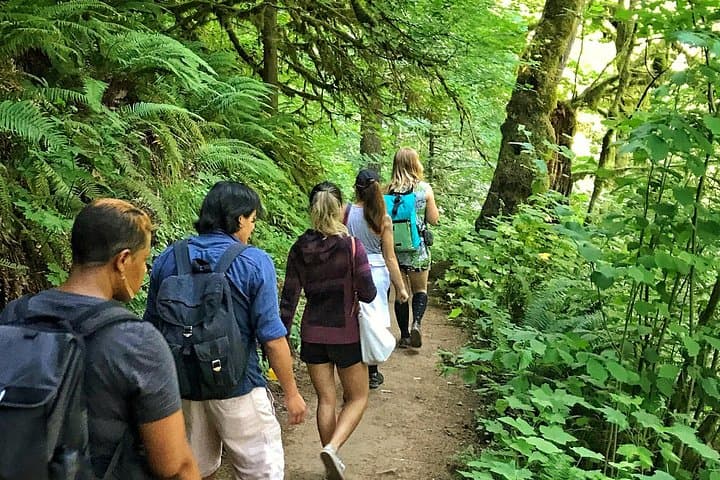
Lose the city for a few hours without leaving it: this 5-mile, 900-foot-gain Forest Park loop threads old-growth pockets, city viewpoints, and cultural landmarks for a compact taste of Portland’s wild side. Expect moss, roots, and stories.