

What the day feels like
On the first run the forest does most of the talking. The cables hum as sunlight slices through emergent crowns; the air smells of wet earth and citrus flowers. Your guide counts you down, the harness snug at your hips, and for ten heartbeats the jungle is an orchestra—monkeys barking high and far, a toucan’s nasal yelp, the distant bronze rush of river. Then gravity takes hold and you fly: a ribbon of adrenaline that threads you between cathedral trees and over the Sarapiquí River, the canopy rearranging itself into a new kind of map—one read in motion.
Sarapiquí Canopy is less a single attraction than a way to understand a place. Nestled in the lush lowlands of Heredia province, roughly an hour and a half north of San José, Sarapiquí folds rainforest, river and rural paddocks into a compact adventure corridor. The canopy experience—zipline platforms suspended amid primary and secondary forest—gives an aerial introduction to the area’s ecology. It lets you feel the altitude-change of the forest in your bones while the Sarapiquí River, a dynamic green artery, dares you to return to earth and meet its rapids.
For many visitors the region’s other calling card is its water. The Sarapiquí River runs hot with biodiversity and with adrenaline: commercial tours here run Class III and IV rapids, a steady sequence of drops and boogieing waves that reward teamwork and a steady paddle stroke. Operators in the area offer both shared runs for groups and private raft options for families or travelers seeking a gentler, more personal experience. Between the ziplines and the rafts the rhythm of a day in Sarapiquí alternates between high, fast, and intimate.
History and geology are stitched into the landscape. The valley is part of Costa Rica’s Central Volcanic Mountain Range; soils are volcanic and rich, which supports dense forest and a complex food web. The terrain funnels humid air from the Caribbean, feeding heavy, productive rain—one reason biodiversity explodes here. Economically, Sarapiquí has long been a working landscape: cattle, banana and pineapple operations exist alongside smallholder coffee and cacao farms, and the tension between agriculture and conserved forest is a constant subplot to any eco-tour.
Culture in Sarapiquí is a pragmatic, welcoming one. Guides are often local—steeped in bird calls, plant names and the river’s moods—and the small communities around Puerto Viejo de Sarapiquí base a lot of their livelihoods on tourism, so hospitality is sincere and practical. Expect roadside sodas serving gallo pinto and fried yuca, and small coffee stands where you can taste beans that were dried just hours earlier. Many operators fold wildlife spotting into tours: sloths cling indifferent to canopy platforms, howler monkeys mark their boundaries with guttural proclamations, and hummingbirds inspect the zipline platforms with the curiosity of equals.
Practically speaking, Sarapiquí is a half-day to full-day destination depending on your itinerary. A typical morning: short transport from Puerto Viejo de Sarapiquí, a safety briefing and harnessing, then a circuit of ziplines—some operators include a long “superline” that glides across canopy gaps, while others place a final platform with a panoramic view of the river valley. Rafting runs commonly take two to three hours on the river itself; add transport and changing time and plan for a four- to six-hour window. Guides provide helmets, lifejackets and local knowledge; the right clothes and timing make the difference between a soggy memory and a crisp one.
Timing matters: mornings bring clearer skies and more active birds; afternoons can bring heavy tropical showers. In the dry months the forest is still wet enough to glow, but the river drops slightly and technical rapids calm. In the green season expect higher water and punchier rapids; the river feels more theatrical but also more unpredictable. Always listen to your guide’s assessment—the river is the one with agency here.
If you go: pick footwear that drains and grips—the same shoes that will feel sticky at the edge of a platform will be the ones you’re glad to have in the raft. Hydrate before arriving, and bring a small waterproof for camera gear. Choose a private raft if you want more wildlife interpretation and a relaxed pace; choose the shared run for higher-energy boofs and team-focused rapids.
Beyond the thrills there is quiet payoff: the chance to learn the language of a rainforest. Guides will point to leaf patterns that indicate a frog’s presence, or an elbow of vine that marks a coati trail. On the river you learn to read the current like sheet music—eddy, seam, pour-over—and the skills translate into confidence in other wild places. In short, Sarapiquí Canopy is as useful as it is exhilarating: a place to test your nerves, to sharpen your senses, and to come away with a better understanding of the rainforest’s rhythm.
For planning, pack light but smart: a small daypack with water, sunscreen, quick-dry shorts and a lightweight rain shell will serve you well. Book morning slots for clearer conditions and the best wildlife viewing. If you’re traveling from La Fortuna or San José, many operators run transfers; if you have time, pair the day with a coffee plantation visit or the La Paz Waterfall Gardens and Poás Volcano to round out your volcanic and biodiversity education.
Sarapiquí doesn’t ask for heroics. It asks for attention. Get that right and the canopy gives you a view most travelers never earn—the jungle, up close and in motion, teaching you its rules one zip and one rapid at a time.
Trail wisdom
Small choices, better day.
Go early for wildlife
Morning launches bring clearer skies and the most active birds and mammals around canopy platforms and riverbanks.
Rent a waterproof case
Protect phones and small cameras during rafting—waves and splashes are frequent on Class III–IV sections.
Bring grip-friendly footwear
Closed-toe shoes with drainage and good tread work for both zipline platforms and river launches.
Choose private if you want interpretation
Private rafting or canopy tours provide more guide interaction and slower pacing for wildlife spotting.
Local knowledge
Read the place, not just the route.
Watch for native species including Howler monkeys, Toucans.
Keep an eye out for wildlife during the transition between areas and habitats. Respect distance guidelines.
Operators partner with local reserves and support sustainable tourism practices; minimizing single-use plastics and staying on marked trails helps protect the watershed.
Follow the guide's instructions on size limits, ethical handling, and leave-no-trace practices.
Walk the quieter trails near La Virgen for intimate birdwatching. Visit a nearby smallholder cacao farm to taste locally processed chocolate
Locally recommended viewpoints and quiet spots known best to local operators.
Sarapiquí has long been a working landscape where agriculture and conservation intersect; local guides often come from families with multi-generational ties to the river.
Maritime roots and regional tradition shape the waterways and working coasts.
Seasonal guide
Four versions of the same landscape.
Spring
Best forBirdwatching · Less mid-day rain
ChallengesOccasional showers · Higher humidity
Spring offers lively bird activity and relatively stable mornings—plan canopy runs early for the clearest windows.
Summer
Best forLonger daylight · Warm river swims
ChallengesAfternoon storms · Increased insect activity
Summer brings warm days and vibrant plant growth; expect brief but strong afternoon showers that can affect rafting schedules.
Fall
Best forLush forest photography · High-water rafting
ChallengesHeavier river currents · Unpredictable weather
Fall often yields higher river flows—excellent for more dynamic rapids but check guide safety briefings.
Winter
Best forCooler mornings · Fewer crowds
ChallengesCooler overnight temps · Occasional regional storms
Winter months can be cooler with clearer weather windows; pack a light insulating layer for pre- and post-tour downtime.
Pack with intention
What to bring.
Good to know
Common questions.
Most canopy circuits last 1–2 hours including a safety briefing; expect an overall visit of 2–3 hours when you add transport and changing time.
Plan the edges
The details that make the day easier.
Sarapiquí lies in Heredia province and its river basin is recognized for high biodiversity—hundreds of bird species inhabit the region, making it a favorite for birdwatchers and naturalists.
Sodas and roadside stands serve fresh Costa Rican coffee and gallo pinto; small cacao farms nearby offer tours and tastings that reveal the region’s agricultural ties to the rainforest.
- Location
- Puerto Viejo de Sarapiquí (Heredia). Typical duration: 3–6 hours. Gear: closed-toe shoes, waterproof case, water bottle. Difficulty: moderate. Booking: advance reservations recommended.
Choose operators that minimize single-use plastics, support local guides, and contribute to watershed conservation efforts; stay on marked trails and avoid disturbing wildlife.
Explore by topic
Follow the threads.
Keep exploring
Make the story part of the trip.
In four hours you can move from shaded canyon ferns to wind-scoured coastal ridgelines, guided by someone who knows where the light—and the hidden views—live. This private half-day hike on the Monterey Peninsula or Big Sur is compact, curated, and perfect for travelers who want depth without a multiday commitment.
 Related story
Beneath a sky of shifting light, Skaftafell’s ice reads like a map of time. This three-hour guided glacier hike mixes technical instruction with geology and culture: compact, safe, and unforgettable.
 Related story
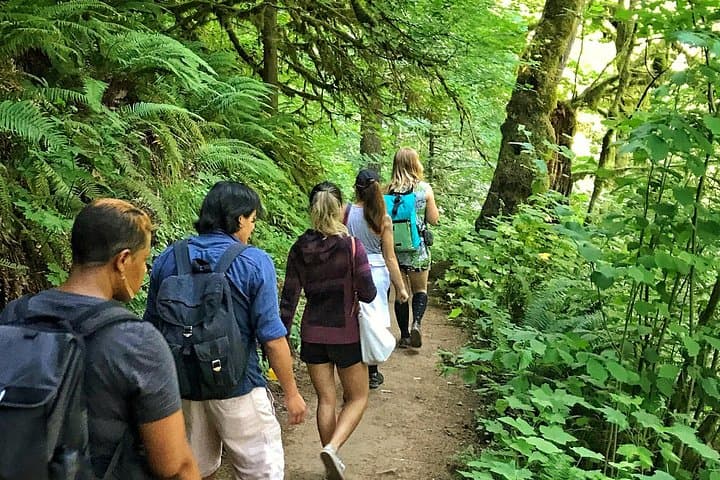
Lose the city for a few hours without leaving it: this 5-mile, 900-foot-gain Forest Park loop threads old-growth pockets, city viewpoints, and cultural landmarks for a compact taste of Portland’s wild side. Expect moss, roots, and stories.