
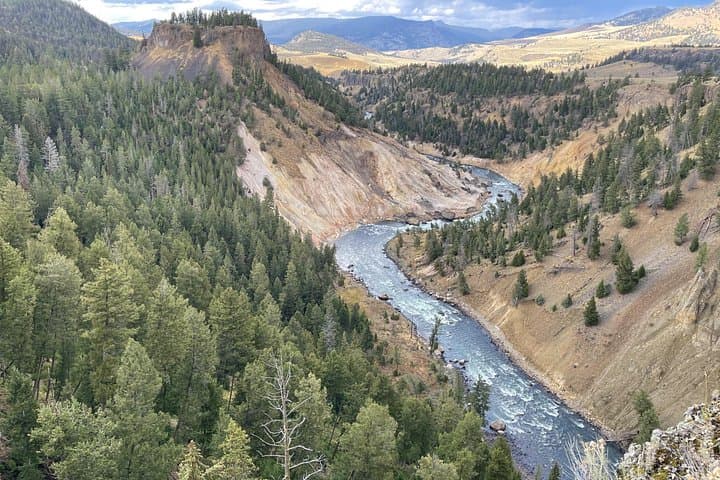
What the day feels like
You step out of the private SUV before sunrise and the air immediately carries that clean, cold honesty only high places and volcanic soil can deliver. Steam murmurs from the basin ahead—Old Faithful’s plume already visible against a pale sky—and the guide gives a quiet nod, the kind that says, We’ll wait for the right moment. For ten hours you’ll move through the park at a human pace: slow enough to watch mule deer graze in the road’s shoulder, fast enough to catch the afternoon light spill into the Grand Canyon of the Yellowstone.
This is a different kind of Yellowstone visit. Instead of a checklist rushed from a rental car, a private tour stitches together geology, wildlife, and stories into a single, continuous day. The itinerary leans on three icons—Old Faithful, Grand Prismatic Spring, and the Grand Canyon of the Yellowstone—but the value is less in the stops and more in how they’re framed: a hydrothermal system that pushes steam like a living thing, a canyon that carved its own ragged personality in acidified rock, and a guide who can read the subtle signs of a bison herd’s mood.
Geology here is not background noise; it’s the cast. Yellowstone sits on a supervolcano, and every boardwalk you traverse is built across the skin of a landscape that keeps moving. Grand Prismatic’s colors are a compact lesson in thermophilic microbes—orange, yellow, and emerald bands that owe their hues to temperature and mineral chemistry. The Canyon’s plunging walls tell a different story: episodic floods and lava flows that cut and folded the land over eons. When you’re standing on Artist Point, the canyon seems to exhale, and you can almost feel the river daring you to slow down and watch it work.
Wildlife isn’t an occasional bonus—it’s a near-constant presence. Bison migrate through open valleys like slow weather systems; elk sound a brassy alarm at twilight; bald eagles pick at thermal pools along the river. A private guide not only increases your odds of sightings but also interprets behavior in ways a quick stop cannot: why a cow bison holds her calves close, or where wolves historically shaped the park’s trophic cascade.
Culturally, Yellowstone is layered. Indigenous tribes—Shoshone, Bannock, Nez Perce—have narratives about these thermal features and the place that predate the national park’s 1872 designation, the world’s first. Later, turn-of-the-century railroads and the rustic architecture of lodges like Old Faithful Inn added another human chapter: tourism as a kind of conservation engine. That past remains visible in hand-laid stone fireplaces and Park Service signage that stitches interpretation to protection.
Practical advantages of booking a private tour here are immediate. Ten-hour timing (expect a full-day outing) means your guide will program stops to avoid peak crowds, position you for the best light for photography, and handle logistics—park fees, parking, safety around wildlife. With a private vehicle, you’re not jockeying for space in a crowded lot; you’re positioning for moments.
Plan for a day that is both intimate and unpredictable. Mornings are best for wildlife—bears and wolves prefer dawn and dusk—while mid-day thermals bloom under stronger sun. Layer clothing: mornings can be icy, boardwalks steamy and humid, and canyon rims wind-exposed. Footwear should be sturdy and comfortable for short walks on uneven ground. Bring binoculars and a telephoto lens for wildlife, but respect distance rules: a guide’s warning to back up is not just etiquette; it’s safety.
For photographers, the itinerary is generous. Old Faithful’s eruption is choreography—your guide will time vantage points. Grand Prismatic’s overlook benefits from midday clarity but also a higher sun that can wash color; aim for mid-morning or late afternoon for better saturation. At the canyon, the warm late-afternoon light softens the rock faces, making Artist Point and Uncle Tom’s viewpoints especially rewarding.
Booking a private tour with a knowledgeable local operator also gives you access to stories that deepen the landscape. Ask about the Park’s fire history, how geothermal monitoring helps predict changes, and where the best chance is to see river otters or trumpeter swans. Expect the day to move like the terrain: segments of concentrated attention followed by long sweeps where the scenery does the talking.
This tour is not a rugged backpacking day; it’s a curated immersion. It’s ideal for families wanting a comfortable introduction, photographers seeking controlled opportunities, or small groups who favor depth over speed. Yes, the cost reflects the bespoke nature—expect to invest for the privacy and expertise—but the return is time: time with the landscape, with a guide who slows the park down so you can listen.
When the day winds down and you leave the steaming basins behind, you’ll have the practical takeaways—a folder of photos, tips on where to hike next, and a better sense of Yellowstone’s ecological pulse. More importantly, you’ll carry a new rhythm: the park’s cadence of steam, river, and herd that keeps you attentive long after you’ve left.
For a curated, relaxed, and deeply informative way to experience Yellowstone’s most famous features, consider booking a private tour that stitches the park’s highlights into a single day—where geology feels animated, wildlife has a script, and every stop is given the time it deserves. Learn more or book a private guide here: <a href="https://app.advcollective.com/local-experts/yellowstone-private-tour-old-faithful-grand-prismatic-grand-canyon-in-a-day">Yellowstone Private Tour: Old Faithful, Grand Prismatic & Grand Canyon in a Day</a>.
Trail wisdom
Small choices, better day.
Start early for wildlife
Wildlife is most active at dawn; a private tour’s early start can put you in the right valley at the right time.
Stay on boardwalks
Thermal areas are fragile and dangerous—always use boardwalks and follow ranger guidance.
Bring optics
Binoculars or a 200mm+ telephoto let you see animals without getting close.
Listen to your guide
Guides balance safety, crowd timing, and interpretation—follow their timing suggestions for best photos and sightings.
Local knowledge
Read the place, not just the route.
Watch for native species including Bison, Elk.
Keep an eye out for wildlife during the transition between areas and habitats. Respect distance guidelines.
Stay on designated paths and boardwalks to protect fragile thermal features; avoid approaching or feeding wildlife and pack out all trash.
Follow the guide's instructions on size limits, ethical handling, and leave-no-trace practices.
Firehole River swimming area (seasonal, and always check safety before entering). Artist Point viewpoints on the North Rim for quieter canyon views
Locally recommended viewpoints and quiet spots known best to local operators.
Yellowstone was established as the world’s first national park in 1872, setting the precedent for public land conservation.
Maritime roots and regional tradition shape the waterways and working coasts.
Seasonal guide
Four versions of the same landscape.
Spring
Best forWildlife viewing · Fewer crowds
ChallengesUnpredictable weather · Patchy road openings
Spring brings newborn elk and migrating birds, but expect variable road access and chilly mornings.
Summer
Best forFull access to park roads · Long daylight hours
ChallengesPeak crowds · Limited parking at popular sites
Summer gives full park access and stable conditions—book early to avoid crowds at Old Faithful and Grand Prismatic.
Fall
Best forCrisp light for photos · Calmer crowds
ChallengesCooler temperatures · Shorter days
Fall’s cooler light enhances canyon colors and reduces visitors—ideal for photography and quieter wildlife encounters.
Winter
Best forSnow-dusted landscapes · Unique thermal contrasts
ChallengesLimited road access · Cold conditions
Winter is dramatic but requires specialized transport (snowcoach/snowmobile) and cultured expectations for access.
Operator details
What the booking data adds.
Included
- ✓Soda/Pop
- ✓Bottled water
- ✓Yellowstone Map
- ✓Sandwiches
- ✓Binocular
- ✓Muffins - Sandwiches
- ✓Granola Bars, Protein Bars and some sweat treats
Not included
- —Entrance fee National Park
Good to know
- ✓Public transportation options are available nearby
- ✓Specialized infant seats are available
- ✓Not recommended for travelers with spinal injuries
- ✓Not recommended for pregnant travelers
- ✓Not recommended for travelers with poor cardiovascular health
- ✓Suitable for all physical fitness levels
Pack with intention
What to bring.
Good to know
Common questions.
This private tour runs roughly 10 hours (full day) and covers key park highlights with time for stops and photo opportunities.
Plan the edges
The details that make the day easier.
Yellowstone National Park was established by the U.S. Congress and signed into law by President Ulysses S. Grant on March 1, 1872—the first national park in the world.
After a day in the park, stop at Old Faithful Inn to admire rustic architecture and a classic lobby fireplace; nearby gateway towns like West Yellowstone and Gardiner offer hearty local fare—think bison or elk dishes—and small breweries where guides and rangers swap stories.
- Closest major airport
- Jackson Hole (JAC). Typical meeting point: Jackson or West Yellowstone depending on operator. Driving distance from Jackson to Old Faithful: ~60–90 miles (1.5–2.5 hours) depending on stops. Cell service: limited and patchy in many areas. Permits
- passes
- Park entrance fee required.
This area’s hydrothermal features are fragile—stay on boardwalks, pack out all trash, never collect thermal minerals or disturb wildlife, and follow Leave No Trace principles.
Explore by topic
Follow the threads.
Keep exploring
Make the story part of the trip.
In four hours you can move from shaded canyon ferns to wind-scoured coastal ridgelines, guided by someone who knows where the light—and the hidden views—live. This private half-day hike on the Monterey Peninsula or Big Sur is compact, curated, and perfect for travelers who want depth without a multiday commitment.
 Related story
Beneath a sky of shifting light, Skaftafell’s ice reads like a map of time. This three-hour guided glacier hike mixes technical instruction with geology and culture: compact, safe, and unforgettable.
 Related story
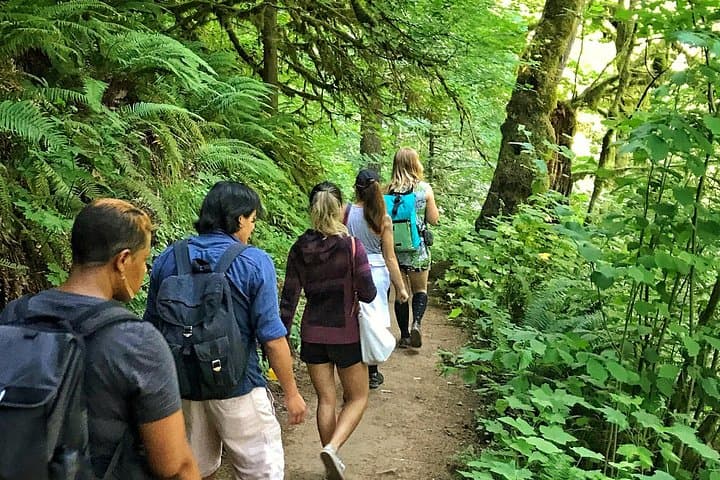
Lose the city for a few hours without leaving it: this 5-mile, 900-foot-gain Forest Park loop threads old-growth pockets, city viewpoints, and cultural landmarks for a compact taste of Portland’s wild side. Expect moss, roots, and stories.