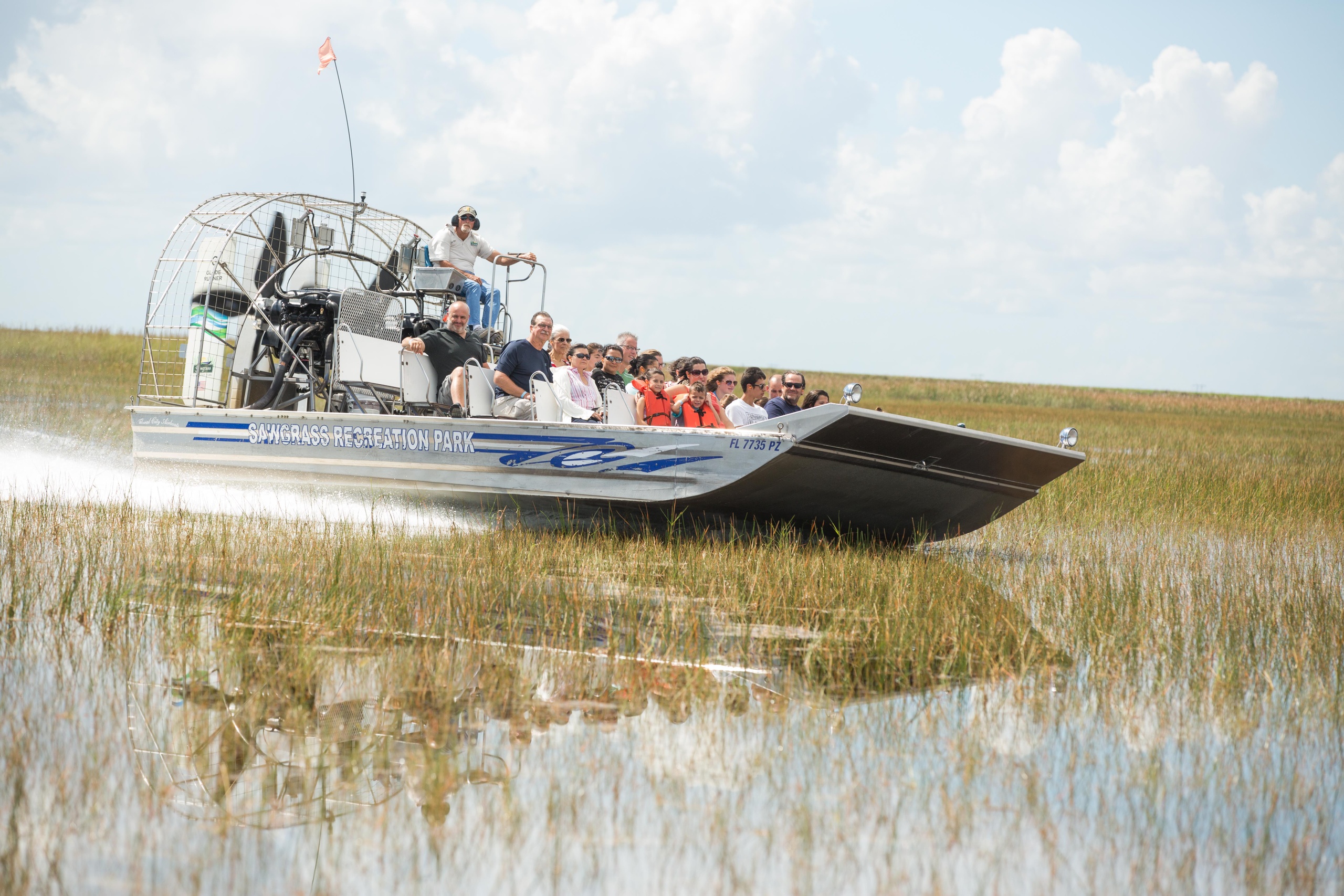
Airboat Adventures in Weston, Florida

Weston, Florida

Skimming low over sawgrass mats and shallow marsh, airboats are the fastest, most cinematic way to read the Everglades from water level. From short wildlife runs to full-length ecology tours, airboat outings around Weston peel back the layers of South Florida’s freshwater Everglades — big skies, furtive alligators, wading birds, and the slow, patient hydraulics of a subtropical wilderness.

36
Activities
Year-round (peak wildlife viewing Nov–Apr)
Best Months

Top Airboat Trips in Weston

36 trips • Book with confidence • Instant confirmation

Why Weston Is a Compelling Base for Airboat Tours

Weston sits on the suburban edge of one of North America’s most singular wetlands — the freshwater Everglades that fringe Broward County. The geography here is not dramatic in the alpine sense; it’s spatial. Vast, horizontal, and alive, the sawgrass prairies and shallow marshes stretch toward low, luminous horizons. Airboats let you experience that horizontality at speed: the hull skims the surface, the prop wakes make the grass inhale and exhale, and the breeze carries birdcalls and the faint metallic echo of the motor. That close combination of intimacy and momentum is the essence of the airboat trip — you see small-scale behaviors (a heron striking, a turtle surfacing) in the context of colossal wetlands.

What sets Weston apart as an airboat gateway is accessibility without spectacle. Unlike deep-park staging areas that require long drives, outings from the Weston corridor can fit into a half-day with quick access to open marsh and backchannel sloughs. Tours range from short, high-octane wildlife runs to interpretive ecology trips that slow the pace, anchoring to marsh edges to scan for alligators, marsh rabbits, and migratory shorebirds. The region’s freshwater Everglades is biologically distinct from the coastal mangrove fringes and salt marshes farther south; it’s a place of sawgrass, cattail channels, and shallow basins that respond dramatically to seasonal rainfall. That seasonality governs what you’ll see and how you’ll plan: the dry season concentrates wildlife into predictable channels; the wet season exchanges dusty flats for a shallow, reflective sea that draws wading birds and floods the landscape with life.

Airboating in Weston is as much about timing and expectation as it is about the ride. Operators often pair fast runs with quieter interpretive stops, and many visitors combine airboat time with birding walks, kayak trips along calmer waterways, or visits to local nature centers that contextualize what you’re seeing. For photographers and naturalists, airboats offer fleeting vantage points that are hard to replicate on foot — a glinting gator silhouette in a cattail throat, a line of ibis marching through ankle-deep water, the incandescent geometry of a marsh sunrise. For families and casual visitors, short rides deliver thrills and close encounters without technical skill or equipment. For responsible travelers, the best airboat experiences are those that foreground habitat sensitivity: keeping distance from nesting areas, minimizing engine idling, and learning the seasonal rhythms that shape wildlife visibility.

The appeal is practical as much as poetic: airboats access places that are otherwise impassable by conventional boat. Their shallow draft and fan-driven propulsion mean operators can cross mudflats, glide over submerged vegetation, and reach quiet sloughs where wildlife concentrates. That mobility makes half-day itineraries possible and expands options for photographers and naturalists seeking morning or evening light.

Seasonality deeply affects the character of trips. November through April generally offers cooler temperatures, fewer insects, and higher concentrations of visible wildlife as animals congregate along shrinking water channels. The wet season — roughly May through October — brings higher water levels, dramatic seasonal vegetation growth, and the peak of nesting season for many waterbirds, but it also means higher humidity, afternoon thunderstorms, and more mosquitoes. Choosing the right window depends on whether you prioritize comfort, spectacle, or specific species encounters.

Activity focus: Guided airboat tours across freshwater marshes
Typical trip lengths: short runs (20–40 min) to half-day interpretive tours
Best wildlife viewing: Dry season (Nov–Apr) concentrates animals
Wet season (May–Oct) transforms marshes into shallow, reflective water surfaces
Accessibility and boarding requirements vary by operator — check ahead

Best Time to Visit

Best Months

NovemberDecemberJanuaryFebruaryMarchApril

Weather Notes

South Florida’s climate has a pronounced dry season (roughly Nov–Apr) and wet season (roughly May–Oct). Dry months are cooler, breezier, and have fewer insects; wet months are hotter with daily afternoon thunderstorms and higher humidity. Wind can be penetrating on an open airboat and morning fog occasionally delays early departures.

Peak Season

Winter and early spring (Nov–Mar) when bird concentrations and cooler temperatures attract the most visitors.

Off-Season Opportunities

Wet-season trips often show the marsh at its lushest and can offer dramatic storm-light photography; operators may run fewer tours during intense storms but may offer lower midweek demand.

Frequently Asked Questions

Are airboat rides safe for families and kids?

Generally yes — most operators welcome families. Rides can be loud and bumpy; small children should be supervised and seated. Age and weight restrictions vary by operator, so confirm details and safety briefings in advance.

Do I need experience or a license to ride an airboat?

No. Airboat tours are guided; you’re a passenger. Guides handle navigation and safety but expect a safety briefing about seating, life jackets, and how to behave near wildlife.

Will I definitely see alligators and birds?

Wildlife is never guaranteed. The dry season increases the likelihood of spotting alligators and dense bird life because animals concentrate around limited water. Wet-season water levels spread wildlife out, which can make sightings less predictable but the landscape more expansive.

How long is a typical tour?

Tours range from short, high-speed runs of 20–40 minutes to interpretive half-day excursions. Confirm duration when booking, and consider time of day — early morning and late afternoon are best for wildlife and light.

Are airboats loud and will that affect wildlife viewing?

Airboats are loud due to the rear-mounted propellers. Guides balance speed with quieter observation stops; the noise can startle some animals but experienced guides know where to find predictable wildlife concentrations and when to slow for observation.

Choose Your Experience Level

Beginner

Short, comfortable rides that deliver the thrill of speed and close-up views without technical skill required. Good for families and first-time visitors.

  • 20–40 minute wildlife run
  • Sunset scenic airboat loop
  • Family-friendly marsh introduction

Intermediate

Tours that combine brisk cruising with guided interpretation and multiple observation stops — better for travelers who want context and photography time.

  • Half-day interpretive airboat tour
  • Photography-focused morning run
  • Birding and ecology combo trip

Advanced

Longer, customized trips that may link multiple wetland areas, incorporate walking stops, or pair airboating with kayaking and guided nature walks. Best for visitors seeking extended field time and deeper interpretation.

  • Extended ecology expedition with marsh walks
  • Combined airboat and kayak day trip
  • Specialty tours timed for migratory or nesting events

Insider Tips & Local Knowledge

Confirm boarding logistics, accessibility, and exact meeting locations with your operator; wetlands terminology and access points vary across the Weston corridor.

Book morning slots for calmer winds, cooler temperatures, and better photo light. If you want to prioritize wildlife photography, request a slower, interpretive tour rather than a pure speed run. Bring cash for small purchases if your operator’s office is rustic, but most accept cards — check ahead. Respect wildlife: don’t try to touch or feed animals, and keep noise and sudden movements to a minimum during observation stops. If you’re visiting in summer, pack stronger insect repellent and a lightweight rain shell; in winter, bring a thin insulating layer for early-morning chill on the open deck. Finally, consider pairing an airboat tour with a guided birding walk, a kayak trip on calmer channels, or a stop at a local nature center to round out your understanding of the freshwater Everglades ecosystem.

What to Bring

Essential

  • Closed-toe shoes you don't mind getting damp
  • Sun protection: wide-brim hat, sunglasses, high-SPF sunscreen
  • Light, breathable layers — mornings can be cool, afternoons hot
  • Insect repellent (DEET or picaridin recommended)
  • Waterproof case for phone/camera and extra memory/charged batteries

Recommended

  • Binoculars for birding and distant wildlife viewing
  • Ear protection (the prop is loud — operators sometimes provide plugs)
  • Small backpack or daypack to stash layers and snacks
  • Portable rain shell during the wet season

Optional

  • Telephoto lens for wildlife photography
  • Polarizing filter to cut glare on wet surfaces
  • Light gloves for early-morning chill

Ready for Your Airboat Adventure?

Browse 36 verified trips in Weston with instant booking

Explore Top 15 Weston, Florida Adventures →