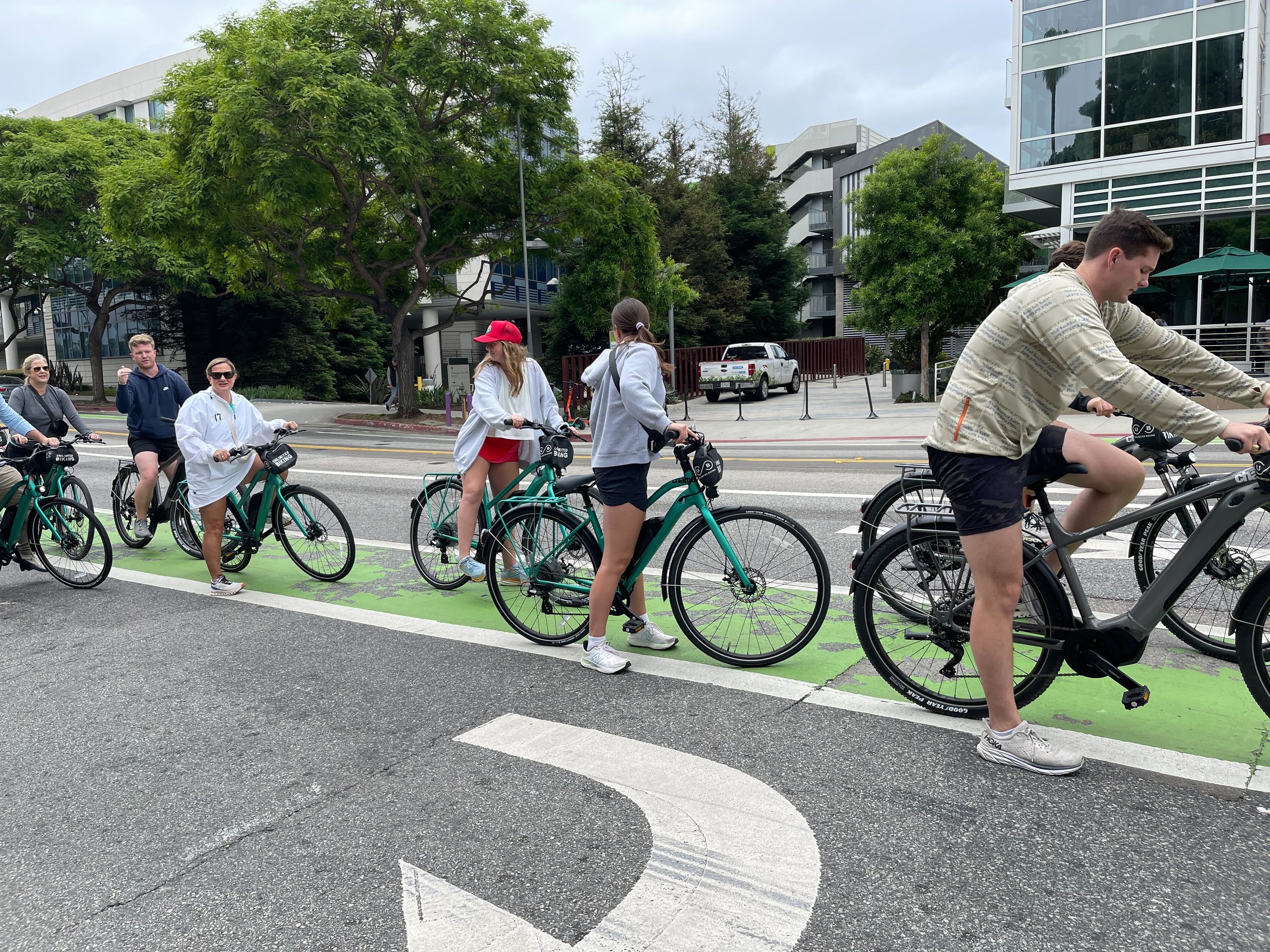
E‑Bike Adventures in West Hills, California
Perched on the western edge of the San Fernando Valley, West Hills is a gateway for short climbs, rolling fire roads, and sunny valley circuits that reward thoughtful exploration on an e‑bike. The neighborhood’s access to canyon trails, parkland ridge lines, and quiet residential connectors makes it an ideal base for riders who want to stretch range without sacrificing convenience—perfect for mixed-surface loops that mix paved streets and dirt roads into one efficient ride.
Top E-Bike Trips in West Hills
18 trips • Book with confidence • Instant confirmation
Why West Hills Works for E‑Biking
There’s a particular clarity to an e‑bike ride that suits West Hills: the quick shifts from suburban streets to scrubby canyon rims, the handful of steady climbs that reward a motor with views, and the way a battery‑assisted pedal steady opens up half‑day loops you might otherwise reserve for a car. West Hills sits where the valley flattens into the Santa Susana foothills, so rides here are rarely about long alpine ascents and more about rhythm—short, punchy climbs, gravel fire roads, and a patchwork of singletrack and paved connectors. For the traveler who wants a day that blends fitness, exploration, and transport—without sacrificing scenery—this place is quietly efficient.
Culturally and historically the landscape carries traces of an older Los Angeles: Indigenous pathways once threaded the same hills, and later, mule and stagecoach routes stitched canyon passes to the valley floor. While pavement has softened some of that old roughness, the feeling of small journeys remains. On an e‑bike that history becomes practical: you can follow a ridge on a morning ride, descend into a residential corridor for coffee, and continue into open space without needing to park or shuttle. That continuity is the appeal. You’ll encounter oak woodlands, chaparral scrub, and the characteristic sun‑baked ridgelines that frame views toward the Santa Monica range. Wildlife is present in subtle ways—birds, lizards, and the occasional deer—so a measured, respectful pace keeps the experience rich and low impact.
Environmentally, the terrain asks for conservative choices. Many of the open spaces are drought‑adapted and erosion‑sensitive; staying on designated roads and trail corridors preserves fragile soils and plant communities. On the practical side, the Mediterranean climate shapes planning: mornings and late afternoons are the sweet spots outside of winter when heat can spike. E‑bikes extend range and flatten climbs, but they also put riders into sun earlier and farther from support, so layered hydration and battery management matter. Lastly, West Hills connects: a single well‑planned ride can link canyon loops, neighborhood backroads, and longer Valley approaches, making it a versatile stop for riders who want to combine technical singletrack in nearby preserves with comfortable paved cruising through town.
E‑bikes change what’s possible here—longer loops, more serviceable climbs, and practical commutes that double as exploration. You can climb a ridge that would be an all‑day slog on a commuter bike and still be back for dinner.
Access and rules vary by land manager: many fire-road networks accept e‑bikes on multi‑use routes while some singletrack remains restricted. Always confirm local trail rules and be prepared to dismount where required.
Best Time to Visit
Best Months
Weather Notes
West Hills has a Mediterranean climate—mild, wet winters and hot, dry summers. Spring and fall provide the most comfortable temperatures for sustained effort. Summer mid‑day heat can be extreme; plan early starts and shade‑aware routes. Winter rains can make dirt sections slick and increase erosion on singletrack.
Peak Season
Spring wildflower months bring pleasant conditions and more riders on weekends.
Off-Season Opportunities
Winter weekdays offer solitude and clear air after storms (watch for muddy trails). Summer pre‑sunrise starts let you ride longer with cooler temperatures.
Frequently Asked Questions
Are e‑bikes allowed on local trails?
Rules vary by jurisdiction and land manager. Many multi‑use fire roads and paved paths accept Class 1/2 e‑bikes, while some natural‑surface singletrack restricts motorized or electric vehicles. Check the specific preserve or park website before you ride.
Where can I charge my e‑bike battery?
Public charging is limited. Plan rides around battery range: charge fully before leaving, consider carrying a spare battery if you have one, and identify cafés or public facilities along lower‑effort sections where you can top up if available. Do not rely on trailhead outlets unless explicitly stated.
Do I need special gear for summer rides?
Yes—bring extra water, sun protection, a cooling bandana, and time your ride for morning or late afternoon. Heat can amplify effort even with motor assist.
Choose Your Experience Level
Beginner
Short, mostly paved loops and gentle fire‑road climbs suitable for riders new to e‑bikes or returning to fitness. Expect low exposure and easy remounts.
- Neighborhood valley circuit with a short canyon feeder
- Paved parkway spin with coffee stop
- Short fire‑road climb to a viewpoint
Intermediate
Mixed‑surface loops combining steeper fire‑road climbs, short singletrack connectors, and longer paved descents. Requires comfortable handling and basic mechanical know‑how.
- Half‑day ridge loop that mixes dirt roads and residential connectors
- Out‑and‑back canyon climb with photo stops
- Valley‑to‑canyon crossover route with moderate technical sections
Advanced
Longer circuits that push battery range, include sustained climbs, and may require carrying extra gear or swapping batteries. Technical singletrack sections and remote connectors demand confident bike handling.
- All‑day loop linking multiple preserves and riding long fire‑road stretches
- Mixed‑terrain tour that combines steep ridge climbs with technical descents
- Range‑extended exploration to neighboring open space areas
Local Tips for Smarter E‑Bike Rides
Confirm trail access and land‑manager rules before you ride; plan for heat and battery range.
Start early to avoid heat and busy parking in popular trailheads. Carry enough water for the whole ride rather than relying on mid‑route resupply—many trailhead facilities are seasonal or closed. Be conservative with boost levels early in your ride to preserve battery for climbs later on. Where singletrack is restricted to unassisted bikes, respect closures and use legal connectors; sharing the trail with hikers and equestrians means yielding appropriately and dismounting at narrow or technical pinch points. Finally, keep repairs simple but effective: a compact multi‑tool and a spare tube will solve most roadside problems, and knowing how to remove the battery quickly is useful for transit or security when stopping in town.
What to Bring
Essential
- Helmet (fully certified) and gloves
- Charged e‑bike battery plus charger or range extender if available
- 1–2 liters of water (more in summer) and electrolyte replacement
- Compact multi-tool, spare tube or patch kit, and mini pump
- Phone with maps and emergency contacts
Recommended
- Lightweight lock for short stops
- Sunscreen and sunglasses
- Light wind layer or packable rain jacket depending on season
- Portable battery pack for phone or lights
Optional
- Small first‑aid kit
- Compact camera or binoculars for birding
- Trail snack stowed in frame bag
Ready for Your E-Bike Adventure?
Browse 18 verified trips in West Hills with instant booking
Explore Top 15 West Hills, California Adventures →