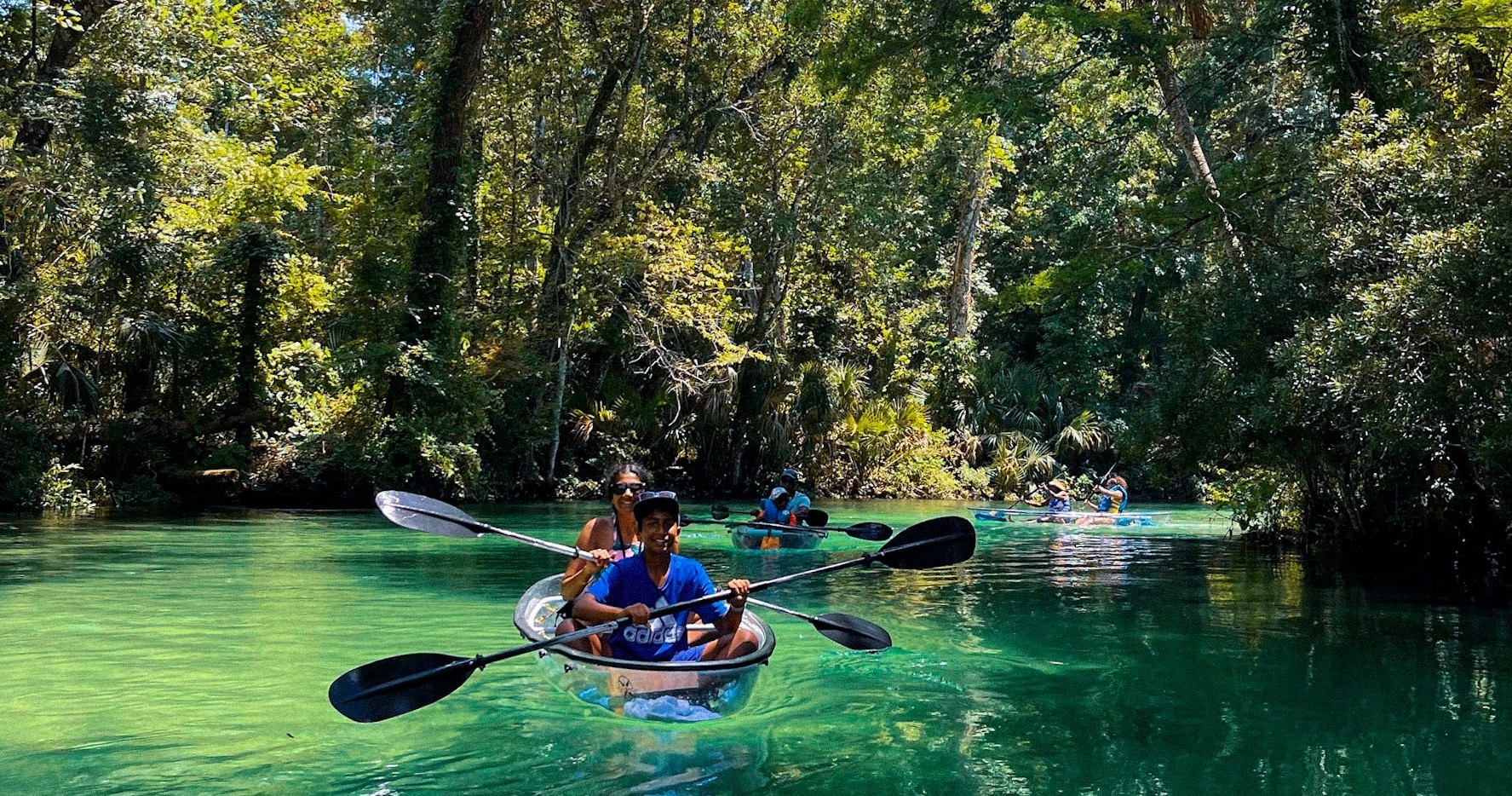
Top Eco Tours in Weeki Wachee, Florida

Weeki Wachee, Florida

Where the springs boil up a luminous turquoise ribbon and the river threads mangrove corridors into the Gulf, Weeki Wachee is a compact ecosystem that rewards slow, attentive travel. Eco tours here emphasize clear-water ecology and wildlife observation: guided glass‑bottom and boat tours, flatwater kayaking and stand‑up paddling through shaded corridors, and shore-based birding walks focused on migratory and resident species. This guide focuses on the experience of eco touring — the light on submerged plant beds, the hush of an oystercatcher lifting off, the icy comfort of spring water in summer — and the practical information you need to plan an immersive, responsible trip.

30
Activities
Year-round (seasonal highlights)
Best Months

Top Eco Tour Trips in Weeki Wachee

30 trips • Book with confidence • Instant confirmation

Why Weeki Wachee Is Exceptional for Eco Tours

There are places where the wildness arrives as a shout — peaks, roaring surf, dramatic canyons — and then there are places where the world nudges you into attention. Weeki Wachee belongs to the latter category. The river begins as a persistent, cold spring whose clarity is a small miracle against Florida’s usual tannin‑stained waterways. In the morning the current is a moving mirror of blue‑green; submerged beds of aquatic plants trace patterns under your boat and fish drift like brushed coins. That visual clarity changes how you move through the landscape: you notice what’s beneath your hull as easily as what’s on the banks, and the tours offered here are built around perception — seeing the subtle lives of a spring ecosystem rather than simply passing through it.

Eco tours in Weeki Wachee are intimate by necessity: the river’s narrow channels and the protected state park set the pace. Guided outings favor low‑impact craft and small groups, which accentuates two realities of the place. One is the abundance of wildlife — cranes balancing on mudflats, anhingas drying their wings, and in the colder months, manatees gathering near warm spring vents. The other is the fragility of those communities. Seagrass beds, submerged tree roots, and mangrove nurseries are both resilient and vulnerable; a careless prop wash or a booted step can bruise an ecosystem that took generations to assemble. A quality eco tour foregrounds that tension: education and observation with a firm ethic of leave‑no‑trace.

There is also a human cultural current here. Weeki Wachee’s identity mixes natural spectacle with midcentury roadside charm — from the historic mermaid shows to the state park operations — and that layered past shows up in how the landscape is used and interpreted. Guides are as likely to point out the ecological importance of a marsh as they are to explain how the river has supported local recreation for decades. That’s useful: eco tours here are not only about spotting animals; they are interpretive journeys that connect hydrology, habitat, and human stewardship.

Practically, Weeki Wachee’s eco tours are unusually accessible. The terrain is flat, the approaches are short, and many experiences are designed for casual travelers, families, and photographers. But the region rewards a slow rhythm: arrive early to catch the river before afternoon thermals roughen the surface, bring optics (binoculars and a zoom lens), and set aside time to linger at a low tide oyster bar or on a shaded bank. For people who love water but are wary of salt spray or surf, the spring‑fed river offers a sheltered, crystalline alternative where small moments — a sunfish flick, a heron’s shadow — compound into a day that feels quietly profound.

In short, Weeki Wachee eco tours are about attuning to a freshwater system embedded in a coastal landscape. They are ideal for travelers who prefer slow observation over adrenaline, interpretive learning over spectacle, and who will leave feeling both refreshed and more aware of the delicate processes that sustain Florida’s springs and estuaries.

Tour types range from guided glass‑bottom boat trips that foreground underwater plant communities to paddle‑based excursions that put you nose‑to‑nose with shoreline birds and mangrove roots. Many operators mix natural history with hands‑on ecology, such as identifying seagrasses or demonstrating how spring flow supports wintering manatees.

Because the spring run connects inland freshwater to coastal estuaries, eco tours often pair well with complementary activities: birding on nearby shell mounds, snorkeling in calmer spring basins where allowed, and sunset paddles that highlight estuarine light and tidal movement.

Activity focus: Guided boat tours, kayaking, stand‑up paddleboarding, shorebird walks
Total matching eco experiences: 30
Spring water clarity makes underwater observation unusually easy
Manatee viewing season peaks in cooler months; bird migration favors spring and fall
Flat terrain and sheltered waters make tours broadly accessible, but operators may have weight or mobility policies

Best Time to Visit

Best Months

MarchAprilMayOctoberNovemberDecember

Weather Notes

Weeki Wachee sits in a humid subtropical zone: hot, humid summers with frequent afternoon thunderstorms; mild winters with cooler, drier spells. Spring and fall offer comfortable temperatures and active bird migration. Winter draws manatees to the warmer spring vents, improving odds for sightings. Early mornings are typically calmest on the river.

Peak Season

Late spring weekends and early fall weekends see higher visitation; winter holiday weekends and cold snaps increase manatee viewing crowds.

Off-Season Opportunities

Summer weekday mornings provide quieter paddles (arrive early to avoid heat and storms). Winter weekdays can be peaceful outside of holiday windows, though popular viewing areas may still attract visitors during prime manatee days.

Frequently Asked Questions

Do I need permits for eco tours or kayaking?

Most guided eco tours are run by licensed operators and include necessary access; private paddlers should check Weeki Wachee Springs State Park or local landings for entry fees, launch rules, or restrictions. Always confirm rules with the park and your tour operator ahead of time.

When is the best time to see manatees?

Manatees congregate near warm springs in the coolest months. Cooler weather increases the likelihood of sightings, but timing can vary year to year; book a guided tour with a reputable operator for the best viewing knowledge and locations.

Are eco tours family‑friendly?

Yes. Many tours are suitable for families and beginner paddlers; operators commonly offer shorter, interpretive trips designed for kids. Confirm age and weight limits with your chosen company.

Choose Your Experience Level

Beginner

Short guided glass‑bottom boat tours, calm flatwater kayak routes, and interpretive shore walks—low technical demand, minimal paddling required.

  • Glass‑bottom boat river tour
  • Shaded half‑mile paddle to an observation point
  • Short birding walk at the state park

Intermediate

Longer paddles through winding mangrove channels, half‑day guided eco paddles that require basic stroke control and comfort in small boats.

  • Half‑day guided kayak through estuary channels
  • Photo‑focused wildlife paddle at dawn
  • Mixed paddle and shore exploration outing

Advanced

Self‑guided multi‑hour navigation of tidal estuaries or extended trips that require route‑finding, tide awareness, and strong paddling endurance.

  • Full‑day estuary navigation to nearby coastal shoals
  • Extended paddle combined with coastal birding and intertidal exploration
  • Remote access trips that require careful tide and weather planning

Insider Tips & Local Knowledge

Verify park access, launch rules, weather, and operator schedules before your trip.

Arrive early for glassy water and cooler temperatures — mornings also concentrate wildlife activity. Use reef‑safe sunscreen and avoid single‑use plastics; springs and estuaries are sensitive to pollutants. Pack a dry bag and keep electronics protected: the water is clear, but a capsize can be unforgiving. If you want manatees, aim for cooler months and book a guided trip; guides know the best viewing locations and how to observe without stressing the animals. Respect wildlife distances and follow your guide’s approach rules: feeding or chasing animals is illegal and harmful. For photographers: a polarizing filter reduces glare on the water surface and improves underwater visibility. Finally, combine an eco tour with complementary activities — a shoreline shelling walk at low tide, an afternoon at a nearby wildlife refuge, or a sunset paddle — to round out a thoughtful, low‑impact exploration of the region.

What to Bring

Essential

  • Water and sun‑protective clothing (hat, UV shirt)
  • Reef‑safe sunscreen and sunglasses
  • Dry bag for electronics
  • Light snacks and refillable water bottle
  • Binoculars for bird and wildlife spotting

Recommended

  • Water shoes or sandals with grip
  • Light rain shell for summer storms
  • Small first‑aid kit and any personal medications
  • Compact telephoto lens or zoom for photography
  • Insect repellent for summer and dawn/dusk outings

Optional

  • Snorkel mask (confirm with operator whether snorkeling is allowed)
  • Field guide or app for birds and plants
  • Portable charger
  • Collapsible stool for shore walks

Ready for Your Eco Tour Adventure?

Browse 30 verified trips in Weeki Wachee with instant booking

Explore Top 15 Weeki Wachee, Florida Adventures →