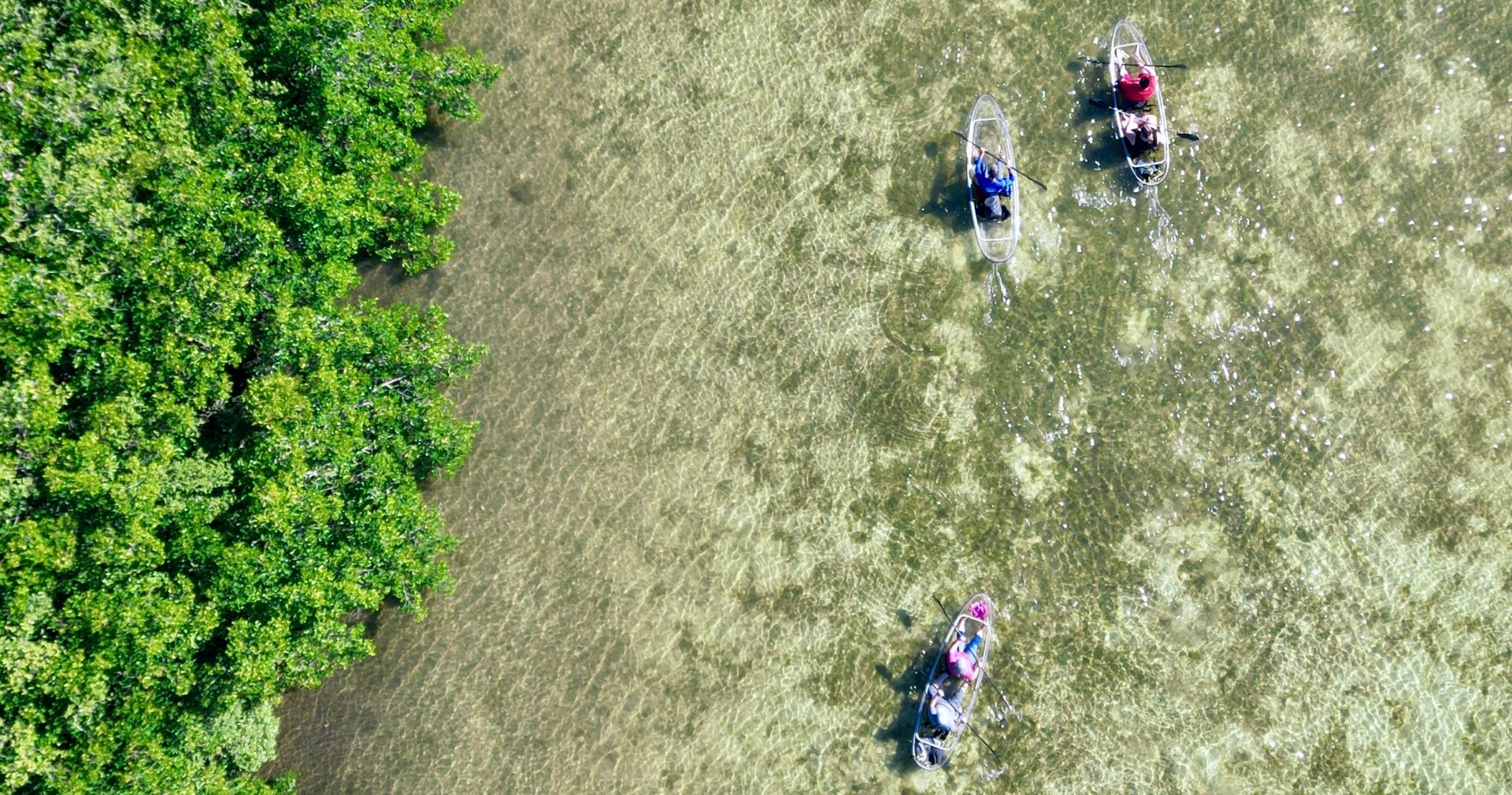
When you launch a kayak in Venice, the immediate contrast is arresting: one moment you're gliding through a dimpled lane of mangroves where the water runs dark and still, the next you're skimming sunlit flats dotted with seagrass and the horizon widens toward the Gulf. That variety—mangrove labyrinths, tidal creeks, wide estuaries, and an accessible inlet—gives paddlers options for every mood and skill level. In the morning, the salt air smells of warmed sand and sea grass; gulls and sandpipers move like punctuation along the shoreline. Dolphins often ride the deeper channels, and turtles surface in quieter coves. For many visitors, Venice is as much about what happens onshore as at sea: the town's beaches are famed for fossilized shark teeth, and a post-paddle walk along the drift-line can feel like a tiny archaeological dig.
Geographically, Venice sits where suburban Florida meets a mosaic of coastal habitats. The Intracoastal Waterway threads north-south, offering calm, protected miles that are ideal for learning strokes, practicing rescues, or enjoying long, low-effort paddles. Cross the inlet and the water physics change—tides funnel, currents accelerate, and waves from the Gulf introduce coastal dynamics. That proximity of calm backwaters and more exposed coastal water means you can plan a day that starts with a tranquil mangrove tunnel and ends with a sunset run along a barrier island. Seasonal shifts shape the experience too: winter months typically bring cooler, drier air and steadier north winds that favor clear conditions; summer is hot and lively with afternoon thunderstorms and abundant life below the surface, from baby tarpon to sprawling seagrass beds teeming with invertebrates.
Beyond scenery, Venice is practical: there are multiple public launches, rental shops, and guided outfitters who know tide windows, inlet currents, and the best local sandbars. That infrastructure invites both casual visitors who want a relaxed guided estuary tour and experienced paddlers plotting longer coastal loops. Environmentally, these same waterways are sensitive—mangroves and seagrass are nursery habitats—so low-impact paddling practices matter. Keep to deeper channels when possible, avoid dragging boats over seagrass, and give nesting shorebirds and visible manatee or dolphin groups a wide berth. In short, Venice delivers a highly accessible, layered paddling playground: intimate ecosystems for contemplative exploration and open water that rewards a stronger stroke and careful planning.
The variety is the draw: quiet tidal creeks and mangrove tunnels for novices and families, long ICW stretches for day paddles, and inlet or Gulf runs for experienced coastal kayakers.
Wildlife encounters are reliable—dolphins, wading birds, and frequent fish activity—making paddles an excellent option for photographers and naturalists.
The harbor is the gateway, and the Pacific becomes the classroom.
Short drives from town put you on many different launch points, so you can tailor distance, exposure, and scenery to the day’s weather and your energy level.
Seasonality affects conditions: winter and spring tend to be drier and clearer, while summer brings warm water, afternoon storms, and more insects; tide timing influences access to some mangrove channels and flats.
Choose by purpose
Whale watching, snorkeling, sunset sailing, cultural canoeing, harbor sightseeing, or private chartering.
Start near the city
Waikiki and Honolulu Harbor are primary hubs, with some trips launching near Hanauma Bay.
Confirm the vessel
Gangways, shaded seating, and boarding requirements vary according to vessel size and operator.