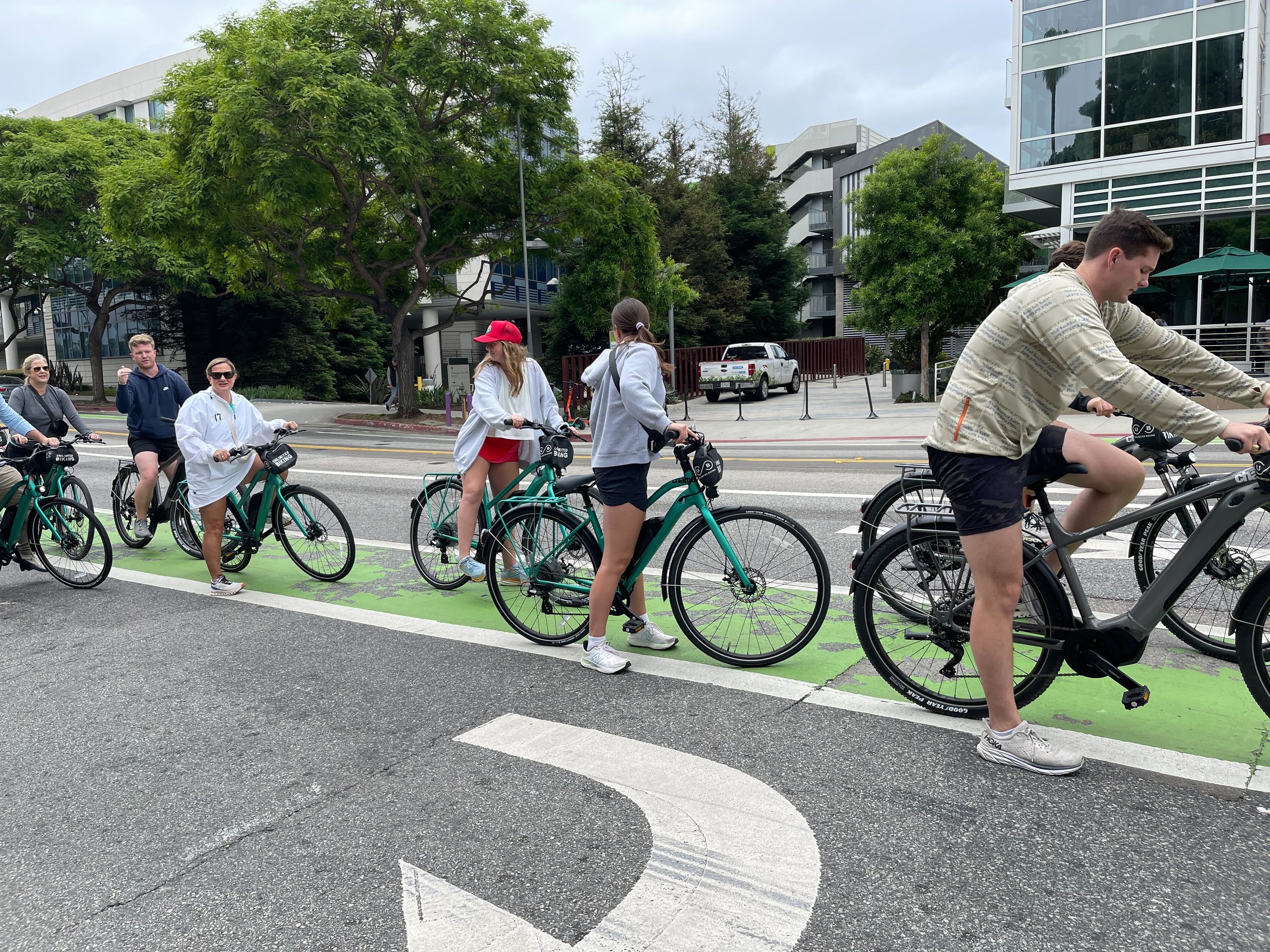
Valencia presents a purposeful contrast to Southern California’s coastal bike corridors: its lanes, river trails, and foothill roads are a studied combination of accessible routes and gateway terrain into the mountains. On a single morning you can roll along an engineered rail-trail, pause for coffee in Old Town Newhall, and be grinding gentle, motor-assisted climbs into chaparral-dusted canyons by lunchtime. That shift—from urban-adjacent greenway to gravelly fire-road—is where e-bikes reveal their advantage. Pedal-assist evens out the ride, turns long distances into manageable outings, and makes the local topography inclusive for riders who want distance without constant muscular strain. Valencia’s infrastructure favors two-wheel mobility: wide shoulders on major arterials, continuous stretches of the Santa Clara River Trail, and a web of service roads and park paths that interconnect neighborhoods and open space.
But Valencia isn’t just about easy mileage. Its geography funnels into a fringe of the Sierra Pelona and San Gabriel foothills, where graded dirt roads and old oil-access tracks—Pico Canyon, parts of the Towsley area, and the short climbs above Henry Mayo Newhall Park—offer meaningful gradients and viewpoint rewards. Here, e-bikes extend the day: climbs that would be all-day commitments on a traditional bike can become half-day excursions. That opens up access to longer mixed-surface loops, gravel adventures toward Agua Dulce, and point-to-point explorations that end with a celebratory descent back into the valley. The result is a layered experience: flat, social rides for families and casual explorers; intermediate mixed-surface loops for riders who want some technical variety; and longer, fitness-oriented outings that use assist strategically to conserve energy for singletrack approach segments or longer return legs.
Culturally, Valencia sits at a confluence of suburban planning and preserved open space. Newhall’s historic core offers post-ride cafes and bike-friendly patios; local parks have shaded picnic spots; and regional trailheads provide immediate access to natural terrain without the long drives typical of many Southern California trailheads. That accessibility means riders can design half-day trips that start downtown and end atop a panoramic ridge, or full-day circuits that stitch together river trail, backroad gravel, and canyon singletrack (where permitted). Environmental sensitivity matters here: much of the foothill habitat is chaparral and scrub that responds poorly to illegal trail creation and summer overuse. E-bikers should be attentive to signage, stay on designated routes, and practice good battery management so rides don’t inadvertently create search-and-rescue scenarios in remote sections. In short, Valencia gives you variety within a short radius—perfect for riders who want to sample many types of terrain in a single trip without sacrificing comfort or convenience.
E-bikes broaden who can ride Valencia’s routes: families, older riders, and gravel explorers all benefit from assist, and the result is a more diverse cycling culture on the greenways.
Because many of the best loops are mixed-surface, you’ll often pair a crisp paved stretch with gravel climbs and smoother fire roads; pick tires and suspension accordingly.
The harbor is the gateway, and the Pacific becomes the classroom.
Heat and sun are factors: Valencia’s inland location means hot summers, so plan for morning or late-afternoon departures and carry hydration and sun protection.
Choose by purpose
Whale watching, snorkeling, sunset sailing, cultural canoeing, harbor sightseeing, or private chartering.
Start near the city
Waikiki and Honolulu Harbor are primary hubs, with some trips launching near Hanauma Bay.
Confirm the vessel
Gangways, shaded seating, and boarding requirements vary according to vessel size and operator.