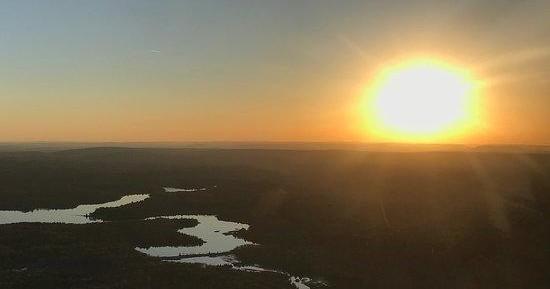
There’s a special hush that arrives in the Poconos at dawn—an easy, buoyant quiet that makes the world seem as if it were shaped to be seen from above. In Tobyhanna that hush is framed by broad, tree-covered slopes, glassy lakes and scattered reservoirs, and by roads and ridgelines that reveal their best geometry when a shadow stretches long across them. That topography, combined with a regionally accessible small-airfield network and operators who run everything from tethered balloon experiences to scenic airplane circuits, makes Tobyhanna an unexpectedly convenient place to plan an airborne outing.
The appeal is practical as much as poetic. Hot-air balloon flights favor the valley mornings here: cool ground air, predictable wind patterns funneling across the ridges, and open landing fields near lakes create a forgiving environment for the activity. Scenic airplane and helicopter flights use the stretches of lower-elevation terrain to give sweeping views with short flight times—perfect for travelers who want a dramatic viewpoint without an all-day commitment. For the more tactile-feeling flights—ultralights or light-sport aircraft—the gently contoured fields and calm weather windows allow operators to run short loops that still feel adventurous without venturing into complex mountain flying.
But Tobyhanna’s air scene isn’t just a single type of experience. It’s the way aerial activities pair with what’s on the ground: a sunrise balloon followed by coffee at a lakeside café, a late-summer scenic flight that helps you spot fall colors before you drive into them, or a helicopter transfer that moves you quickly to trailheads and reservoirs for water-based adventures. The region’s seasonal shifts—lacy green summers, vivid autumns, and quiet, snow-bright winters—reshape the aerial perspective throughout the year, and that variability is part of the draw. Weather will always be the limiting character; pilots, operators, and local airports commonly postpone flights for wind and visibility, which rewards flexible planning and a patient travel rhythm.
For first-timers the learning curve is small: most operators brief passengers on safety, what to expect during launch and landing, and how to help with simple tasks like holding a basket edge or loading a seat harness. More experienced flyers will appreciate the chance to compare platforms—hot-air balloon vs. fixed-wing vs. rotorcraft—each offering a different relationship to speed, altitude and sensation. Across it all, the understated landscape of Tobyhanna keeps the experience focused on connection rather than spectacle—an intimate, regional aerial view that feels curated rather than theatrical.
Close-set ridges, open fields and accessible small-airfields make launch, landing and short scenic circuits practical for a range of aircraft.
Air activities pair well with lakefront outings, hiking, and autumn leaf-peeping—many operators coordinate timing so you can combine pursuits in a single day.
The harbor is the gateway, and the Pacific becomes the classroom.
Clear early-morning windows are the most reliable for ballooning and ultralight flights; helicopter and airplane tours have a slightly broader operating envelope but still depend on visibility and wind.
Choose by purpose
Whale watching, snorkeling, sunset sailing, cultural canoeing, harbor sightseeing, or private chartering.
Start near the city
Waikiki and Honolulu Harbor are primary hubs, with some trips launching near Hanauma Bay.
Confirm the vessel
Gangways, shaded seating, and boarding requirements vary according to vessel size and operator.