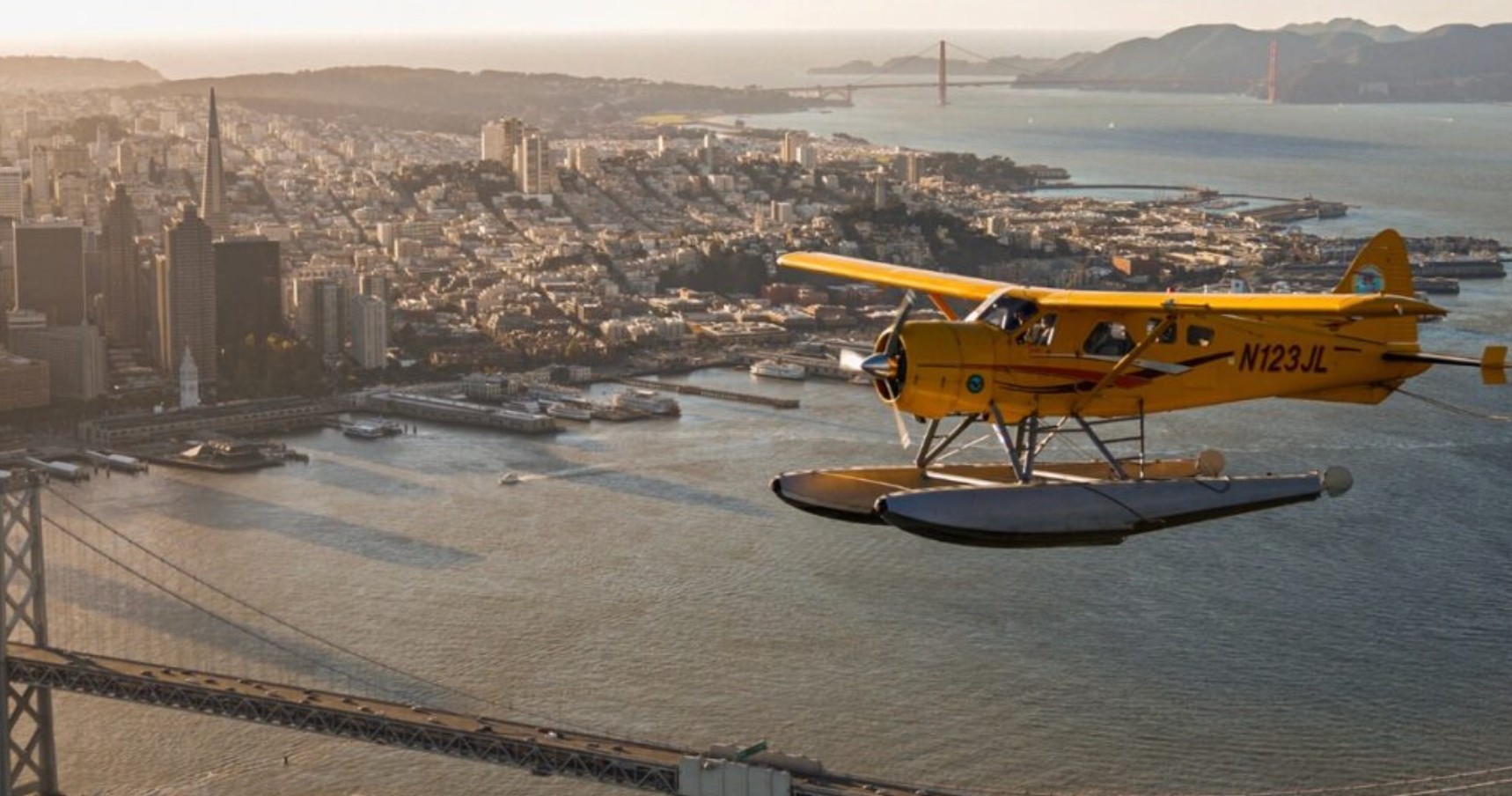
Top Airplane Experiences in South San Francisco, California
Nestled against the bay and directly beneath one of the busiest approach corridors on the West Coast, South San Francisco is an unlikely but excellent staging ground for airplane-focused adventures. From flightseeing hops that trace the Golden Gate and the Pacific coastline to cockpit discovery flights and airport-side plane spotting, airplane experiences here are defined by dramatic urban-meets-wildland scenery, concentrated aviation infrastructure, and weather that can fold the sky into fog or open it into crystalline visibility.
Top Airplane Trips in South San Francisco
18 trips • Book with confidence • Instant confirmation
Why South San Francisco Is a Standout Airplane Activity Hub
There’s an unusual intimacy to flying around South San Francisco. The city sits at the juncture where dense urban infrastructure thins into wetlands, where the industrial coastline gives way to the soft spine of San Bruno Mountain, and—critically—directly under approach corridors that bring commercial airliners and light aircraft in tight, cinematic passes over the Bay. For travelers seeking airplane experiences, that geography concentrates the thrills: low-altitude sightseeing offers close-up views of the Bay Bridge, Alcatraz, and the Marin headlands; flight training and discovery flights use the nearby general aviation fields for short, high-impact sorties; and airport adjacency makes aircraft-spotting accessible without long drives.
But the appeal is more than convenience. The Bay Area’s weather sculpts flights here in dramatic ways. A marine layer can roll in over the city at dawn, turning approach lights and aircraft silhouettes into a slow-motion light show; when the fog burns off, visibility opens into sweeping panoramas of the city skyline and the Pacific. That variability means every flight feels like a different conversation with the landscape. For photographers and storytellers, the contrast between industrial waterfronts, polished airliners, and wild ridgelines creates compelling compositions. For the curious traveler, quick discovery flights — where a pilot walks you through the controls and takes you on a short lesson — demystify the cockpit and provide a tactile thrill that stays long after touching down.
South San Francisco’s aviation scene also plugs you into a broader net of complementary activities. Hiking San Bruno Mountain or walking the Oyster Point shoreline offers a ground-level counterpart to the aerial perspective, while nearby aviation museums and public viewing areas provide historical and technical context. Practical considerations make it a pragmatic base: proximity to SFO and regional airports shortens transit times to operators; plentiful parking and waterfront parks give family-friendly viewing options; and a dense urban service network means easy access to rental cars, cameras, or last-minute aviation supplies. That said, the region’s airspace regulations, noise abatement procedures, and occasional air traffic restrictions require planning — they’re part of the experience, and mastering them makes for better, safer flights. In short, South San Francisco compresses the elements that make airplane experiences memorable—diverse scenery, concentrated air traffic, and easy logistics—into a compact, accessible coastal corridor.
The proximity to SFO means some of the most dramatic commercial approach views on the West Coast are within easy reach for plane spotters and flightseeing tours.
A mix of commercial, charter, and general aviation activity creates options for brief scenic hops, discovery flights, and formal flight training without long transfers.
The region’s microclimate (marine layer and afternoon clearing) produces varied flying conditions; bookings should remain flexible to account for weather.
Complementary ground activities—hiking, waterfront walks, and aviation exhibits—pair well with airplane experiences, letting visitors see the landscape from multiple perspectives.
Best Time to Visit
Best Months
Weather Notes
Summer and early fall typically offer the clearest aerial visibility in the afternoons after marine layer burn-off. Morning flights in late spring and summer can be foggy—creating moody conditions ideal for silhouette photography but potentially limiting distant views. Winter can bring low ceilings and windier days; operators sometimes reschedule for safety.
Peak Season
Summer and early fall—best visibility and more frequent charter/tour availability.
Off-Season Opportunities
Winter and spring may have lower prices and unique atmospheric moods for photographers; off-peak days are quieter for spotting and pilot-customer interactions.
Frequently Asked Questions
Do I need any special permits to join a scenic flight or discovery flight?
Most commercial scenic flights operate under the operator’s FAA authority and require only standard ID for passenger screening; private flights or airstrip access may have additional operator-specific requirements. Always confirm with the operator before booking.
Are airplane experiences suitable for families or non-flyers?
Yes. Many sightseeing flights and waterfront viewing areas are family-friendly. Short flights and ground-side plane spotting offer low-commitment options. Consider ear protection for young children and check age or weight restrictions with operators.
How far in advance should I book a flight?
Book as early as possible for weekend or golden-hour flights, especially in summer. Weekdays tend to have more flexibility; operators often allow same-week bookings if weather permits.
Choose Your Experience Level
Beginner
Introductory airplane experiences that require no prior knowledge: waterfront plane spotting, short sightseeing flights, and discovery flights where a pilot demonstrates basics while you sit in the right seat.
- 20–45 minute bay sightseeing hop
- Meet-and-watch airport viewing at waterfront parks
- Introductory discovery flight (student-oriented short lesson)
Intermediate
Hands-on introductory flight training, longer scenic routes, or private charter hops that require basic coordination and some preparation (ID, preflight briefing).
- Hour-long coastal and city aerial tour
- First solo-ish supervised discovery flight segments
- Charter flights to nearby coastal destinations
Advanced
Advanced aviation activities for pilots or serious enthusiasts: formal flight training toward certificates, instrument training in complex airspace, and technical spotting sessions that involve understanding NOTAMs and traffic flow.
- Formal dual instruction toward private pilot milestones
- Instrument flight training in controlled Bay Area airspace
- Technical plane-spotting session with runway and approach analysis
Insider Tips & Local Knowledge
Always confirm schedule and weather with your operator. Respect airport security and local noise-abatement procedures; do not trespass on airfield property.
Book morning or golden-hour flights if you want dramatic light, but expect foggy conditions earlier in the day during summer months. If visibility is a priority, mid-afternoon flights after the marine layer typically offer the clearest views. When planning a combined trip—say, a flight plus a hike of San Bruno Mountain—build in extra time for transit and possible flight delays. For plane spotting, waterfront parks and designated viewing areas near Oyster Point give safe, legal vantage points with easy parking. If you’re interested in instruction, ask about aircraft type, dual-instructor experience, and simulator availability; local instructors often have the best sense of when to fly in the Bay Area’s complex airspace. Finally, bring ear protection and a pair of binoculars: they transform a good flight into a memorable one.
What to Bring
Essential
- Government ID (required for airport access or boarding)
- Layered clothing for coastal fog and wind
- Camera with a fast shutter or smartphone with stabilizer
- Ear protection (especially for small-craft or cockpit seating)
- Motion-sickness medication if prone to airsickness
Recommended
- Light windbreaker and hat for exposed viewing points
- Binoculars for plane spotting and identifying airframes
- Portable battery/charger for devices
- Sunglasses and sunscreen for exposed runways and viewpoints
- Printed or offline directions to operator meeting points
Optional
- Compact notebook for logbook notes if participating in discovery flights
- Small daypack for combining flights with shoreline or mountain walks
- Noise-reducing headphones for longer cockpit tours
Ready for Your Airplane Adventure?
Browse 18 verified trips in South San Francisco with instant booking
Explore Top 15 South San Francisco, California Adventures →