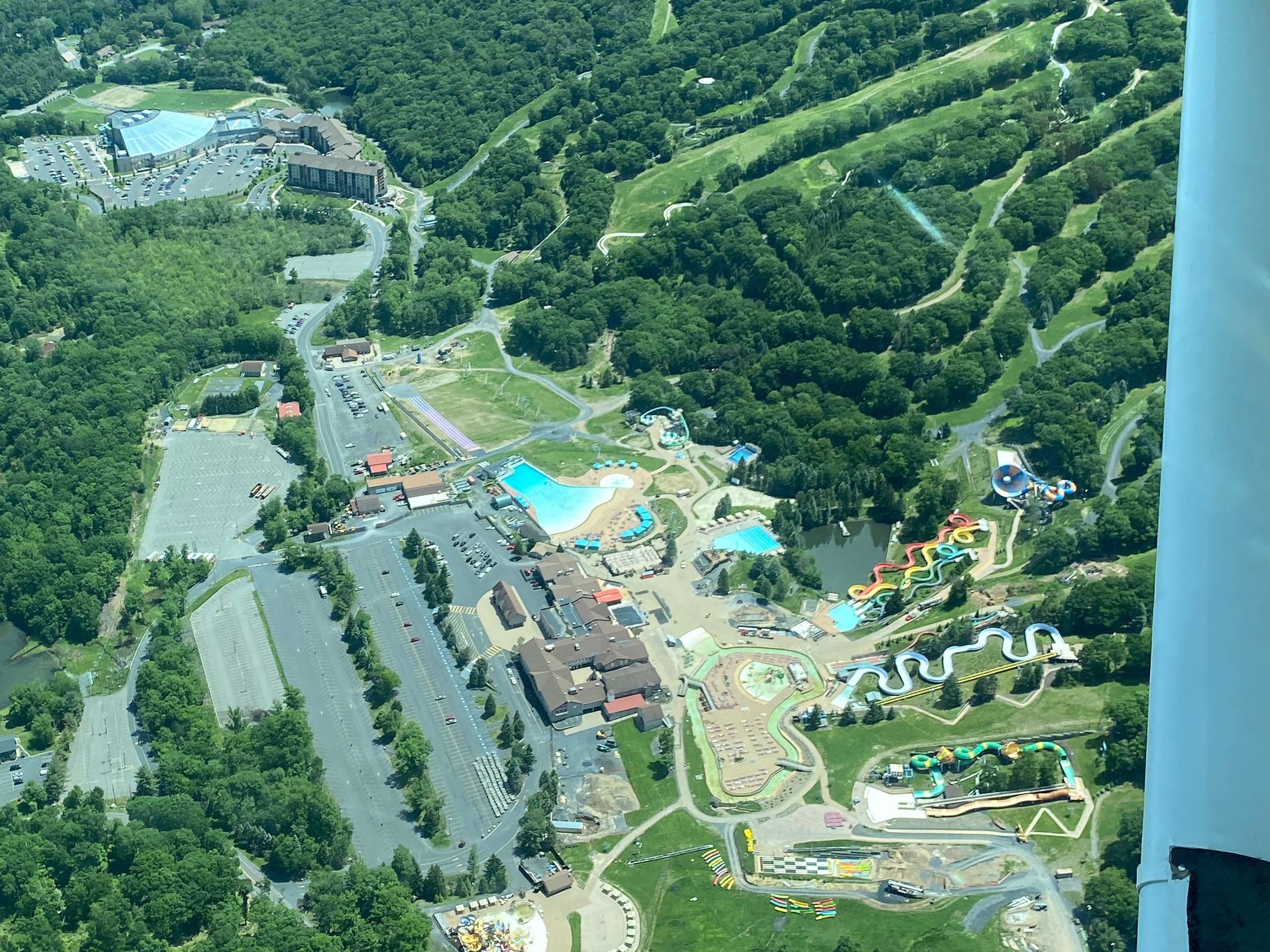
Why Phillipsburg Is a Standout Spot for Air Tours
From the moment the propeller whispers to life on the tarmac near Phillipsburg, the landscape rearranges into a sequence of frames: the gray ribbon of the Delaware River carving a valley between low ridges, towns clinging to the water's edge, and the dark, folded line of the Kittatinny range drawing the horizon. Phillipsburg is not a sprawling aviation hub, it’s an intimate stage for short, highly visual flights. That compactness is its advantage. In twenty or thirty minutes aloft you can move from industrial riverfront to pastoral farmland to the stone-cut drama of the Delaware Water Gap — a condensed aerial sampler that larger airports rarely offer without transit time.
Beyond the immediate scenic payoff, Phillipsburg’s geography and history give air tours an added texture. The river valley is an axis of migration for birds and a corridor of commerce from the 19th century onward; the legacy of rail yards, mills, and bridgework is visible as rusted geometry from above. Pilots and guides here know how to read that patchwork and turn it into a narrative: a childhood quarry turned marsh, a sequence of floodplain oxbows, the way suburban grids give up to uninterrupted forest. For photographers and first-time flyers alike, that narrative is part of the experience — the tour becomes a guided translation of landscape into story.
Practicality is also part of the appeal. Flights launched from small general-aviation strips around Phillipsburg are short enough to fit into a half day, which makes them easy to pair with riverfront cycling, a guided kayak below the gap, or a late-afternoon hike to a ridge vista. Seasonal shifts are dramatic from the air: spring reveals a mosaic of thawing wetlands, summer fills the canopy in deep green, autumn turns the valley into a layered map of color, and winter exposes rock and river lines the road never shows. Because tours are typically low-altitude and short-duration, they highlight detail — a shoreline nesting area, a switchbacked road ascending a ridge, a historic bridge — making Phillipsburg an unexpectedly rich place to see from above.
Finally, the local scene supports a spectrum of experiences tied to aviation: short scenic hops and photo flights, introductory flight lessons that end with a few minutes of guided sight-seeing, and seasonal balloon flights launched upriver at dawn. For travelers, that range means you can choose a gentle scenic lap for the family, a focused photographic sortie, or an experiential combination that pairs a flight with river or ridge adventures below. The result is an air-tour offering that feels deliberately human-scale: close enough to land to step back into the town for coffee, high enough to make the everyday look extraordinary.
Short flight times and small aircraft make Phillipsburg air tours accessible for families and first-time flyers; you’ll spend more time watching the valley than waiting at an airport.
Because the terrain is varied and condensed, most tours offer multiple points of interest — river meanders, quarry scarps, bridgework, and ridge lines — within a single loop.
The harbor is the gateway, and the Pacific becomes the classroom.
Seasonal color and light conditions transform the same route dramatically; photographers should target shoulder seasons for contrast and clarity.
Choose by purpose
Whale watching, snorkeling, sunset sailing, cultural canoeing, harbor sightseeing, or private chartering.
Start near the city
Waikiki and Honolulu Harbor are primary hubs, with some trips launching near Hanauma Bay.
Confirm the vessel
Gangways, shaded seating, and boarding requirements vary according to vessel size and operator.