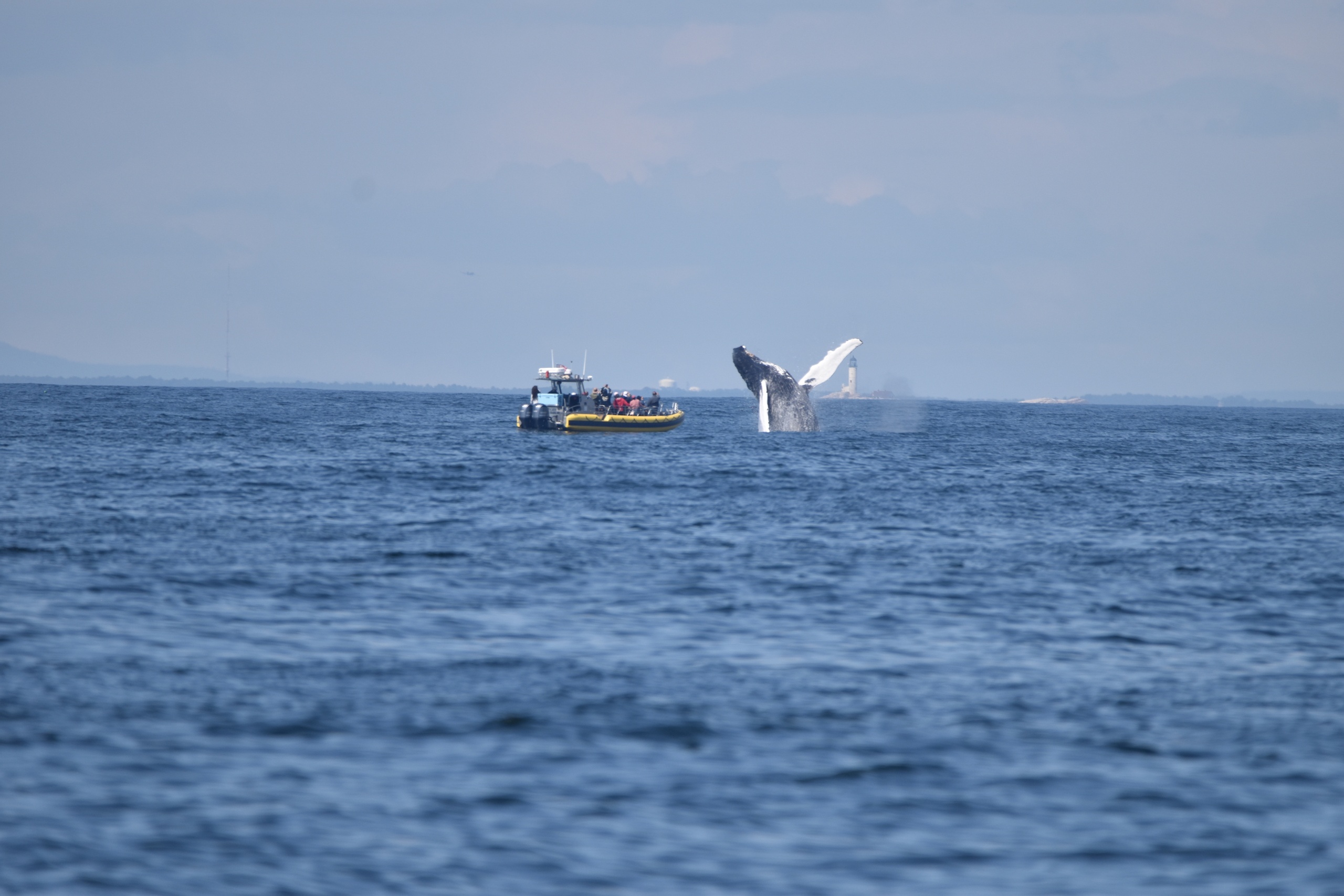
Whale Watching in Newington, New Hampshire
Newington is a quiet coastal hinge between Portsmouth’s working waterfront and the wild productivity of the Gulf of Maine. Whale-watch departures here and from nearby harbors put you within reach of humpbacks, minkes, and a rich cast of seabirds and seals—an afternoon on the water that blends natural history, dramatic coastal scenery, and the unique tidal energy of the Piscataqua estuary.
Top Whale Watch Trips in Newington
6 trips • Book with confidence • Instant confirmation
Why Whale Watching Near Newington Feels Different
The coastline around Newington sits at a crossroads of currents. Downriver are the narrow, tidal channels of the Piscataqua—the same stubborn tides that shaped Portsmouth Harbor—while offshore the Gulf of Maine drops into a nutrient-rich basin that feeds plankton blooms and the baitfish that draw whales. That proximity compresses a big-ocean spectacle into a shorter transit time from shore: you can leave harbor in a morning and, within a few miles, feel the quiet pull of whales feeding where the sea is deeper and colder.
On a calm day the experience is cinematic. You feel the boat roll as birds wheel overhead—gannets, shearwaters, terns—then the call from a naturalist and the sudden white steam of a blow several hundred yards away. Humpbacks are common visitors along this stretch; minkes and, at times, fin whales or porpoises appear in the same tableau. The Isles of Shoals, a ragged chain of rocks and history a short run away, add a human layer: seabird rookeries, old lightstations, and a sense of maritime history that reminds you New England’s coast has always been a place where people and whales cross paths.
Newington and the surrounding ports act as pragmatic staging grounds. Small-town infrastructure—marinas, launch ramps, and short drives from regional airports—means operators can offer morning, afternoon, and seasonal full-day departures. The tours here emphasize natural history and responsible viewing: experienced crews read signs—surface activity, bird concentrations, GPS tracks from marine researchers—and position vessels to minimize disturbance. For travelers who want more than a glimpse, combining a whale-watch with coastal hikes, a visit to Odiorne Point State Park, or an overnight in historic Portsmouth creates a balanced itinerary: active time on the water followed by quiet, shoreline exploration.
For photographers and families alike the area’s modest seas and short transit times are an advantage. You don’t need to sign up for an offshore expedition to feel the scale of a whale’s tail or to watch pods of birds corralling a school of fish. Still, the ocean is changeable—wind, fog, and swell rearrange plans—so timing, local weather awareness, and a flexible attitude are part of the experience. When conditions align, a trip out of Newington becomes a concentrated lesson in marine ecology and, for many, a lifetime memory.
The Gulf of Maine’s productivity is seasonal; late spring and summer tend to bring the most sustained whale activity as baitfish and plankton concentrate in predictable areas.
Newington’s proximity to Portsmouth makes it a convenient launch point for travelers staying in the region—combine a whale watch with seafood on the waterfront or a walk through historic neighborhoods.
Operators prioritize small-group experiences and interpretive guidance: expect naturalists or trained crew who will explain identification, behavior, and conservation considerations.
Best Time to Visit
Best Months
Weather Notes
Late spring through early fall offers the most consistent whale activity and milder sea conditions; mornings are often calmer than afternoons. Fog and swift tidal winds are possible—check local marine forecasts before departure.
Peak Season
Summer months (June–August) generally see the highest frequency of tours and busiest harbors.
Off-Season Opportunities
Shoulder seasons (May and September–October) can offer excellent sightings with fewer crowds; some operators run reduced schedules and smaller-group trips.
Frequently Asked Questions
How long do whale watch trips typically last?
Trips vary by operator and weather—common formats are short half-day excursions or longer, more exploratory runs. Check individual tour descriptions for transit time and duration.
Are whale-watching tours family-friendly?
Yes. Many operators welcome families and provide educational commentary. If traveling with young children, confirm safety amenities and consider a morning departure when seas are calmer.
What should I do if I get seasick?
If you’re prone to motion sickness, take preventive medication as directed before boarding, choose a seat in the middle of the vessel where motion is least, and stay hydrated. Operator crews can also advise on the best onboard seating.
Choose Your Experience Level
Beginner
Short, interpretive cruises designed for first-time watchers and families; minimal sea time with interpretive commentary.
- Harbor-and-nearshore whale watch
- Family-friendly wildlife cruise
- Short birding-and-whale hybrid trips
Intermediate
Half-day runs that travel farther offshore and emphasize species identification and behavior interpretation.
- Half-day whale watch to offshore feeding zones
- Combined whale-and-seabird excursions
- Photography-focused outings
Advanced
Longer expeditions that cover larger offshore areas and pursue seasonal concentrations of whales; may spend extended time on open water.
- Full-day offshore whale expedition
- Research-ship partner trips and citizen-science excursions
- Extended ecology-focused sea days
Insider Tips & Local Knowledge
Confirm departure times, boarding locations, and sea conditions before you go.
Book early for summer weekends—small-boat capacity fills quickly. Mornings often offer calmer seas and clearer viewing; afternoon runs can be windier but sometimes line up with feeding activity. Choose operators who emphasize responsible viewing and follow local and federal guidelines for marine mammals. Combine a whale-watch with nearby shore activities—a walk at Odiorne Point State Park, a visit to the Isles of Shoals (when available), or dinner in Portsmouth—to turn a single trip into a full coastal day. Finally, bring patience: whales are wild and sightings can be episodic; the payoff, when it comes, is unforgettable.
What to Bring
Essential
- Warm, waterproof outer layer (coastal wind and spray)
- Non-slip shoes or deck-friendly footwear
- Motion-sickness medication if you’re prone to seasickness
- Binoculars and a camera with a zoom lens
- Reusable water bottle and snacks
Recommended
- Layered clothing (mornings can be cool even in summer)
- Hat and polarized sunglasses for glare reduction
- Small daypack to store layers and essentials
- Portable phone charger
Optional
- Light rain shell for fog or drizzle
- Dry bag for sensitive gear
- Notebook for field notes or species lists
Ready for Your Whale Watch Adventure?
Browse 6 verified trips in Newington with instant booking
Explore Top 15 Newington, New Hampshire Adventures →