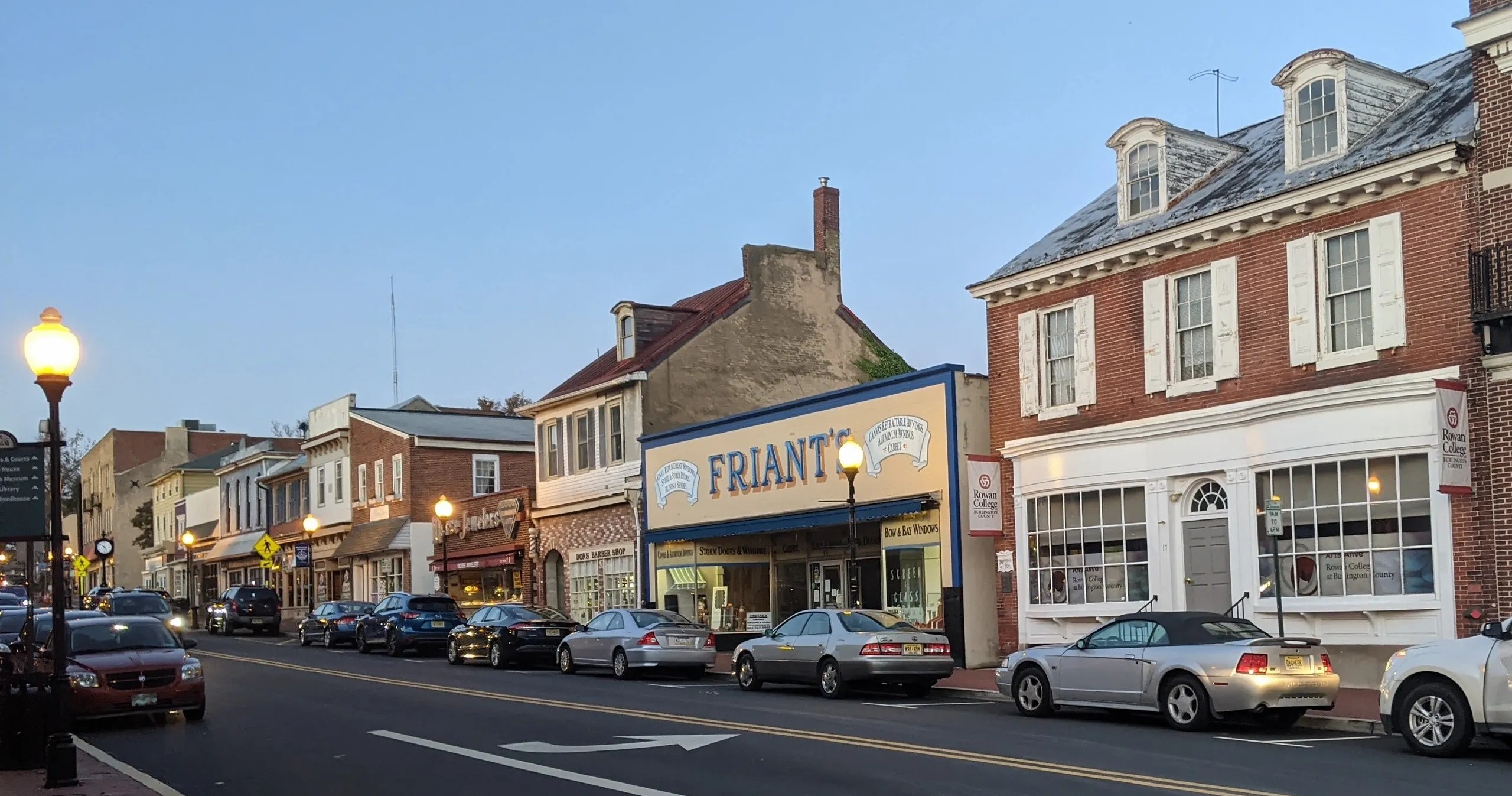
Mount Holly is a small town with a large sense of time. Walk its streets and you move through epochs: Georgian and Federal storefronts sit beside Victorian rowhouses, former mill sites along the river give way to green corridors where osprey and kingfishers hunt, and public squares still keep the cadence of civic life that defined the town for two centuries. Walking tours unlock an intimacy that driving cannot—doorways, plaques, stoops and the gentle bend of the Rancocas Creek reveal the intertwined stories of industry, agriculture, and community that shaped Burlington County.
The town’s scale is one of its greatest assets for walkers. Routes are short enough for a relaxed morning yet varied enough to string together a half-day of discovery. Start with a focused architectural loop through the historic district to learn how early commerce and Quaker influence determined lot patterns and building forms. Add a creekside meander to sample riparian habitats and listen to the water’s seasonal moods, or plan an evening route that centers on public art, cafés, and independent shops. In every season Mount Holly offers distinct rewards: spring brings migratory birds and flowering street trees; summer softens the riverbank with dense green; fall turns the adjacent woodlands gilded; winter exposes skeletal rooflines and quieter interpretation of the town’s material history.
Walking tours here do more than catalog buildings. They place you in the landscape where trade and travel met the water and the forest. Nearby Pine Barrens trails and preserved farmland mean a single day can balance urban-history interpretation with nature watching. Local guides, self-guided maps, and themed tours—food-focused, architecture-focused, or history-focused—offer multiple entry points. For travelers who appreciate both storytelling and practical logistics, Mount Holly’s walking tours are an excellent short-form adventure: accessible, layered with context, and easily paired with complementary activities like kayak floats on Rancocas Creek, bicycle loops on low-traffic roads, or seasonal farmers’ market stops. The result is a walking experience that feels like a long conversation with a place—measured, revealing, and eminently walkable.
Compact routes: most curated walks are under 3 miles and can be combined for half- or full-day itineraries.
Multilayered history: colonial-era sites, industrial-era mill remnants, and 19th-century civic architecture appear within a few blocks of each other.
The harbor is the gateway, and the Pacific becomes the classroom.
Waterfront access: Rancocas Creek shapes both wildlife habitat and the aesthetic heart of many tours.
Complementary activities: pair walks with local dining, creek kayaking, birding, and nearby Pine Barrens hikes for variety.
Choose by purpose
Whale watching, snorkeling, sunset sailing, cultural canoeing, harbor sightseeing, or private chartering.
Start near the city
Waikiki and Honolulu Harbor are primary hubs, with some trips launching near Hanauma Bay.
Confirm the vessel
Gangways, shaded seating, and boarding requirements vary according to vessel size and operator.