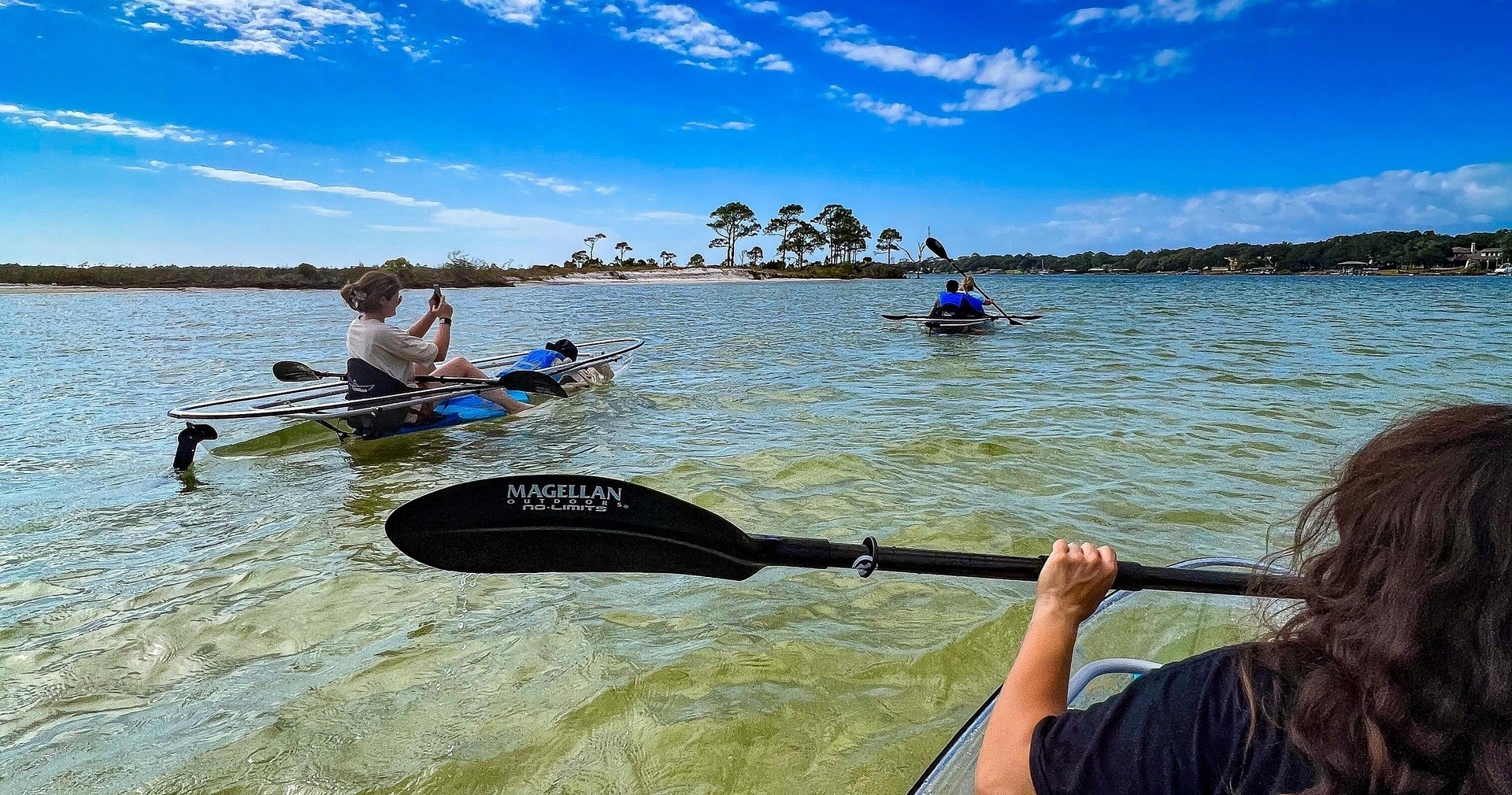
Top Kayak Adventures in Mary Esther, Florida
Mary Esther sits at the hinge between emerald Gulf waters and wide, sheltered bay marshes—an unusually intimate place for kayakers who want both open-water Gulf runs and quiet paddle-through tidal creeks. This guide focuses on paddling opportunities that start near town: in shallow bays threaded with oyster bars, in calm backwaters where birds drift more than boats, and along protected barrier beaches where dolphins and sea turtles are routine company. Expect easy access, varied launch points, and a local paddling culture that prizes low-impact exploration.
Top Kayak Trips in Mary Esther
16 trips • Book with confidence • Instant confirmation
Why Mary Esther Is a Distinctive Kayak Destination
On a still morning in Mary Esther the water reads like a slow-moving mirror and the sky slides into the bay in a pale wash. Paddling here feels intimate because the landscape is scaled to the boat—narrow channels braid through cordgrass and mangroves, oyster bars rise like small, silvery reefs at low tide, and the horizon is often framed by a distant line of dunes rather than high-rise development. The mix of shallow estuary and quick access to the Gulf creates a compact playground: sheltered, wildlife-rich paddling for mornings and gentle offshore runs when conditions allow. For a coastal kayaker, that means variety without the all-day drive.
Mary Esther’s waterways are ecological at heart. The Choctawhatchee Bay and its tributaries funnel nutrients and juvenile fish into the Gulf; as a paddler you’ll pass through nursery grounds where spotted seatrout, mullet, and small sharks move beneath your hull. Above, wading birds—great blue herons, snowy egrets, and roseate spoonbills in season—hold stately poses on exposed flats. Dolphins often thread the bay’s deeper channels; turtles and occasional rays show themselves near sandbars. Because much of the habitat is low and horizontal, wildlife viewing is uncomplicated: a silent glide and a slow turn of the paddle are often enough to watch behavior unfold.
Culturally, Mary Esther is quietly tied to the larger Okaloosa County paddle community—Fort Walton Beach, Destin, and Niceville share launch points, local outfitters, and an ethic of respecting fragile coastal systems. Launches are typically municipal parks, small boat ramps, or beach access points where parking and day-use rules vary; tide windows matter, especially if you plan to thread shallow bays or cross wide flats. The region is also home to fishing, stand-up paddling, birding, and scalloping in season—activities that pair well with a kayak trip and enrich an itinerary. For travelers, the city’s compact size means you can base in a simple rental and be on the water within minutes, trading cramped travel hours for more dawn and dusk paddling time.
Practical paddling here is straightforward but not without nuance. Weather patterns—sea breezes in the afternoon, summer storms, and occasional cold fronts—shape whether a route is calm or choppy. Tides alter the appearance of the route: low tide reveals sprawling flats and oyster beds that are beautiful to study but can strand a novice paddler if they misjudge depth. Local knowledge pays off: tide charts, a basic understanding of currents in the mouth of the bay, and watching wind forecasts will turn a good day on the water into a great one. Above all, Mary Esther rewards slow travel—stick to low-impact routes, carry a small trash kit, and you'll leave the places you visit as quiet as you found them.
The compact mix of bay and Gulf access makes Mary Esther uniquely efficient: short drives to diverse paddling environments.
Tide and wind are the primary determinants of difficulty here—planning around sea breezes and tidal windows is essential.
Wildlife viewing is excellent and accessible: early mornings and late afternoons provide the richest encounters.
Best Time to Visit
Best Months
Weather Notes
Spring and fall deliver the most comfortable paddling temperatures and calmer seas for bay and nearshore routes. Summer brings hot, humid conditions and frequent afternoon thunderstorms; winter is mild but can bring cooler northerly winds and occasional cold fronts.
Peak Season
March–August (spring break and summer tourism increase beach and ramp crowding).
Off-Season Opportunities
Winter weekdays are quieter on the water and can offer glassy conditions on calm days. Early-season bird migration in late winter/early spring brings added wildlife viewing.
Frequently Asked Questions
Do I need a permit to launch?
Most municipal launches are free or require a small parking/day-use fee; certain state park or preserve launches may require a parking pass. Always check the specific launch site website or local signage before you go.
Are the routes suitable for first-time kayakers?
Yes—there are sheltered bay routes and short estuary loops ideal for beginners. Beginners should stick to calm tide windows and avoid crossing open Gulf water without an experienced guide.
Can I kayak to the Gulf from Mary Esther?
Yes, multiple access points allow paddlers to reach Okaloosa Island and the Gulf; crossings depend on wind and sea state and should only be attempted with appropriate experience and safety gear.
Choose Your Experience Level
Beginner
Short, sheltered estuary loops and calm bay paddles with minimal chop and short distances.
- Morning wildlife loop through protected bay channels
- Family-friendly paddle to nearby sandbars at high tide
- Short guided kayak tour focusing on birds and oysters
Intermediate
Longer bay crossings, tidal-timed paddles across flats, and short nearshore Gulf runs requiring better boat control and awareness of wind.
- Half-day paddles across Choctawhatchee Bay
- Tide-window oyster-bar exploration and beach hop
- SUP or kayak combo with light surf practice on Okaloosa Island
Advanced
Exposed Gulf crossings, long-distance coastal runs, and technical tide- and current-sensitive routes needing advanced navigation and self-rescue skills.
- Crossing to nearby barrier islands on an offshore day
- All-day coastal traverse linking multiple launches
- Wind-assisted downwind runs when conditions permit
Insider Tips & Local Knowledge
Check tides and winds, respect wildlife and oyster reefs, and use launches with clear parking rules.
Launch early for calm water and cooler temperatures; afternoons bring sea breezes and choppier conditions. Use local tide tables to avoid getting grounded on oyster bars at low tide. If you plan to cross the bay or head for the Gulf, brief a pair and carry a VHF or reliable cell option and a spare paddle. Pack reef-safe sunscreen and a small trash kit—leave no trace keeps the flats healthy. Consider renting from a local outfitter for guided first trips; they know low-tide shortcuts, launch etiquette, and where the dolphins like to hang out.
What to Bring
Essential
- Stable sit-on-top or touring kayak sized for your experience
- Personal flotation device (PFD) — wear it on the water
- Tide and wind forecast (apps or printed charts)
- Sun protection: long-sleeve shirt, hat, reef-safe sunscreen
- Water and waterproof snacks; dry bag for electronics
Recommended
- Map or downloaded route on a phone GPS (signal can be spotty)
- Light fishing tackle if you plan to fish from the kayak
- Quick-dry layers and a small first-aid kit
- Paddle leash and spare paddle for exposed Gulf runs
- Insect repellent for summer marsh paddles
Optional
- Binoculars for birding
- Compact hand pump or repair kit for inflatable kayaks
- Waterproof camera for wildlife and oyster-bar textures
- Small trash bag to pack out waste
Ready for Your Kayak Adventure?
Browse 16 verified trips in Mary Esther with instant booking
Explore Top 15 Mary Esther, Florida Adventures →