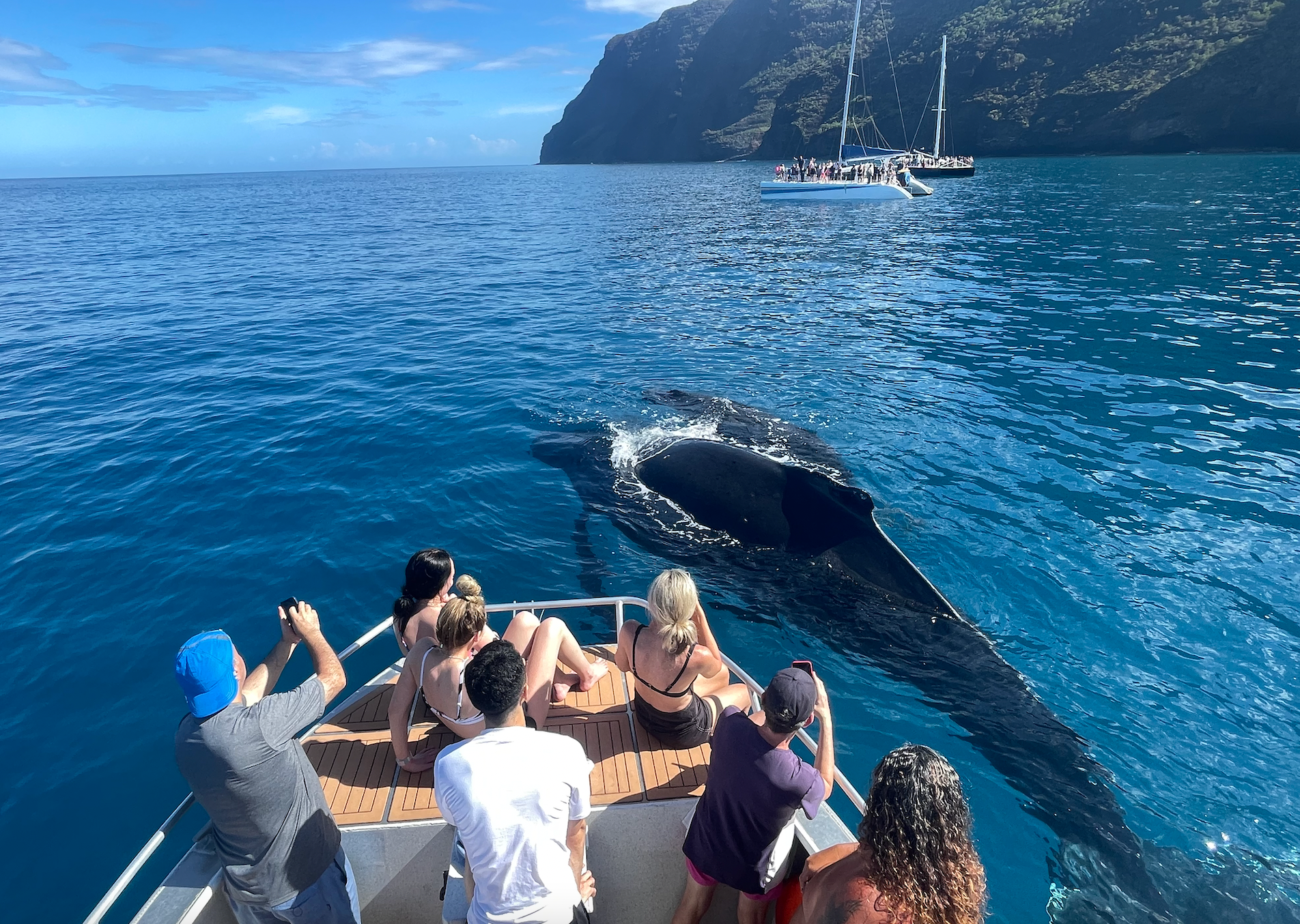
Top Catamaran Experiences off Kaʻena, Hawaii
Catamaran trips out of Kaʻena deliver a distinct blend of raw coastline, open-ocean horizons, and intimate marine encounters. From sunrise sails skimming the rugged cliffs of Kaʻena Point to evening voyages that track migrating whales and paint the sky for sunset, catamarans offer stable, spacious platforms ideal for wildlife viewing, snorkeling, and relaxed coastal cruising. This guide focuses on what to expect on a Kaʻena catamaran trip and how to choose the right excursion for sea state, season, and your sense of adventure.
Top Catamaran Trips in Kaʻena
10 trips • Book with confidence • Instant confirmation
Why Catamaraning off Kaʻena Is Special
A catamaran off Kaʻena feels like a moving porch for the Pacific. The coastline there is unapologetically raw—lava-scarred cliffs, ancient seabird rookeries, and a ribbon of surf that marks where island geology finally yields to open ocean. From the water the contours of the land read differently: headlands drop away into deep blue, small coves that look inaccessible from shore reveal fringe reefs, and the ocean’s sudden swells throw light into textures you can’t perceive from the bluff. A catamaran’s twin hulls tame many of those movements, trading the single-hull roll for a broad, forgiving glide that invites sightlines across the water. That steadiness reshapes the day: it makes a long-lens camera usable from a moving platform, lets you linger over a pod of spinner dolphins, and turns a snorkeling stop into a relaxed exchange with the reef rather than a hurried scramble in and out of the surf.
Beyond sea comfort the area around Kaʻena carries ecological and cultural weight. Kaʻena Point is a sanctuary for native seabirds and a last stretch of wild coastline on Oʻahu—its relative remoteness means marine life has fewer human footprints compared with more developed harbors. Depending on season, catamaran trips can pass humpback whale migration lanes, cross trails of spinner dolphins, or drift above green sea turtles grazing on reef flats. Local captains often weave Hawaiian place names and island lore into the narration of a cruise: the geology that birthed the point, the traditional fishing practices of the leeward shore, and how currents and winds have always shaped island life. That context deepens the boat ride; it turns a leisure sail into a short lesson on ocean stewardship.
Practically, catamaraning here is versatile. Operators run half-day snorkeling runs that hop shallow reefs, full-day wind-swept sails that extend into open water, and sunset cruises timed for golden light and calm evening seas. Conditions swing with the trade winds and the winter swell: summer often brings the clearest water and gentler seas, while winter trades bigger waves—and, for those focused on natural spectacle, peak whale season. Choosing the right outing depends on what you value most: the clarity and calm of a snorkeling reef, the spectacle of a whale breach, or simply the social pleasure of a breezy sunset sail. In all cases, a catamaran's space and stability make it the best way to pair comfort with a true, up-close relationship to Kaʻena’s coastal edge.
Catamarans are especially good for wildlife viewing and photography because the stable platform reduces motion blur and gives photographers room to move.
Trips typically combine sailing, snorkeling (on protected reefs), and coastal narration from local guides—many operators emphasize low-impact practices and reef-safe protocols.
Wind, swell, and tides will shape each itinerary. Summer months favor calmer water and clearer snorkel conditions; winter opens whale-watching opportunities but can mean a bumpier ride.
Best Time to Visit
Best Months
Weather Notes
Trade winds dominate summer, often creating steady, predictable sailing with clearer water for snorkeling. Winter can bring larger north/west swells and more variable conditions; it also coincides with humpback whale migrations near the islands.
Peak Season
Summer months for calm-water snorkeling; winter for whale-watching charters (Dec–Mar) which are busier but offer unique sightings.
Off-Season Opportunities
Shoulder months and weekdays typically have lower prices and fewer crowds. Winter weekdays can still be calm and are useful for experienced travelers seeking quieter decks between whale-season peaks.
Frequently Asked Questions
Do I need prior sailing experience to join a catamaran trip?
No. Most commercial catamaran excursions are guided and operate with experienced crews; passengers are not required to sail. Some operators may offer opportunities to assist under crew supervision.
Are snorkeling stops appropriate for beginners?
Many trips include guided snorkeling at shallow reefs suited to a range of skill levels. If you’re a nervous swimmer, tell the crew—floatation aids and guided entry are commonly available.
How likely am I to see whales or dolphins?
Sightings depend on season and location. Humpback whales are most commonly observed during winter months; dolphins and turtles are frequent year-round, but sightings cannot be guaranteed.
Can I bring food or alcohol on board?
Policies vary by operator. Some allow light snacks, while others provide refreshments or require purchases on board. Alcohol rules are operator-specific and may be restricted.
Choose Your Experience Level
Beginner
Comfortable, low-effort trips with short snorkeling stops and plenty of deck space for lounging—good for families and casual travelers.
- Half-day coastal cruise with a single snorkeling stop
- Sunset sail with light refreshments
- Short wildlife-watching run near Kaʻena Point
Intermediate
Longer sails or full-day trips that include extended reef exploration, brief open-ocean passages, and opportunities to stand at the bow or help with sails.
- Full-day reef-hopping and guided snorkeling
- Photography-focused morning sail
- Combination snorkel-and-coastal-hike excursions
Advanced
Trips that push farther offshore or depend on more variable conditions—ideal for experienced sailors, serious photographers, or those chasing seasonal wildlife like whales.
- Extended open-ocean sailing along the leeward coast
- Whale-focused morning charter during migration season
- Multi-stop exploratory charters to lesser-visited reef systems
Insider Tips & Local Knowledge
Confirm pickup location, check cancellation and seasickness policies, and verify what's included (snorkel gear, beverages, park fees) before booking.
Book early for weekend sunset sails and whale-season charters. Sit midship for the smoothest ride, or near the bow for unobstructed photography. Use reef-safe sunscreen and follow crew guidance around wildlife—keeping a respectful distance preserves both animals and visitor access. If you’re prone to motion sickness, take medication at least an hour before departure and choose morning sails when swells tend to be smaller. Finally, consider combining a catamaran trip with a Kaʻena Point hike or a visit to nearby leeward beaches to deepen your appreciation of the coastline from both sea and land.
What to Bring
Essential
- Reef-safe sunscreen and hat
- Sunglasses with retainer strap
- Light windproof layer (it’s cooler on the water)
- Motion-sickness medication if you’re prone
- Swimwear and quick-dry towel
- Waterproof bag for phone and wallet
Recommended
- Personal snorkel mask if you prefer your fit
- Water shoes or reef booties for landing at rocky coves
- Small camera with zoom lens or binoculars
- Reusable water bottle and light snacks (check operator policy)
Optional
- Light windbreaker for sunset sails
- Dry change of clothes for the return trip
- Small daypack for shore stretches or hikes near landing spots
Ready for Your Catamaran Adventure?
Browse 10 verified trips in Kaʻena with instant booking
Explore Top 15 Kaʻena, Hawaii Adventures →