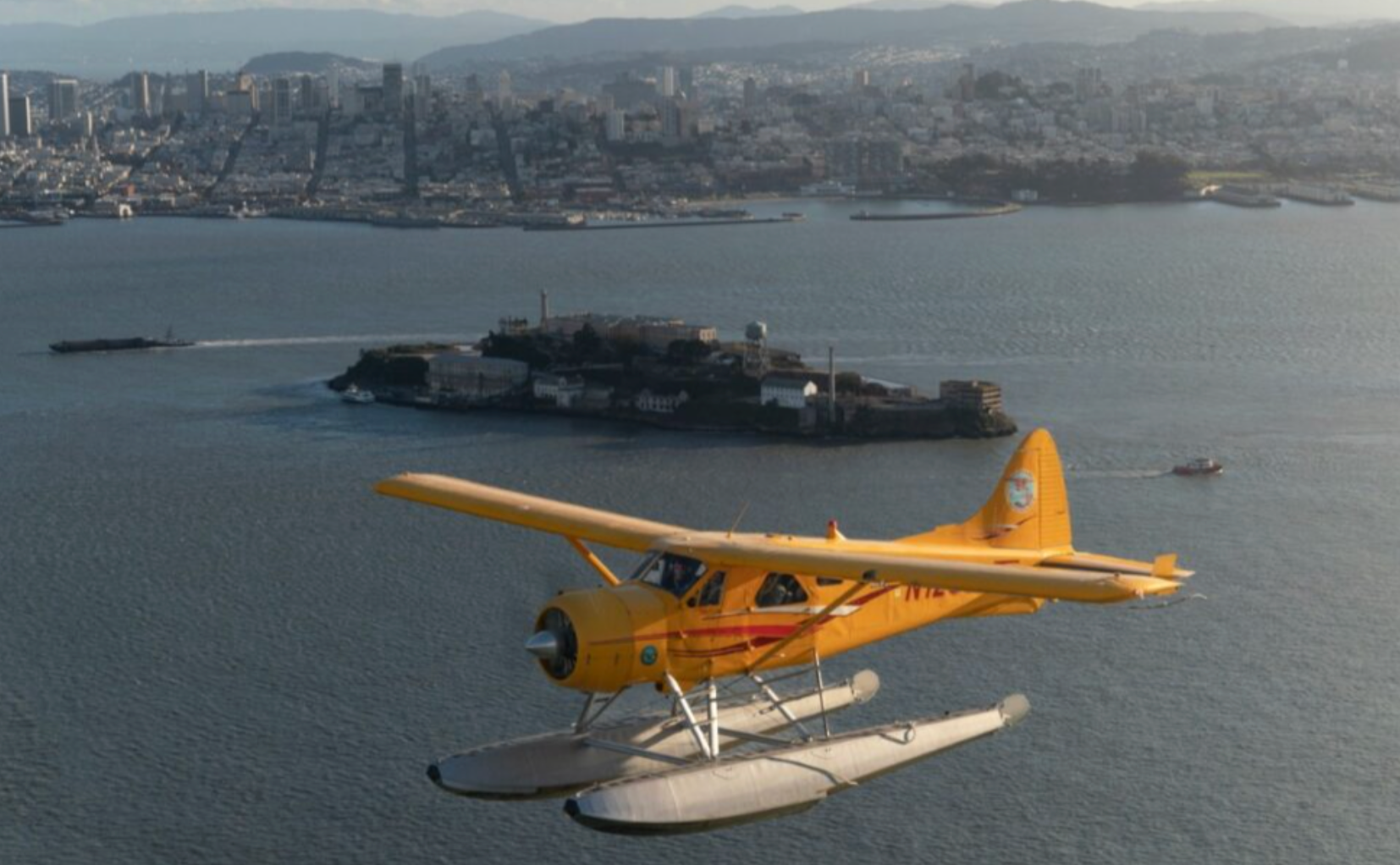
The word "flight" still carries a particular kind of clarity here: short climbs that reward you with wide angles on urban edges, tidal flats, and the low, industrial geometry of the Bay. Hercules sits where shoreline, refineries, suburban neighborhoods, and open water meet — a mix that makes a short airplane trip feel more like a curated exhibition of Northern California’s layered landscape. Takeoff from the local airspace and within minutes you can be skimming the salt-marsh contours of San Pablo Bay, circling the shipping channels, or tracing the spine of the East Bay hills. The contrast is immediate and cinematic: wetlands and barges below, distant city grids, and the possibility of the Golden Gate’s fog fingers to the west.
Practically, Hercules works for airplane experiences because it offers accessibility without the bustle of a major commercial field. Small-group sightseeing flights, introductory discovery flights for curious travelers, and pilot-training circuits all fit naturally into the area’s rhythm. Pilots and operators routinely plan flights to capitalize on clear-weather windows and midday thermals, while photographers and filmmakers use altitudes and approach vectors that emphasize light and composition — low sun on mudflats, fog drifting through the Gate, or the patchwork of vineyards inland. Because the region’s airspace is complex, shared-use airports nearby tend to attract operators familiar with Bay Area procedures; that local knowledge translates to smoother logistics for visitors, safer routing, and smarter weather decisions.
Beyond the cockpit, airplane outings in and around Hercules are gateways into complementary outdoor activities. A short scenic flight pairs beautifully with a kayaking morning on the bay, birdwatching along the shoreline, or a vineyard tour inland. A discovery flight that stokes an appetite for aviation can be followed by a lesson at a flight school or a museum visit in nearby cities. The airplane becomes both transport and perspective — a way to reframe otherwise familiar landscapes. For planners, the most important considerations are weather, airspace, and expectations: choose your window for visibility, know that mornings may be marine-layered while late summer often yields the clearest light, and leave flexibility for rescheduling when fog or wind make low-level sightseeing impractical.
The variety is the draw: short coastal sightseeing hops, targeted aerial photography sorties, discovery flights for first-time fliers, and formal flight training circuits are all feasible from Hercules-area operations.
Seasonality matters more for visibility than for availability — summer and early fall often bring the clearest air, while spring and winter offer dramatic skies, migrating birds, and quieter booking windows.
Choose by purpose
Whale watching, snorkeling, sunset sailing, cultural canoeing, harbor sightseeing, or private chartering.
Start near the city
Waikiki and Honolulu Harbor are primary hubs, with some trips launching near Hanauma Bay.
Confirm the vessel
Gangways, shaded seating, and boarding requirements vary according to vessel size and operator.