Why Hawley Is a Unique Base for Air Tours
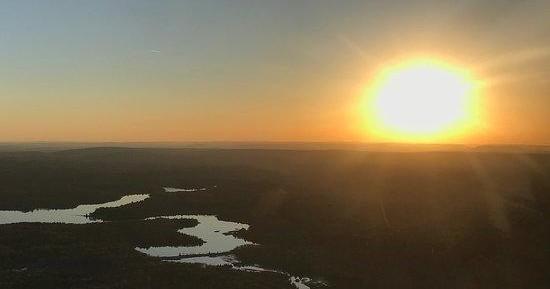
There’s a particular hush that settles over Hawley before takeoff: the late-summer heat is held at bay by lake-breezes, fall mornings crackle with cold clarity, and winter light makes every wooded slope a study in graphite and silver. Viewed from the ground, Hawley’s history and landscape feel intimate—a Victorian main street, a rail-trail threaded with rusted rails and wildflowers, and a broad, dark lake framed by conifers. From the air the same elements rearrange into patterns: beaches become ribbons, ridgelines become spine-like, and small towns tuck into river bends like secret pockets. That shift in scale is the essential appeal of an air tour here. It’s not only about seeing more; it’s about seeing differently. A seaplane skimming Lake Wallenpaupack emphasizes how glacial geology carved the basin; a helicopter arc over the Delaware River reveals how water has stitched state lines, rail corridors, and industrial ruins into the present landscape; a balloon at sunrise makes visible the slow weather shifts and the way light rolls across the Poconos.
Pragmatically, Hawley’s air-tour scene is compact and approachable. Tours tend to be short—often 20–60 minutes—designed for sightseeing and photography rather than long-distance travel. That brevity makes them ideal as part of a broader itinerary: combine a morning flight with paddling on the Lackawaxen, an afternoon at a local brewery, or an evening stroll through Hawley’s historic district. Yet the experience still demands respect for weather and season. Low clouds, wind, and early winter snows can cancel or postpone flights; operators commonly fly during the calmest hours of the day—dawn or late morning in summer and clear mid-morning windows in autumn. Visibility matters: haze, mist, or flat light dull the views, while clear, crisp days reveal the topography and foliage in high contrast.
For photographers, families, and anyone who likes a story tied to place, an air tour out of Hawley is both literal and figurative perspective-taking. Pilots often point out the scars and signposts of the region—former milling towns, the curves of an old canal, the shoulders of ski slopes—and they translate the landscape into narratives of geology, industry, and recreation. The tours are an invitation to reassemble a day on the ground: land, hike, paddle, dine, sleep, then return to the sky to remember what paid the mortgage on this scene and what continues to shape it. Practical planning—book early in peak foliage weeks, pack for wind and sun, and allow a weather buffer—turns a fleeting aerial exhilaration into a reliable highlight of any Hawley visit.
The variety is the draw: short seaplane circuits over Lake Wallenpaupack, helicopter flyovers of the Delaware Water Gap and surrounding gorges, and occasional tethered or free hot-air balloon launches timed for calm mornings.
Seasonal color and visibility are the primary variables: spring and fall offer the richest, most photogenic views, while summer visibility can be reduced by haze and mid-day thermals; winter flights are possible but more frequently disrupted by weather.
Choose by purpose
Whale watching, snorkeling, sunset sailing, cultural canoeing, harbor sightseeing, or private chartering.
Start near the city
Waikiki and Honolulu Harbor are primary hubs, with some trips launching near Hanauma Bay.
Confirm the vessel
Gangways, shaded seating, and boarding requirements vary according to vessel size and operator.