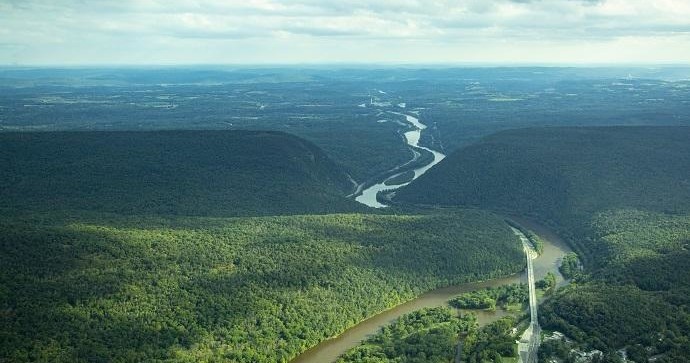
Hampton sits in a transitional landscape where the broad, low-angled fields of Hunterdon County open into river valleys and gentle ridgelines. That geography matters for anyone looking upward: shallow relief creates predictable wind corridors on many mornings, while open farmland offers safe landing zones and unobstructed approach paths that make ballooning, ultralight flights, and scenic small-aircraft tours practical. The airspace over and around Hampton is largely free of the vertical clutter of dense urban centers; pilots and operators often favor the area for calm-sky windows, long sightlines, and the kind of quiet panoramas that reveal farms, stone walls, and the slow winding of local creeks.
Air activities here are as much about timing as place. The best flights tend to happen at first light, when thermals are weak and winds are lightest—conditions that matter for both hot-air balloons and light aircraft. Late-spring through early-fall brings the most consistent flying weather, when mornings are cool and visibility is high. In contrast, afternoons can build thermals and gusts that make small-craft operations more weather-sensitive. Cultural context nudges the experience in other ways: a balloon launch over the patchwork fields feels like a different kind of rural tourism, one that pairs well with local farm stands, a riverside picnic, or an afternoon tasting at nearby wineries. For people pairing flight experiences with ground-based exploration—hiking, cycling, or visiting small-town markets—Hampton acts as a quiet staging ground rather than a destination crowded with amenities.
Practically speaking, Hampton’s air-activity scene is modest and community-oriented. Operators that serve the region typically run small teams rather than large commercial outfits, so touches like personalized weather briefings and flexible scheduling are common. That intimacy has trade-offs: fewer daily departures than in a city, and more dependence on short lead times and good weather. Regulations and safety practices are standardized—licensed pilots, FAA guidance for aircraft and parachute operations, and operator-specific briefings—but local knowledge is valuable: knowing which fields clear for landing at different times of year, where access roads are gated, and how to time a morning flight to avoid agricultural work on fields below. In short, Hampton rewards travelers who respect seasonality and who bring patience for weather-dependent scheduling. When conditions align, the payoff is expansive: quiet, low-traffic skies and a perspective on the rural mid-Atlantic that’s hard to get from the road.
Open farmland and low ridgelines create favorable launch and landing zones for balloons and light aircraft.
Morning flights are the norm—pilot briefings will emphasize pre-dawn call times and flexible windows.
The harbor is the gateway, and the Pacific becomes the classroom.
Operators are often small teams; expect personalized briefings and variable daily schedules.
Air activities pair well with local agritourism—pick-your-own farms, country diners, and nearby winery routes.
Choose by purpose
Whale watching, snorkeling, sunset sailing, cultural canoeing, harbor sightseeing, or private chartering.
Start near the city
Waikiki and Honolulu Harbor are primary hubs, with some trips launching near Hanauma Bay.
Confirm the vessel
Gangways, shaded seating, and boarding requirements vary according to vessel size and operator.