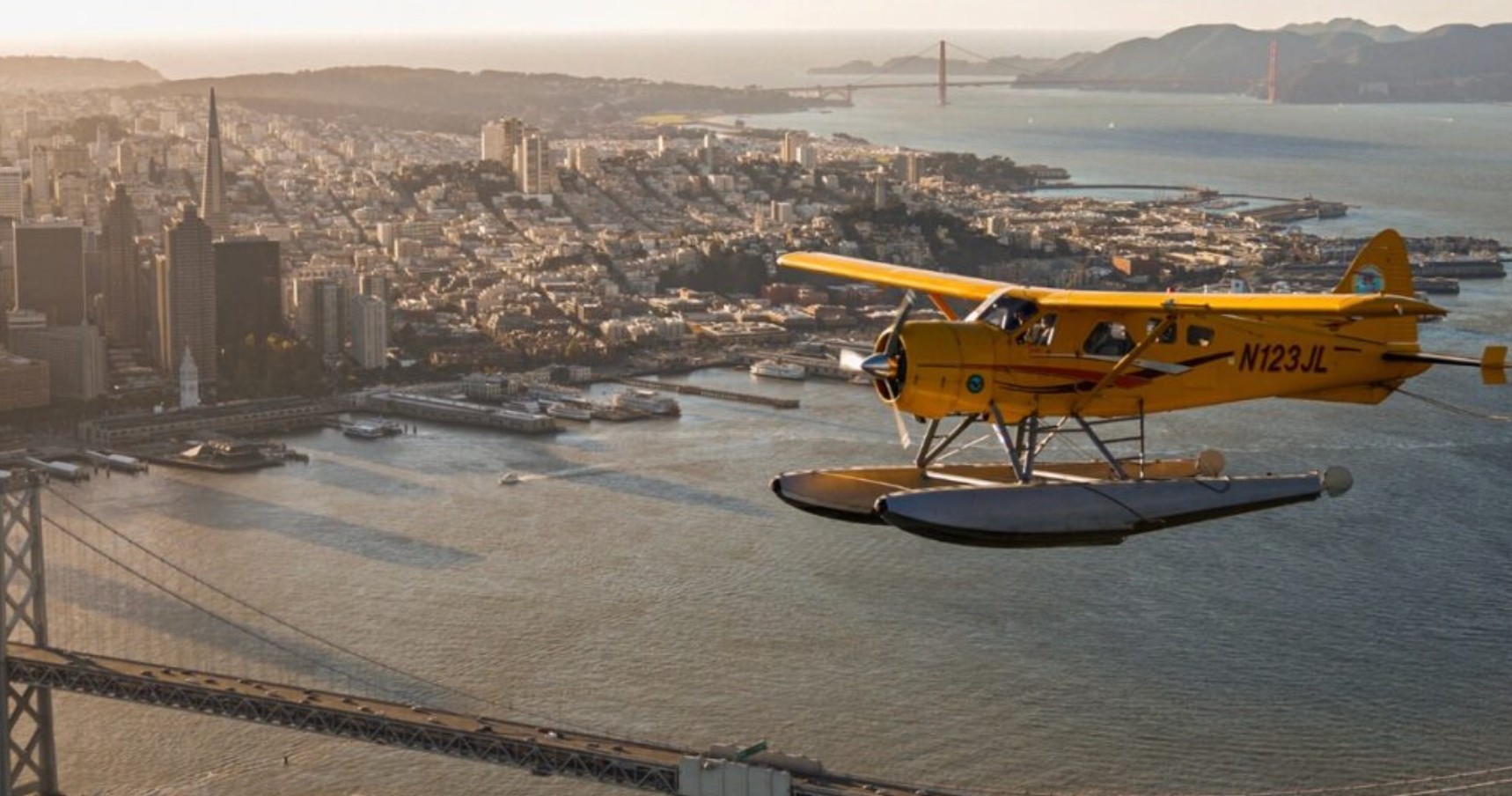
Airborne Over the Bay: Airplane Experiences in Foster City, California
Foster City sits on a low-lying lattice of lagoons and engineered marshland at the heart of the South Bay—a place where the horizon is dominated not by peaks but by flightpaths, bridges, and water. Airplane experiences here are intimate: short flightseeing hops that fold the region into an hour of cinematic coastlines, discovery flights that introduce you to the controls in general aviation airports nearby, and practical cross-country legs for pilots training toward their next certificate. The landscape below—checkerboard salt ponds, the slender arc of the San Mateo Bridge, and the distant silhouette of downtown San Francisco—rewards any flight with a dramatic spatial clarity that ground travel can’t match.
Top Airplane Trips in Foster City
18 trips • Book with confidence • Instant confirmation
Why Foster City Is a Standout Airplane Destination
There is a special geometry to flying over Foster City. From the pilot's seat, the town reads as engineered water—marinas, levees, and a grid of lagoons that shimmer in sunlit patterns. From the passenger perspective this geometry becomes an atlas of the Bay: bridges like threads, sandy spits, and the shifting palette of salt ponds—turquoise, copper, and slate—depending on life and mineral content. Flights launched from nearby general aviation fields fold familiar landmarks into new relationships. The San Mateo Bridge becomes a delicate spine linking the South Bay to the East Bay; the runway patterns of San Carlos, Palo Alto, and the approach corridors into San Francisco's international airport reveal the layered choreography that keeps one of the nation’s busiest airspaces flowing.
The draw here is both practical and poetic. Short sightseeing sorties amplify what feels like an everyday local scene into a narrative of tide and tide lines, while discovery flights deliver an intake of freedom: a first-hand lesson in lift, throttle, and horizon reference without the logistics of a full-day mountain trip. For pilots, the South Bay is a practice ground for real-world skills—flying busy satellite fields, navigating terminal control areas, and planning cross-country legs along a crowded coastline. The terrain itself is unthreatening—low elevation, predictable approaches, and visual references everywhere—yet the proximity to SFO and major commercial traffic injects an operational seriousness that makes every flight an education in discipline and situational awareness.
Seasonal patterns matter. Summer mornings can be glassy and calm before the classic bay fog rolls in; late summer and fall often provide the clearest visibility and the most stable air. Energy and wildlife considerations shape the experience as well; the South Bay wetlands are active habitats and pilots often adjust altitude and routing to respect migratory corridors and local noise abatement rules. For travelers, airplane outings here plug neatly into a broader Bay Area trip: combine a short flightseeing leg with a shoreline bike ride, a windswept picnic under the bridge, or a birding stop at a nearby refuge. For locals, the airplane is often a practical extension of mobility—flight training, business hops, and aerial photography are common enough to keep a network of experienced schools and aircraft owners busy.
In short, flying in and around Foster City is less about adrenaline and more about perspective. The region rewards measured curiosity: a half-hour flight can reframe your sense of distance, turn the familiar into something cinematic, and leave you wanting to explore both the sky and the places it links.
The proximity to multiple general aviation airports makes Foster City an accessible staging point for short sightseeing flights, discovery lessons, and pilot training sorties.
Unique coastal and man-made features—salt ponds, bridges, and protected wetlands—create compelling photographic and navigational landmarks visible even at low altitude.
Best Time to Visit
Best Months
Weather Notes
Late summer and fall usually offer the clearest skies and calmest conditions for sight-seeing flights; coastal fog and onshore breezes are most common in late spring and summer afternoons. Morning flights often provide smoother air and better visibility before sea-breeze turbulence develops.
Peak Season
Late summer through fall for the best visibility and calmer conditions.
Off-Season Opportunities
Winter and early spring can offer dramatic low clouds and storms for more dramatic photography, but flights are more weather-dependent and cancellations are more likely.
Frequently Asked Questions
Do I need a pilot's license to take an airplane sightseeing flight?
No. If you book a commercial sightseeing flight or discovery flight with an operator, you can ride as a passenger. A pilot's license is required only if you intend to act as pilot-in-command.
Are there age or health restrictions?
Most operators allow children and older passengers, but specific age minimums or health-related restrictions vary—check with the operator in advance, especially for very young children or those with mobility concerns.
How long are typical sightseeing flights from the Foster City area?
Sightseeing sorties commonly range from 20 minutes to an hour, depending on the route and whether the flight includes landing at another field or a longer coastal leg.
How close do flights get to San Francisco and the Golden Gate?
Routing is controlled by airspace and ATC. Flights in the South Bay typically offer views of the San Francisco skyline and Bay bridges from a distance; access into restricted or Class B airspace requires coordination with air traffic control and is limited by operator permissions.
Choose Your Experience Level
Beginner
Passenger-focused sightseeing flights and introductory discovery flights where you can ride along and learn basic cockpit terminology.
- 20–45 minute Bay flightseeing tour
- Introductory discovery flight with dual controls
- Aerial photography hop over the salt ponds
Intermediate
Hands-on discovery lessons, short dual cross-country flights, and VFR navigation practice in controlled airspace under instructor supervision.
- Dual instructional flights from a local GA airport
- Short cross-country to a neighboring field
- Aerial survey or photography sortie combining multiple waypoints
Advanced
Certified pilots practicing complex airspace operations, night or instrument training in coordinated settings, and advanced aerobatic or tailwheel instruction where available.
- Cross-country navigation through Bay-area airspace
- Night or instrument approaches with an instructor
- Advanced handling (tailwheel or high-performance aircraft) training
Insider Tips & Local Knowledge
Coordinate early, prioritize morning windows, and respect local noise-abatement and wildlife areas.
Book morning flights to avoid afternoon winds and bay fog moving inland. When arranging flights, ask about the operator’s procedures for camera straps and window glare—small adjustments can transform a reflective shot into a magazine-quality image. If you’re a pilot, plan conservative fuel reserves: diversions and hold times are common around big airports. Be mindful of wildlife and wetlands—pilots frequently route higher over sensitive bird habitats and adhere to published noise-abatement procedures near residential shorelines. Finally, communicate dietary or motion-sickness concerns ahead of time; operators are used to making accommodations and advising on the best seat for comfort and photos.
What to Bring
Essential
- Government ID (required for commercial flights or airport access)
- Comfortable layers—cockpit temperatures can change rapidly
- Noise-reducing headset or ear protection (some operators provide them)
- Camera with wrist strap or tether
- Small daypack that fits in the aircraft’s cabin or baggage compartment
Recommended
- Sunglasses with UV protection and a neutral tint
- Motion-sickness medication if you’re prone to airsickness
- Light waterproof shell for coastal fog spray or drizzle
- Charged phone and portable battery for photos and communications
Optional
- Binoculars for wildlife and shoreline detail
- Pilot logbook or notebook if taking a discovery lesson
- Compact binoculars for birding during shoreline passes
Ready for Your Airplane Adventure?
Browse 18 verified trips in Foster City with instant booking
Explore Top 15 Foster City, California Adventures →