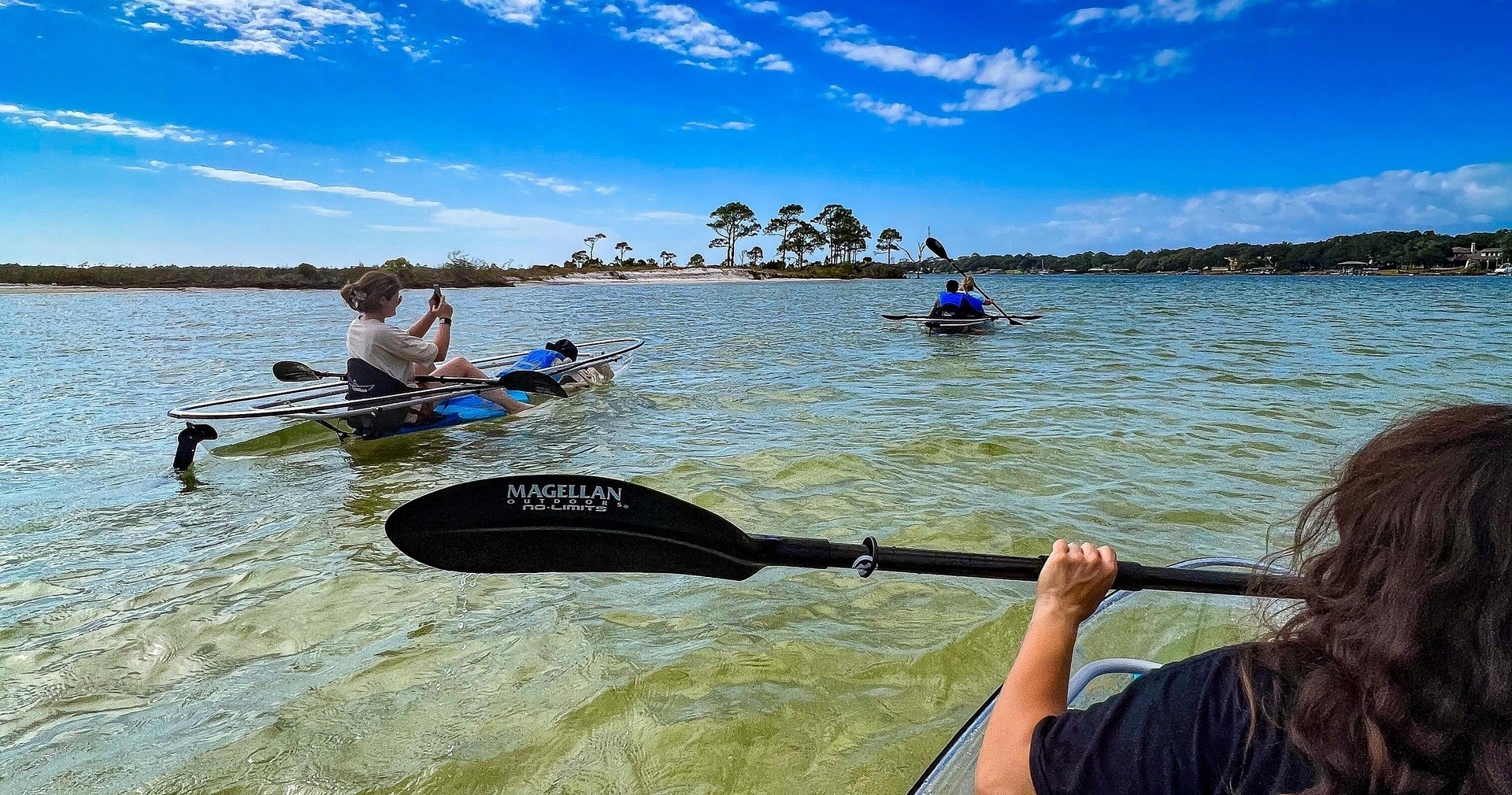
Kayaking in Fort Walton Beach, Florida
Sheltered bays, sinuous estuaries, and the rare coastal dune lakes around Fort Walton Beach create a range of paddling conditions ideal for everyone from first-time kayakers to seasoned sea paddlers. Expect calm morning crossings, wildlife-rich mangroves, and the occasional open-water stretch toward the Gulf—plus easy access to guided eco-tours and gear rentals.
Top Kayak Trips in Fort Walton Beach
16 trips • Book with confidence • Instant confirmation
Why Fort Walton Beach Is a Standout Kayaking Destination
Fort Walton Beach sits where the calm lagoon of Choctawhatchee Bay meets the narrow, moonlit ribbon of Santa Rosa Sound, and that meeting of waters is the secret behind its broad appeal to kayakers. Paddling here is intimate and varied: you can skim shallow seagrass flats at sunrise and watch rays lift from the shallows, thread a slender mangrove creek that smells faintly of salt and decaying leaves, or launch from a white-sand inlet for an exposed Gulf crossing when conditions allow. Those contrasts—protected bay, tidal sound, and the open Gulf—mean the same day can feel like three different paddle trips, depending on tide, wind, and how far you want to explore.
Ecology shapes the experience. The region is home to a high density of coastal dune lakes—rare, dynamic water bodies that change character with storms and tides—and stretches of seagrass that support juvenile fish, shrimp, and the turtles and rays that draw paddle-watchers. Birdlife is prolific: roseate spoonbills, ospreys, black skimmers, and wintering ducks all use these shallow estuaries. Manatees and bottlenose dolphins are regular sightings in the bay and sound; when they appear they transform a routine paddle into an unforgettable wildlife encounter. Sensitivity to these species and the fragile dune-lake systems informs stewardship here, so good paddling etiquette and spatial awareness are part of the culture.
The human story is woven into the waterways as well. Indigenous peoples first navigated these coasts and bays; later, fishing villages and military installations combined with tourism to create a layered coastal identity. Fort Walton Beach’s shoreline infrastructure—launch ramps, municipal boat ramps, and a small but capable network of outfitters—makes the town unusually accessible for a coastal paddling destination. Local guides offer everything from beginner-friendly bay tours to technical sea-kayak instruction for paddlers looking to move into open-water crossings or overnight trips to nearby barrier islands.
Practical advantages are clear: morning winds often die down, producing glassy conditions in Choctawhatchee Bay that are perfect for novices and photographers. Conversely, seabreezes and afternoon storms can make the Gulf side challenging in summer; understanding tide lines, wind forecasts, and how surf refracts around headlands is essential for anyone paddling beyond the sound. For travelers, Fort Walton Beach’s compact geography means one trip can combine nature observation, light fishing, stand-up paddleboarding, and a beach finish—useful when your time is limited. In short, Fort Walton Beach rewards curiosity: paddle slowly, listen for the slap of a mullet or the distant calling of gulls, and you’ll learn why local paddlers keep returning.
The mix of calm estuary conditions and nearby open water creates natural progressions for skill development—bay paddles for mastering strokes and rescues, sound crossings to practice navigation, and Gulf runs for experienced paddlers comfortable with surf and tide.
Conservation-minded outfitters emphasize leave-no-trace paddling and often include naturalist commentary, which deepens enjoyment of the area’s birdlife, fisheries, and the dune-lake systems.
Many launch points are within minutes of dining, gear shops, and overnight lodging, making multi-day kayak-focused itineraries very practical without extensive logistics.
Best Time to Visit
Best Months
Weather Notes
Spring and fall offer the most comfortable paddling temperatures and more stable winds. Summers are hot and humid with frequent afternoon thunderstorms and a stronger seabreeze; winter brings cooler air and occasional frontal winds that increase chop on exposed waters. Hurricane season (June–November) requires attention to forecasts for longer trips.
Peak Season
Summer beach season (June–August) and spring break see the highest visitor numbers, especially around Okaloosa Island and public beaches.
Off-Season Opportunities
Late fall through early spring can provide solitude on popular bay routes and excellent birding, though water is cooler and some outfitters operate reduced hours.
Frequently Asked Questions
Do I need a permit to kayak in Fort Walton Beach?
For most day paddles from public launch sites you do not need a special permit. Some state parks or managed areas may have parking or entry fees; check site-specific rules before launching.
Are guided tours or rentals available?
Yes—local outfitters offer sit-on-top and sea-kayak rentals, guided eco-tours, sunset paddles, and instruction. Reservations are recommended during peak season.
Is kayaking here suitable for beginners?
Yes. Choctawhatchee Bay and sheltered parts of Santa Rosa Sound provide calm, shallow water ideal for first-time kayakers. Beginners should start with a guided tour or rental outfit that offers safety briefings.
What wildlife can I expect to see?
Common encounters include bottlenose dolphins, occasional West Indian manatees, wading birds (herons, egrets, spoonbills), shorebirds, and plenty of fish life in seagrass beds.
Are there tidal or current concerns?
Tidal flow in the bay and sound is modest compared with large estuaries, but currents and tidal range can affect narrow passes and inlets. Wind-driven currents and surf are the primary concerns for open-water crossings.
Choose Your Experience Level
Beginner
Calm-bay paddles and protected mangrove creeks with short distances and easy launch points—ideal for learning strokes, balance, and basic rescues.
- Morning Choctawhatchee Bay loop
- Mangrove creek exploration near Okaloosa Island
- Sunset paddle from a municipal launch
Intermediate
Longer coastal sound crossings, tidal-lagoon exploration, and paddles that require basic navigation, wind management, and comfort with boat traffic.
- Santa Rosa Sound crossing to Crab Island
- Coastal dune lake circuit with multiple launches
- Guided wildlife and birding tour with moderate distance
Advanced
Open-Gulf paddles, surf zone entries and exits, and overnight island trips that require strong navigation, weather-readiness, and self-rescue proficiency.
- Gulf crossing to nearby barrier islands (weather permitting)
- Multi-day island camping with tide and surf planning
- Advanced sea-kayak instruction and rolling clinics
Insider Tips & Local Knowledge
Always check local weather, tides, and advisories; be aware of wildlife and respect protected areas.
Launch in the early morning for the calmest water and best light for wildlife. When paddling near seagrass beds or turtle nesting beaches, avoid dragging boats and keep noise low—these areas are both productive and fragile. If you’re new to the region, book a guided eco-tour for local route knowledge and wildlife spotting; guides also teach how to read the subtle cues of wind and tide here. On exposed Gulf-facing paddles, time your crossing with the tide and wind to minimize exposure to surf. Leave snorkel or fishing plans flexible—shallow flats can be great for quick, improvised stops but are highly sensitive to trampling. Finally, support local outfitters and conservation groups: many run beach cleanups and dune-restoration projects that keep the paddling experience healthy for everyone.
What to Bring
Essential
- Personal flotation device (PFD) — required in Florida for small craft
- Waterproof sunscreen and hat
- Dry bag for phone, keys, and layers
- Water and snacks (electrolytes recommended in summer)
- Light wind layer and quick-dry clothing
Recommended
- Reef-safe sunscreen and lip balm
- Water shoes or sandals with secure straps
- Whistle and small signaling mirror
- Reef-safe insect repellent for mangrove creeks
- Basic paddle repair kit and spare paddle leash
Optional
- Binoculars for birding and distant wildlife
- Underwater camera or GoPro
- Small first-aid kit with blister care
- Map or GPS with local waypoints preloaded
Ready for Your Kayak Adventure?
Browse 16 verified trips in Fort Walton Beach with instant booking
Explore Top 15 Fort Walton Beach, Florida Adventures →