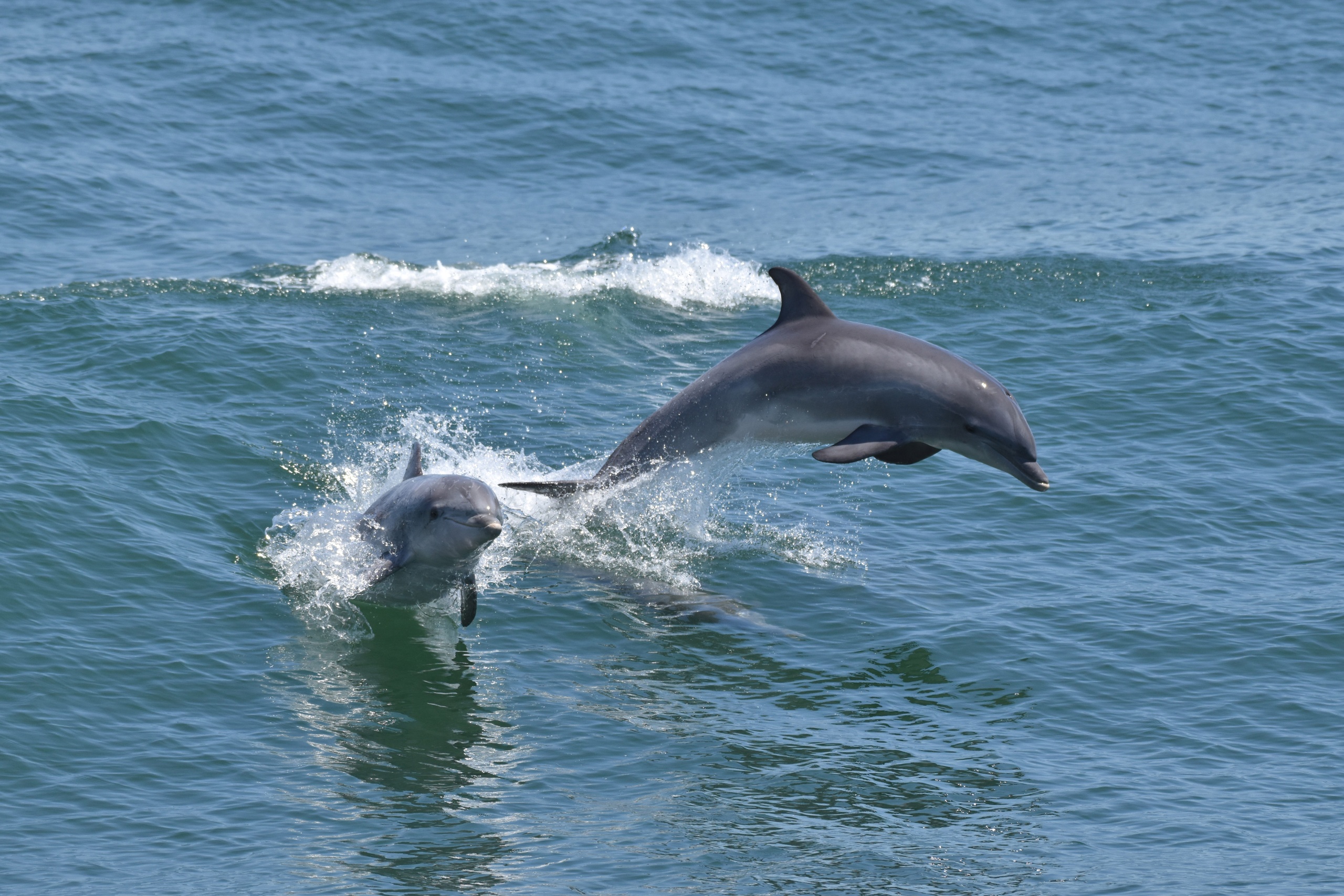
On a clear morning the cityscape of Essex County recedes into the peripheral rhythm of engines and gulls; beyond that, the salt runs and shipping channels that feed into New York Harbor and the Atlantic are places of sudden brightness—blows, tails, and the curious black crescents of dolphin dorsal fins. Essex's advantage is proximity. From modest municipal launch points and nearby Jersey Shore towns you can reach brackish estuaries and nearshore zones where dolphins forage along tide lines and around structure. Those who come for dolphins learn quickly that the experience is ecological as much as emotional: these are animals navigating complex waters shaped by tides, thermoclines, baitfish migrations, and human infrastructure.
This is not postcard wildlife, and it shouldn’t be. Dolphin encounters near Essex are often intimate and unpredictable; they can arrive as quick, ecstatic passes by the bow of a small vessel, or as distant, purposeful arcs where pods follow the narrow corridors of the estuary. The best days are those when currents concentrate baitfish—menhaden and anchovy runs that bring dolphins close to shore and within sight of amateur naturalists. Seasonal shifts matter. Late spring and summer bring expanded coastal foraging and higher sighting rates; fall can produce dramatic, transient visits as schools migrate; winter sightings are rarer but sometimes spectacular after nor'easters reshape the water column.
Approaching dolphins from Essex requires a mix of patience and respect. Local skippers and paddlers emphasize slow, low-profile approaches, avoiding rapid direction changes or loud engines. Kayak and small-boat outings often yield the most memorable encounters because they minimize noise and allow the dolphins to decide whether to engage. At the same time, the urban-to-ocean transition around Essex offers complementary experiences: shorebird migration in tidal flats, seal sightings in cooler months, and the sensory collision of industrial shoreline and thriving marine life. For travelers who value a layered day—morning tide patrol for dolphins, afternoon birding along a salt marsh, evening meal at a coastal town—Essex functions as a pragmatic launching pad. The following sections lay out how to plan a responsible dolphin outing, what to bring, and how to choose among shore-based, kayak, and guided-boat options so your chance encounter becomes a well-considered adventure rather than a rushed checklist.
Dolphin activity near Essex is concentrated where estuarine currents meet the open ocean. Travel a short distance from urban launch points and you enter habitat corridors used by bottlenose dolphins and transient schools that follow bait concentrations.
The human story here is compact: commercial and recreational harbors, historic shipping channels, and protected marshlands create a patchwork of habitats. That mosaic attracts foraging dolphins and makes Essex a convenient jump-off for multi-activity itineraries—combine dolphin watching with birding, salt-marsh walks, or a sunset coastal ride.
Choose by purpose
Whale watching, snorkeling, sunset sailing, cultural canoeing, harbor sightseeing, or private chartering.
Start near the city
Waikiki and Honolulu Harbor are primary hubs, with some trips launching near Hanauma Bay.
Confirm the vessel
Gangways, shaded seating, and boarding requirements vary according to vessel size and operator.