E-Bike Adventures in Duck, North Carolina
Flat, fragrant, and framed by sea and marsh, Duck is an ideal coastal pocket for e-biking. Riders can cruise waterfront boardwalks, roll along quiet residential lanes, and reach wild salt marsh edges with less effort and more time to notice the details—shorebirds on the tideline, a kayak slicing across still water, the slow drift of late-afternoon light. This guide focuses on how to plan e-bike trips in and around Duck, where to ride, what terrain to expect, and how to fold other coastal activities—birding, paddleboarding, light hiking—into an electric-assisted day of exploration.
Top E-Bike Trips in Duck
4 trips • Book with confidence • Instant confirmation
Why Duck Is a Standout E‑Bike Destination
Duck’s quiet streets and waterfront promenades are the kind of place an e-bike was invented for: approachable, scenic, and forgiving of tired legs. The town is a compact ribbon of community hugging Currituck Sound, a landscape of marsh islands, shallow coves, and low dunes that unfolds at a human pace. On a conventional bike you cover a pleasant distance; on an e‑bike you expand what’s possible in a single afternoon—linking the boardwalk, neighborhood lanes, and soundside dirt shoulders without scheduling your day around fitness or the tide.
Riding here means paying attention to nuance. The wind off the sound is a constant companion: helpful on an outbound leg, a bracing headwind on the return. Salt and sand shape the infrastructure—boardwalk planks, wooden bridges, and paved multi-use paths—so e-bike riders experience a mix of surfaces and microclimates as they move from shaded maritime forest to exposed shoreline. Because Duck sits at the northern edge of the Outer Banks’ developed corridor, routes can feel both village-like and unexpectedly wild; in a single loop you can pass cafes, a nature interpretive center, and then be peering at migrating shorebirds on a mudflat.
E-bikes flatten gradients and shorten distances in the same way binoculars sharpen detail: they give you access. Families can attempt longer outings without turning a ride into a slog, and older riders or those recovering from injury can still enjoy extended coastal circuits. That accessibility expands the kinds of complementary activities that work with an e-bike-focused trip—stop for an early-morning bird walk, lock the bike and launch a paddleboard at a calm sound launch, or roll up to a waterfront restaurant for sunset. The technology also invites ethical considerations: courteous speed on shared paths, awareness around pedestrians on the boardwalk, and leaving fragile habitat undisturbed. Respectful riding keeps Duck feeling like a small, interconnected place rather than a transit corridor.
Planning in Duck rewards a pragmatic approach. Battery range matters more than horsepower; choose a bike with a battery and range profile that matches your intended distance and be realistic about headwinds. Bring a simple toolkit and a charger if you plan to overnight in town. Seasonality shapes the experience: shoulder seasons bring comfortable temperatures and peak bird migrations; summer fills the town with visitors and increases rider–pedestrian interactions; winter offers solitude at the cost of fewer rental options. Ultimately, Duck as an e‑bike destination is about leisurely discovery—about turning a ride into a sequence of small, satisfying encounters with the coast’s softer edges, rather than a dash from one tourist stop to the next.
E-biking in Duck is inherently multimodal. Routes are short enough that bikes pair well with paddling, fishing, and coastal birding—plan stops rather than long continuous miles. Many e-bike riders use docks, public launches, and small parking nodes to combine a padded sound paddle with a shoreline circuit by bike.
Local stewardship matters: boardwalks protect dune systems and marsh edges, and many popular viewing points are maintained for pedestrians and wildlife. Keep speeds low in mixed-use areas, avoid riding on protected dunes or wet marsh flats, and check local signage for any seasonal restrictions.
Best Time to Visit
Best Months
Weather Notes
Spring and fall offer the most comfortable temperatures and lighter crowds; summer is hot and windy with busy boardwalks, while winter delivers quiet streets but fewer rental options. Wind off the sound can vary from a gentle breeze to strong gusts that significantly affect range and effort.
Peak Season
Late June through August—highest visitation and fullest rental bookings.
Off-Season Opportunities
Late fall through early spring offers solitude and excellent birding windows, though expect limited bike rental hours and some seasonal businesses closed.
Frequently Asked Questions
Do I need a special permit to ride an e-bike in Duck?
Generally no special permit is required for typical e-bikes on public multi-use paths and streets. However, local regulations can restrict where certain classes of electric-assist bikes operate, so check town and state guidelines if you have a higher-speed or throttle-based e-bike.
Are rentals available in Duck and the nearby Outer Banks?
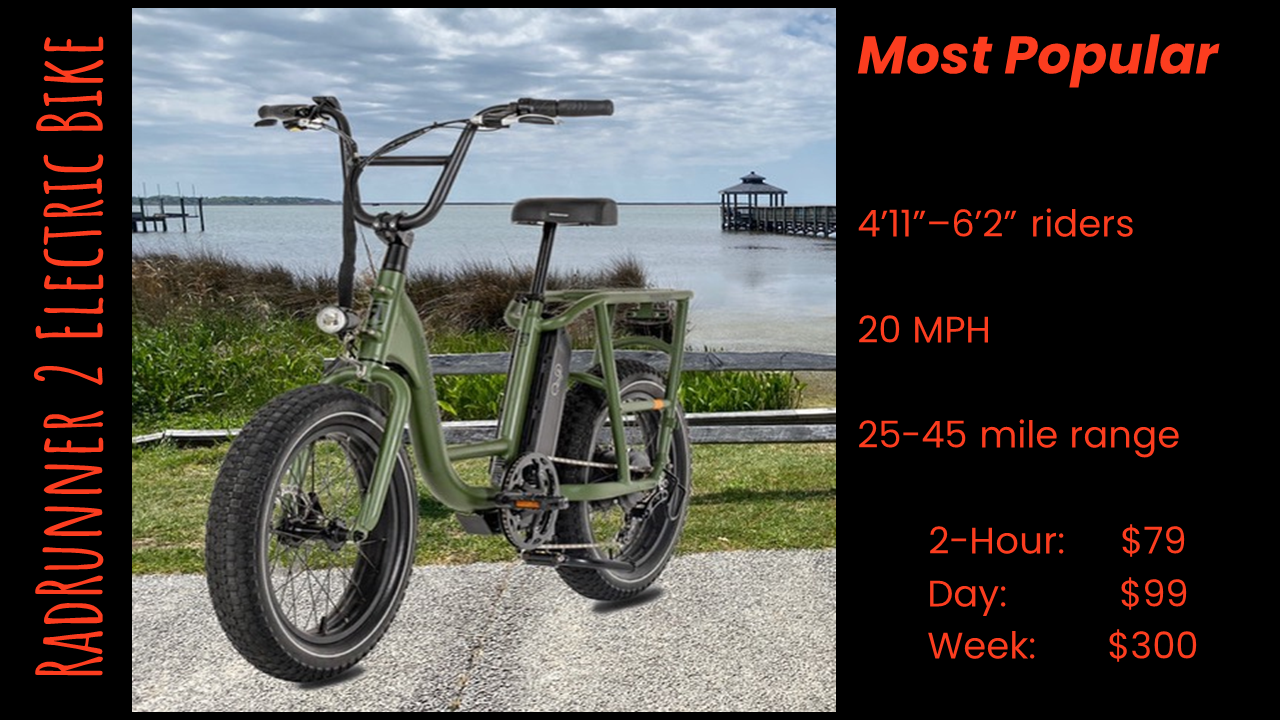
Yes—there are rental shops in Duck and neighboring towns that offer a range of e-bikes, from commuter-style models to fat‑tire cruisers. Rental availability peaks in summer, so reserve in advance for weekends and holidays.
Can I take an e-bike on the Duck Boardwalk?
Boardwalk etiquette varies by section and time of year. Many boardwalks are shared spaces—ride slowly, yield to pedestrians, and walk your bike in congested areas. When in doubt, dismount and walk through busy viewing platforms.
Choose Your Experience Level
Beginner
Short, flat circuits perfect for first-time e-bike riders, families, or those who want a relaxed soundside cruise.
- Boardwalk loop with beach and sound viewpoints
- Gentle residential routes linking cafes and parks
- Short round-trip to a nearby public launch for a paddle-and-ride combo
Intermediate
Longer loops that require battery planning and comfort sharing multi-use paths with pedestrians and locals.
- Extended soundside circuit connecting Duck, Kitty Hawk, and nearby viewpoints
- Mixed-surface ride combining paved trails and firm shoulder roads
- Birding-focused rides with multiple stops at marsh overlooks
Advanced
Endurance routes that use the e-bike’s assistance for multi-hour rides or as a base for exploring more remote Outer Banks stretches.
- All-day exploration linking multiple towns along the northern Outer Banks
- Wind-aware loops with planned charging or battery-swap stops
- Combined bike-and-ferry itineraries to reach more remote wildlife areas
Insider Tips & Local Knowledge
Check local regulations, battery range, and path rules before heading out.
Reserve rentals and helmet sizes ahead of peak weekends. Ride predictably—signal changes in speed or direction and use a bell or polite call when passing pedestrians. Monitor the forecast for wind direction; a strong headwind can halve your effective range. Carry a basic charger if you plan an overnight trip, and ask rental shops about local charging options. For wildlife viewing, arrive early—bird activity is best at dawn and late afternoon. Finally, leave no trace: stay off sensitive marsh edges and pack out anything you bring in.
What to Bring
Essential
- Helmet (required for safety and often by rental providers)
- Water bottle and light snacks
- Phone with a charged battery and offline map option
- Light waterproof jacket or windbreaker
- Lock for securing your e-bike during stops
Recommended
- Spare inner tube and mini-pump or patch kit (if using non-rental bikes)
- Portable USB charger for phone or bike key fob
- Small first-aid kit and sunscreen
- Binoculars for birding along the sound
- Comfortable panniers or a handlebar bag for camera and snacks
Optional
- Compact U-lock for longer stops
- Light gloves for wind protection
- Fenders if you expect wet or sandy conditions
- Chamois or padded seat cover for longer rides
Ready for Your E-Bike Adventure?
Browse 4 verified trips in Duck with instant booking
Explore Top 15 Duck, North Carolina Adventures →