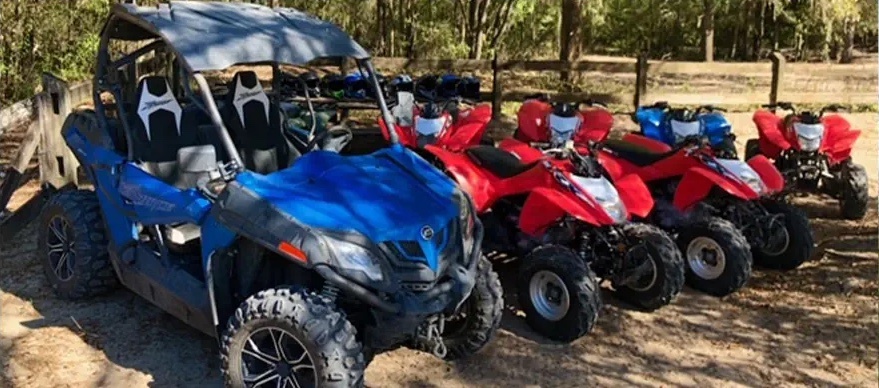
Why Dade City Works for ATV & UTV Riders
At first glance Dade City reads like a quiet Florida town of historic storefronts and pastoral backroads. Sit with it a little longer and the landscape rearranges itself: where citrus groves give way to scrub and longleaf pine, the earth turns sandier, drainage ditches carve narrow channels, and service roads thread between stands of oak and cypress. For off-road riders, that transition matters. It creates a terrain palette—sandy hollows that reward momentum, shallow creek crossings that test line choice, and wide, abandoned fire lanes where you can stretch a UTV’s legs. The atmosphere is not alpine drama or desert vastness; it’s a subtler kind of adventure, one tuned to slow Florida seasons, sun-soaked tracks, and the peculiar ecology of the Gulf coastal plain.
That subtlety is part of the appeal. Dade City’s ATV and UTV experiences are often short in distance but rich in variety: a half-day loop might move from packed sand to loamy singletrack to a rutted mud shelf in minutes, while multi-hour rides explore the deeper mosaic of Withlacoochee State Forest and county-managed trail systems. For families and new riders, many operators offer guided UTV tours that prioritize scenic stops, local history, and easy lines. For more experienced drivers, there are private parcels and informal networks of trails where technical choices—timing, tire pressure, line selection—make each ride feel like a small problem to solve.
Culturally, the riding scene has a grassroots feel. Local outfitters and small rental shops are the connective tissue: they provide machines, local trail knowledge, and the kind of advice you won’t find on a map—where the mud deepens after a week of rain, which fire lanes are gated seasonally, and what landowner permissions matter. Because the riding footprint overlaps with working landscapes—timber tracts, hunting lands, and agricultural parcels—respectful navigation matters. Good route planning balances the urge to explore with stewardship: pack out what you bring in, avoid soft-ground shortcuts near wetlands, and follow any posted restrictions. When you ride well here, you get rewarded with long, quiet sections of trail and the occasional sighting of marsh birds, tortoises, or the slow, deliberate movement of a box turtle crossing a sandy road.
Finally, Dade City is a practical base. The town offers straightforward services—fuel, parts, casual dining—and it's close enough to larger coastal trail networks if you want to chain a weekend of exploration. The seasonality is forgiving compared with the North, but Florida’s wet season changes the riding game; planning around precipitation and heat will shape how challenging each track feels. In short: Dade City delivers an approachable but authentic Florida ORV experience—one that rewards attention to nuance and a willingness to trade high-speed vistas for close-up landscape work.
Terrain variety: Sandy flats, pine-wiregrass corridors, intermittent mudholes, and small creek crossings create short bursts of technical riding rather than long continuous elevation changes.
Accessibility: Many trailheads and rental operators are within a 20–40 minute drive of downtown Dade City; basic rider support—fuel, light mechanical help, and food—is available locally.
The harbor is the gateway, and the Pacific becomes the classroom.
Local operators: Guided UTV tours are the best way to learn local lines and seasonal hazards; rental shops also provide orientation on machine handling for first-time riders.
Environmental context: Riding overlaps with wildlife habitats and private lands. Stay on designated routes, respect closures, and adhere to landowner rules to preserve access.
Choose by purpose
Whale watching, snorkeling, sunset sailing, cultural canoeing, harbor sightseeing, or private chartering.
Start near the city
Waikiki and Honolulu Harbor are primary hubs, with some trips launching near Hanauma Bay.
Confirm the vessel
Gangways, shaded seating, and boarding requirements vary according to vessel size and operator.