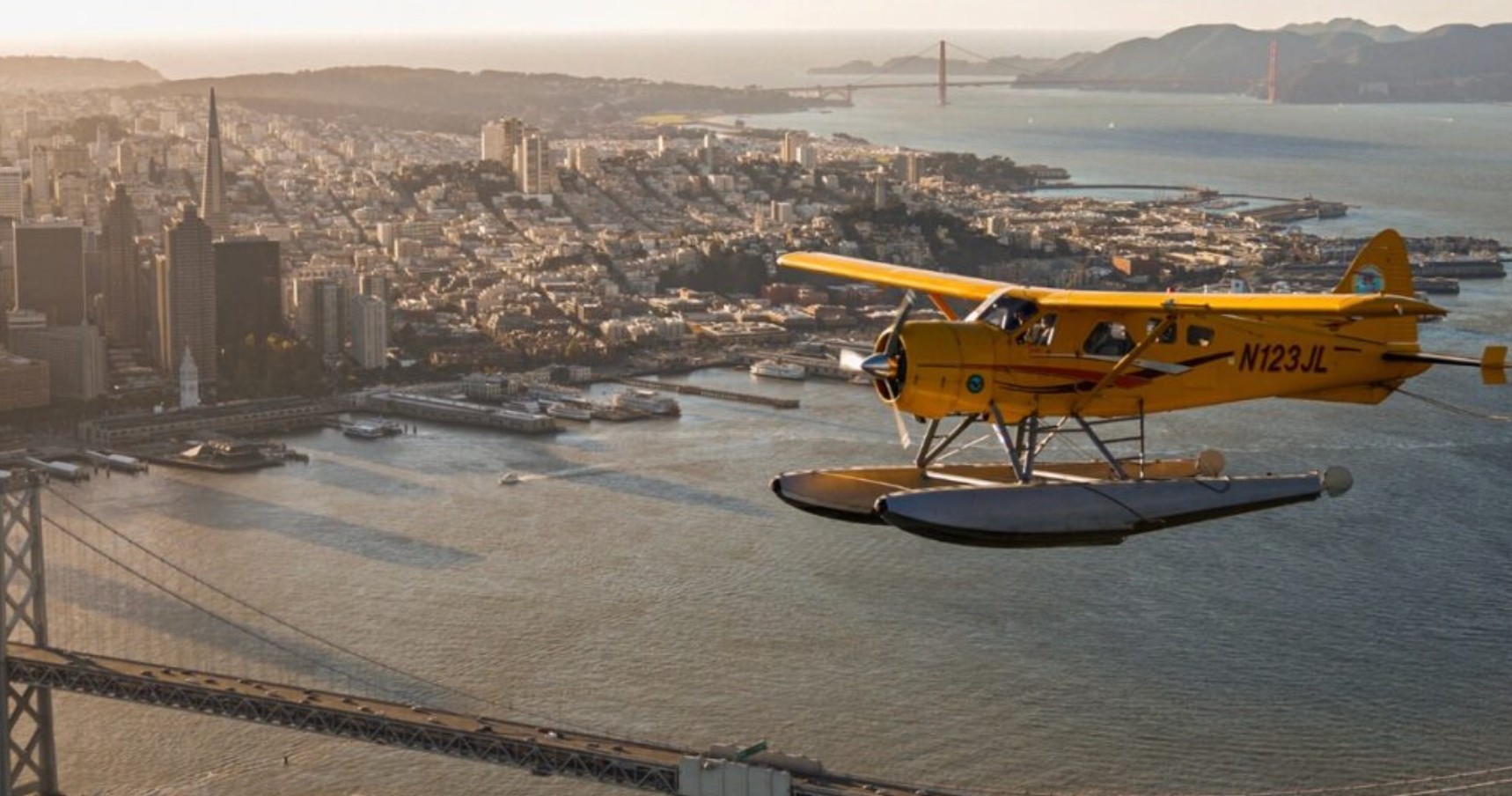
Airplane Experiences in Brisbane, California

Brisbane, California

Perched on the peninsula just south of San Francisco, Brisbane is an unlikely gateway to airborne adventure. The town's proximity to controlled-airspace hubs, dramatic coastal scenery, and a cluster of general-aviation operators makes it an ideal launch point for short scenic flights, introductory discovery flights, and specialized aerial services like photography and aerial surveys. This guide focuses on airplane-based experiences that let you trade shorelines for skyline—whether you’re chasing Golden Gate Bridge light, learning to take off and land, or commissioning a drone-alternative bird's-eye portrait of the Bay.

18
Activities
Year-Round (weather-dependent)
Best Months

Top Airplane Trips in Brisbane

18 trips • Book with confidence • Instant confirmation

Why Brisbane Is an Exceptional Base for Airplane Adventures

Brisbane's geography reads like an aerialist's storyboard: a tight peninsula, a sweeping bay, and a jagged coastline backed by low, wind-sculpted hills. From the air, the human scale falls away—highways become ribbons, neighborhoods become tessellated patterns, and a single flight can stitch together the city's most iconic neighbors: the copper sweep of the Golden Gate Bridge, the urban islands of Alcatraz and Angel, and the serrated headlands of Marin and Point Reyes. That visual immediacy is part of the appeal for airplane experiences launched in and around Brisbane. Flights here are short enough to be accessible—often 20 to 90 minutes—yet rich enough in sights to feel like a small expedition.

The town's position near major aviation infrastructure gives it practical advantages, too. While San Francisco International Airport dominates the region's air traffic, a network of smaller airports, fixed-base operators, and flight schools around the peninsula support a vibrant general-aviation scene. That ecosystem means you can book everything from a beginner’s discovery flight with a Cessna instructor to a curated scenic tour in a turbine skylight, or even contract aerial photography for weddings, real estate, or personal projects. For aspiring pilots, nearby flight schools offer discovery flights and lessons that introduce takeoff, basic control, and navigation in manageable, confidence-building steps.

That said, flying near Brisbane comes with constraints that shape the experience: controlled airspace around major airports, frequent marine layer fog, and local noise-sensitivity policies. Pilots and operators work within FAA rules and local restrictions, so scenic routings that look simple on a map may be carefully choreographed corridors in practice. The weather is a defining variable; clear, crisp visibility days—often late summer and early fall—deliver the best photographic and sightseeing conditions, while mornings and cooler months can be socked in with low clouds. For travelers, that means planning flexibility is essential: arrive with an open window for rescheduling, prioritize mid-day bookings when the marine layer lifts, and expect operators to change plans for safety and regulatory compliance.

Beyond logistics, airplane experiences launched from Brisbane offer a special kind of perspective on the Bay Area's environmental and cultural texture. You can witness urban growth patterns, industrial shorelines, restored wetlands at Brisbane Lagoon, and the patchwork of green spaces that stitch the peninsula together. Operators that emphasize conservation-aware flying can point out habitat restorations, migratory bird corridors, and shoreline resilience projects, turning a sightseeing flight into an educative encounter with the region's ongoing environmental story. Whether you're a first-time flyer, a photographer seeking a new vantage, or a pilot-in-training, Brisbane's airplane offerings condense the Bay's scale into a single, accessible arc of sky.

Short scenic flights over the Bay are perfectly suited to Brisbane’s location—big views without a long commute to an airport.

Discovery flights and introductory lessons are common nearby, allowing newcomers to experience controls and takeoffs under instructor supervision.

Operators often combine aerial tours with complementary experiences: helicopter transfers, coastal hikes, or post-flight dining on the peninsula.

Weather and airspace rules shape routes; expect operators to provide alternatives and clear guidance on sightlines and safety.

Activity focus: Fixed-wing scenic flights, discovery flights, flight training, and aerial photography
Nearest major controlled airspace: San Francisco International Airport (SFO)
Typical flight lengths: 20–90 minutes
Seasonality: Year-round with best visibility late summer–early fall
Operators must coordinate with air-traffic control; some routes are restricted for safety and noise reasons

Best Time to Visit

Best Months

SeptemberOctoberMayJune

Weather Notes

Late summer and early fall generally offer the clearest skies and reduced marine layer, improving visibility for aerial sightseeing. Spring brings variable conditions; mornings can be foggy and afternoons clearer. Winter and early spring may see low clouds and higher likelihood of cancellations.

Peak Season

Late summer and early fall when Bay visibility is typically best.

Off-Season Opportunities

Winter and spring weekdays can mean fewer bookings and greater scheduling flexibility; operators may offer discounted slots but will cancel or reschedule for marginal weather.

Frequently Asked Questions

Do I need special permits to fly on a scenic airplane tour?

No personal permits are required for passengers, but operators must comply with FAA routing and local restrictions. Operators will handle necessary coordination with air traffic control and obtain any route approvals.

Are flights safe for first-time flyers?

Yes. Discovery flights and scenic tours are conducted by certificated pilots in aircraft maintained to regulatory standards. Operators provide pre-flight briefings and safety procedures. If you have medical concerns, consult your physician before booking.

How should I plan for weather-related cancellations?

Book with flexible timing, confirm the operator's cancellation policy, and allow an extra day in your itinerary for rescheduling. Morning fog and sudden marine-layer changes are the most common reasons for changes.

Choose Your Experience Level

Beginner

Short scenic and discovery flights designed for first-time flyers and those curious about piloting. Instructors often let students handle basic controls during discovery flights.

  • 20–40 minute San Francisco Bay scenic flight
  • Discovery flight with dual-control Cessna
  • Introductory aerial photography sortie

Intermediate

Longer flights, targeted photographic missions, or foundational flight-training blocks that include navigation and controlled airspace ops.

  • 60–90 minute coastal and headlands tour
  • Aerial photography mission focused on shoreline or urban grids
  • First solo-prep lesson segments at a nearby flight school

Advanced

Complex flight operations, cross-country navigation in controlled airspace, advanced flight training in instrument conditions, or chartered turbine flights.

  • Cross-peninsula navigation and controlled-airspace procedures
  • Instrument flight rules (IFR) training segments
  • Chartered views of the greater Bay and coastal corridor

Insider Tips & Local Knowledge

Coordinate closely with operators, expect flexibility for weather and airspace, and plan photography around window position and light angle.

Book mid-day departures during the shoulder-season to avoid morning fog. If clear photos are a priority, request a window seat on the side of the aircraft that faces your primary subject and bring a fast lens. For students, bring a notepad to record instructor feedback immediately after the flight. Respect local noise ordinances by choosing operators that follow published scenic routes, and ask operators about wildlife-avoidance practices if flights pass over sensitive habitat. Finally, leave extra time for ground briefings and post-flight debriefs—these are where the best context and tips for future flights are shared.

What to Bring

Essential

  • Photo ID (required for some operators)
  • Water and light snacks for waiting or post-flight
  • Layered clothing—coastal wind can feel colder aloft
  • Sunscreen and sunglasses for reflective Bay light
  • Comfortable, low-profile shoes suitable for airplane steps

Recommended

  • Camera with a fast shutter speed and vibration reduction
  • Ear protection if you're sensitive to engine noise
  • A small daypack to hold personal items during briefing and debriefing
  • A light windbreaker—cockpits can be drafty during boarding

Optional

  • Binoculars for pre-flight shoreline scouting
  • Notebook or voice recorder for student-pilots to log first impressions
  • Polarizing lens filter for improved window photography

Ready for Your Airplane Adventure?

Browse 18 verified trips in Brisbane with instant booking

Explore Top 15 Brisbane, California Adventures →