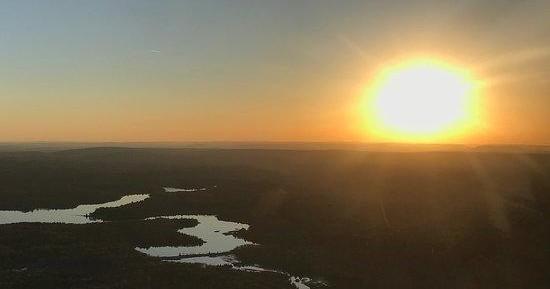
Air Tours in Blakeslee, Pennsylvania
From low-and-slow hot-air balloon drift to nimble helicopter hops and small fixed-wing scenic flights, air tours around Blakeslee turn the region’s patchwork of lakes, ridges, and farms into a map of textures and color. This guide focuses on what to expect from aerial sightseeing here—how the terrain reads from above, when conditions are most cooperative, and how to plan a safe, memorable flight.
Top Air Tour Trips in Blakeslee
4 trips • Book with confidence • Instant confirmation
Why Take an Air Tour Around Blakeslee
Aerial travel reframes a landscape you thought you knew. Around Blakeslee the Pocono foothills, small lakes, and long shadowing ridges fold into one another like sheets of paper—edges softened by forest and punctuated with glints of water. From the air, the human scale softens: roads become threads, houses are punctuation marks, and the geometry of old stone walls and field boundaries appears as deliberate pattern. The view transforms seasonal particulars into a broader story of glacial history and freshwater networks. In spring you’ll track melted snow draining into ponds; in fall, the tapestry goes incandescent, and even small ponds become mirrors for the blaze.
An air tour is also a practical shortcut to perspective. Where a trail rewards patience with a single summit panorama, a short flight over Blakeslee delivers a succession of distinct vantage points—ridgebacks, lakes, and river corridor all within a 20- to 60-minute window. That makes aerial sightseeing a great option for day travelers, photographers seeking unique angles, and anyone who wants to supplement ground-based exploration (kayaking, hiking, mountain biking) with a context-setting aerial sweep. The scale and pace of each flight vary: fixed-wing planes linger at altitude for wide-angle compositional work; helicopters permit low passes and close looks at wetlands and shoreline; balloons offer silent, slow ascents timed with golden-hour light.
Practicality meets poetry in the planning. Weather is the primary arbiter of success—calm mornings are the sweet spot, when thermals and turbulence are minimal and the air is clear. Pilots route flights to maximize seasonal highlights: wetlands in spring, expansive green in summer, and the concentrated color of fall. For photographers, aircraft with large windows or open doors (helicopter-door shoots) change what’s possible. For travelers sensitive to motion, shorter fixed-wing hops at steady altitudes typically feel gentler than low helicopter maneuvers. Environmental considerations are gaining parity with experience: operators who respect noise-sensitive corridors and nesting seasons produce safer, quieter flights and maintain better access over time. Finally, pairing an air tour with land activities—an early-morning balloon followed by a lakeside breakfast, or an afternoon flight that previews a hike for the next day—turns a single aerial experience into a narrative thread across a multi-day trip.
Air tours condense the region’s variety into a single session: lakes, ridgelines, and farmed valleys become a continuous sequence of views.
Morning flights are typically calmer and offer the best light; evenings can be dramatic but may be subject to stronger thermals and shorter windows for safe operation.
Respect seasonal restrictions and local wildlife patterns—quiet routing and scheduled windows help protect nesting areas and reduce noise complaints.
Best Time to Visit
Best Months
Weather Notes
Calm mornings provide the smoothest flying and clearest visibility; afternoons can bring thermals and gusts, especially in summer. Fall offers the most dramatic visual payoff but also higher demand.
Peak Season
Fall foliage (late September through October) is the busiest time for scenic flights.
Off-Season Opportunities
Winter can offer crisp visibility and unique low-traffic windows, but many operators reduce schedules or pause services during cold months.
Frequently Asked Questions
How long does a typical air tour last?
Tour lengths vary by operator and aircraft type. Public scenic flights are often 20–45 minutes; private charters or balloon flights can run longer. Check each experience listing for exact durations.
Are there weight or health restrictions?
Many operators have weight limits, cockpit-space restrictions, or health guidelines. These specifics vary by craft and company—confirm directly with the operator when booking.
What should I do if my flight is canceled due to weather?
Most operators offer rescheduling or a refund for weather cancellations. Have flexible plans for early-morning bookings and ask about backup dates when you reserve.
Choose Your Experience Level
Beginner
Short, gentle scenic flights designed for first-time flyers and families. Typically flown at steady altitudes with panoramic window seating.
- 20–30 minute fixed-wing scenic flight over lakes and ridgelines
- Hot-air balloon sunrise drift with soft landing near open fields
- Introductory helicopter hop for neighborhood orientation
Intermediate
Longer flights or lower-altitude tours that include targeted low passes, extended photography windows, or combined flight-and-ground packages.
- 45–60 minute helicopter tour with low passes along shoreline
- Fixed-wing half-hour photo flight timed for golden hour
- Balloon ride paired with a ground breakfast and local farm visit
Advanced
Specialty charters such as aerial photography sessions, cinematography flights, or bespoke routes that require coordination with pilots and possibly additional briefing.
- Aerial photography charter with pilot and photographer collaboration
- Custom scenic route focusing on geological features and mapped survey points
- Private helicopter charter for multi-stop overflights and low-level inspection
Insider Tips & Local Knowledge
Book morning flights for the calmest air; confirm window seating and photographic access when you reserve.
1) Reserve early in fall—operators fill quickly during peak foliage. 2) Ask operators about the typical flight route and which side of the aircraft offers the best seasonal views for your intended photography goals. 3) If you’re photographing, request a seat with the least window framing or inquire about helicopter-door options—operators often require advance notice and safety briefings. 4) Combine an aerial tour with a land-based activity: a morning balloon ride followed by a lakeside breakfast or an afternoon flight that previews a hike or paddle for the following day. 5) Expect variable cancellation policies around short-notice weather changes—build flexibility into your itinerary and request operator contact details for same-day updates. 6) Be mindful of wildlife and noise-sensitive areas; reputable pilots route flights to minimize disturbance and follow local guidelines. 7) If you suffer from motion sickness, schedule a shorter flight at a steady altitude and take preventative measures beforehand.
What to Bring
Essential
- Government ID (required for many operators)
- Camera with straps and extra batteries
- Layered outerwear — temperatures change quickly at altitude
- Motion-sickness remedies if you are prone to airsickness
- Closed-toe shoes (for boarding and disembarking)
Recommended
- Polarizing filter for photography to manage reflections on water
- Ear protection or earplugs for helicopter flights
- Sunglasses and sunscreen
- Small daypack for personal items
Optional
- Binoculars for scanning shoreline and ridgelines
- Light snacks and water for longer private charters
- Notebook for jotting photographic settings and coordinates
Ready for Your Air Tour Adventure?
Browse 4 verified trips in Blakeslee with instant booking
Explore Top 15 Blakeslee, Pennsylvania Adventures →