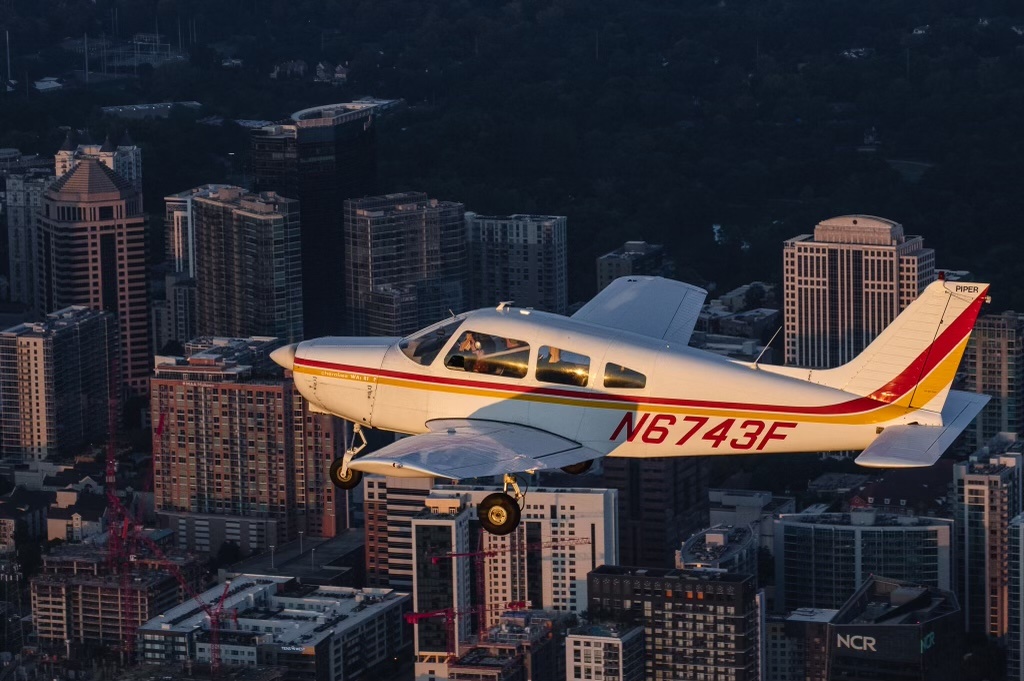
There is a particular clarity to flying low over northern Georgia that only a small-plane window can deliver. From fifteen hundred feet, the foothills that surround Ball Ground resolve into a quiet geometry: narrow ridgelines, curving farm lanes, and the saw-tooth shoreline of reservoirs that reflect the sky. The land here is intimate and human-scaled—vineyards, orchards, and patchwork fields sit cheek-by-jowl with stands of hardwoods and narrow rivers—so a short sightseeing flight does more than show you the lay of the land; it reveals how geology, agriculture, and small-town life have arranged themselves across the valley floors. For travelers who come for the calm of countryside and leave with a new map in their head, airplane experiences in this region are equal parts scenic spectacle and cultural primer.
Practically speaking, the airplane offerings you’ll find serving Ball Ground are shaped by the rhythms of general aviation: discovery flights, hour-long sightseeing loops, and introductory lessons that let you take the controls under an instructor’s watchful eye. These are not heavy-traffic airline hops; they’re intimate, hands-on encounters with flight. Pilots will usually pick routes that highlight the region’s best visuals—shorelines and river meanders, the folded silhouettes of low ridges that catch light at different times of day, and the small towns that function like stage props when viewed from above. Photographers prize the golden hours for the long shadows and saturated colors; leaf-peepers find autumn flights particularly rewarding because fall color in the foothills is diffuse and layered, visible across many valleys at once.
Weather and seasonality shape the experience more than they do a road trip. Spring and fall offer the most stable windows: cooler mornings, better visibility, and fewer convective storms than the hot summer afternoons when thermals and pop-up thunderstorms become more likely. Winter flights can deliver crystalline air and long sightlines, though shorter daylight and chillier preflight waits are factors. Practical planning matters here—pilots and operators monitor ceilings, visibility, and wind closely, and most short flights prefer early-morning departures for smoother air. Complementary adventures are easy to stitch onto an aerial day: land, stretch, and hike a nearby trailhead; paddle a lake inlet you just saw from above; or visit a local vineyard whose rows looked like a miniature landscape an hour earlier. Responsible flying also matters: observe noise abatement requests, respect private property below, and choose operators who prioritize safety briefings and transparent preflight information. In Ball Ground, an airplane trip is both a way to see the region and a reminder of how perspective changes everything—what once looked like a long drive becomes a compact, vivid portrait when viewed from the air.
Short scenic flights are ideal for first-time flyers and photographers who want a compact, high-impact experience. For aspiring pilots, discovery flights let you hand the stick to the instructor for controlled, supervised time at the controls.
Because many operations use small general-aviation fields, access is straightforward but facilities are often minimal—expect simple terminals, friendly pilots, and a hands-on, preflight routine that prioritizes weather and weight-and-balance considerations.
Choose by purpose
Whale watching, snorkeling, sunset sailing, cultural canoeing, harbor sightseeing, or private chartering.
Start near the city
Waikiki and Honolulu Harbor are primary hubs, with some trips launching near Hanauma Bay.
Confirm the vessel
Gangways, shaded seating, and boarding requirements vary according to vessel size and operator.