
What the day feels like
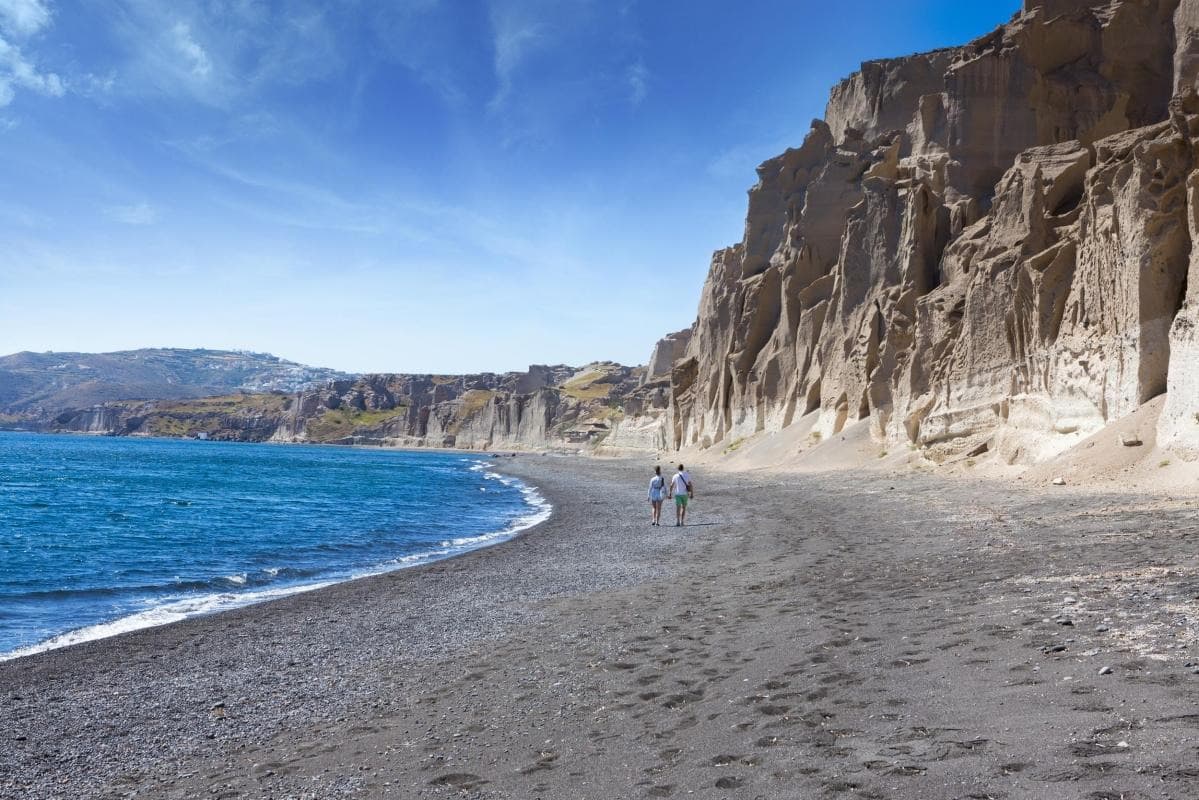
When the caldera cliffs of Santorini bow away and the island’s whitewashed villages fall out of earshot, the sea takes over in a way the cliffs never can. You arrive at White Beach by water—the boat eases to a stop in aquamarine that deepens into cobalt, and a wall of pumice and chalk rises like a theatrical backdrop. The cliffs are not merely scenery here; they script the pace of the day: vertical, sun-baked, and patient. Waves tug at your ankles, the wind rearranges your hat, and the beach—small, pale, composed of pulverized pumice and volcanic “white” stone—seems to have earned its name as a deliberate contrast to Santorini’s famous reds and blacks.
White Beach is most often encountered on a circumnavigation of the island. Day cruises and private charters hug the island’s southern rim, stopping at the hot springs, Red Beach, and then this quieter shelf of sand. Because boats cannot usually moor directly on the shore, disembarkation is part of the ritual—either a short swim from the anchored vessel or a tender drop-off—so the beach keeps the casual flip-flopper crowd a shade thinner than the more accessible sands. That isolation is part of its appeal: you come for the water, for cliffside theatrics, and for a genuine sense of being at the edge of Santorini’s geology.
Geology explains the look. Santorini is the caldera remnant of one of the eastern Mediterranean’s most dramatic eruptions—the Minoan event roughly 3,600 years ago—that evacuated a vast magma chamber and left behind a ring of cliffs in varying palettes of volcanic rock. Where oxidized iron stains the exposed strata red, other eruptions and deposits left lighter pumice and tuff that weather into the chalky whites visible at White Beach. The beach itself feels almost sculpted: small coves and cave-edged coves, stone shelves that sweep into the sea, and cliffs that look as if the island has flaked off at the edges.
Culture and local life sit a few miles uphill. Akrotiri—the nearest village and the gateway for most land-based exploration here—pairs a working Cycladic harbor with low-slung tavernas, fishermen mending nets, and the archaeological ghost of a Bronze Age settlement preserved nearby. The overlap between natural spectacle and millennia of human habitation is a recurring theme: this coastline sheltered ancient sailors, and modern boatmen still read its mood with the same weather-bronzed skill.
How to experience White Beach depends on your appetite. For a relaxed day, a half-day catamaran is the most efficient way to see the south coast: you’ll skim past the Venetian lighthouse, swim in the hot springs below the active volcano, float off Red Beach with its iconic crimson cliffs, and then drop anchor for a stay at White Beach. Many operators include snorkeling gear, a simple barbecue on board, and an open bar—comfortable, social, and a good way to meet other travelers while still keeping the shoreline’s drama to yourself.
If you want a closer relationship with the water, paddle to the coves on a guided sea-kayak trip. The South Discovery tour is an approachable three-hour paddle that threads the volcanic coast—Red Beach, White Beach and sea caves—mixing easy paddling with snorkel stops and a short picnic. It’s an intimate way to see rock faces and coastal textures you’d miss from a larger boat.
For something quieter and custom, private motor yachts and luxury catamarans let you set the pace: anchor where you like, extend a snorkeling stop, or time your return to catch the caldera’s sunset paint Oia in blowing pinks and golds. There are also traditional fishing trips if you prefer the company of locals and the practical reward of a fresh catch that can be cooked on board.
Practicalities matter: there is minimal shade at White Beach; bring sun protection, a reusable water bottle, and footwear you can use on rock and sand. Many boats supply towels and snorkel kits, but if you prefer your own mask, bring it—visibility is typically excellent, and fish will greet you within arm’s reach. Remember that fragile seabeds and cliff faces require respect; many operators anchor just offshore to minimize harm to marine flora.
Timing is part of the calculation. Morning trips give you calmer seas and cooler air for paddling; late afternoon or sunset cruises offer that cinematic Santorini light. September and early October feel like a sweet spot—water still warm, crowds dissipating, and afternoons languid. During peak summer, tours are frequent but can feel busy; booking ahead helps. If you’re traveling on a budget, a shared morning trip that includes Red and White Beaches is an efficient way to combine swimming, a mud bath at the hot springs, and a grilled lunch on board.
White Beach is an exercise in contrasts: fragile against the sea’s insistence, remote but within reach, geological spectacle and simple leisure. It’s not the place for a long sandy stroll or a taverna-lined promenade; it’s a place to descend from the clifftop hum of Santorini and be reminded that the island is, first and always, an island—shaped by eruptions, sea, and the long negotiation between people and surf. If you come expecting cinematic views, warm water, and a quiet hour of cliff-shadowed swimming, you’ll leave with a deeper appreciation for why Santorini’s coasts keep luring people back: the island’s drama isn’t always in its villages; sometimes it’s where the cliffs whisper and the sea answers.
Trail wisdom
Small choices, better day.
Arrive by boat for the full experience
Most operators anchor offshore and tender passengers in; book a half-day or private cruise to access the beach without a steep hike.
Protect your feet
Bring reef or water shoes—shorelines are rocky and small pumice can be abrasive underfoot.
Bring sun protection and water
Shade is scarce; pack sunscreen, a hat, and a refillable bottle even if your tour provides drinks.
Respect the marine environment
Avoid anchoring on seagrass and don’t collect stones or shells—local operators often choose spots to minimize impact.
Local knowledge
Read the place, not just the route.
Watch for native species including Common dolphins (often seen from boats), Mediterranean sea birds such as shearwaters.
Keep an eye out for wildlife during the transition between areas and habitats. Respect distance guidelines.
Operators typically anchor offshore to protect seagrass and seabed habitats; choose tour companies that follow responsible anchoring and leave-no-trace practices.
Follow the guide's instructions on size limits, ethical handling, and leave-no-trace practices.
Mesa Pigadia — a quiet snorkeling cove often included on private itineraries. Ammoudi Bay (near Oia) — a different coastal mood with cliffside tavernas and clear inlet swimming
Locally recommended viewpoints and quiet spots known best to local operators.
The caldera around Santorini is the result of a massive Bronze-Age eruption that reshaped the island; Akrotiri village nearby sits above one of Greece’s key archaeological sites.
Maritime roots and regional tradition shape the waterways and working coasts.
Seasonal guide
Four versions of the same landscape.
Spring
Best forcalmer seas · fewer crowds · wildflowers on the clifftops
Challengescooler water temperatures · unpredictable winds
Spring offers clear light and quieter tours; water may still be crisp, so expect brisk swims and windy afternoons.
Summer
Best forwarm water · long days for cruising · full tour schedule
Challengescrowds · midday heat
High season brings abundant boats and hot, still seas—book morning slots to beat the heat and boats to yourself.
Fall
Best forwarmer sea temps · fewer tourists · golden light for photos
Challengesreduced late-season services
Late summer into early fall is ideal—water holds heat and crowds thin, making for comfortable paddling and snorkeling.
Winter
Best fordramatic storms and empty shorelines · off-season solitude
Challengeslimited tours · cool water and rough seas
Winter is quiet and moody; most boats pause service, so access is limited to experienced private charters and calm-weather windows.
Pack with intention
What to bring.
Good to know
Common questions.
The most common way is by boat—shared or private cruises that depart from Amoudi, Athinios or Vlychada marinas; some guided sea-kayak trips also visit the beach.
Plan the edges
The details that make the day easier.
Santorini’s modern profile stems from a volcanic collapse after a massive eruption around 1600 BCE, an event linked to the decline of the Minoan civilization—its caldera cliffs and varied beach colors are direct results of that geology.
Pair a morning swim with a late lunch of grilled fish and fava in Akrotiri’s tavernas—local fishermen still supply many of the island’s kitchens, and simple Cycladic hospitality feels immediate and unpretentious.
- Access
- primarily by boat; best base: Akrotiri or Fira; typical tour length: 3–5 hours; bring sun protection, water shoes and a mask; cell service is intermittent under cliffs.
Support operators that anchor offshore to protect seabeds, avoid collecting volcanic stones, and bring reusable bottles to cut single-use plastic from boat tours.
Explore by topic
Follow the threads.
Keep exploring
Make the story part of the trip.
Set out from Bass Harbor for a private, customizable day on Blue Hill Bay — lighthouses, puffins, seals, and the chance to feel Acadia from the water. Small groups, local captains, unforgettable views.
In four hours you can move from shaded canyon ferns to wind-scoured coastal ridgelines, guided by someone who knows where the light—and the hidden views—live. This private half-day hike on the Monterey Peninsula or Big Sur is compact, curated, and perfect for travelers who want depth without a multiday commitment.
 Related story
Beneath a sky of shifting light, Skaftafell’s ice reads like a map of time. This three-hour guided glacier hike mixes technical instruction with geology and culture: compact, safe, and unforgettable.